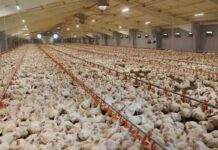

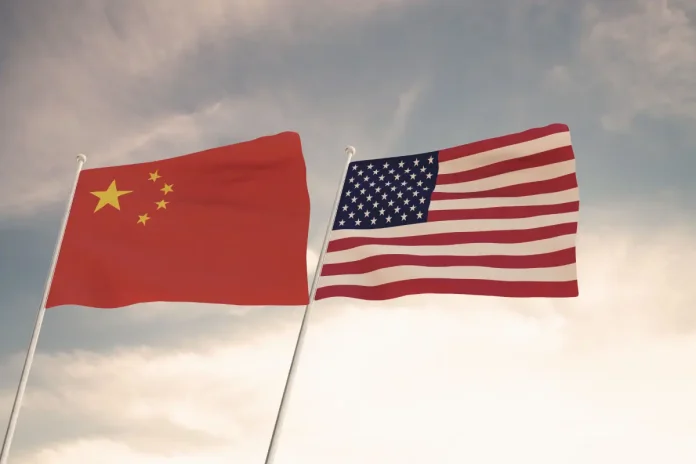
The White House stated that China would resume imports of poultry meat and poultry products from U.S. states recognised by the U.S. Department of Agriculture as free from highly pathogenic avian influenza (HPAI), following the recent summit between U.S. President Donald Trump and Chinese President Xi Jinping in Beijing.
The announcement was included in a White House fact sheet outlining a broader agricultural trade framework under which China would purchase agricultural products from the United States at an annualised rate of $17 billion per year for 2026, with the same level indicated for 2027 and 2028. The commitments are in addition to previous soybean purchase agreements reached in 2025.
According to the White House, China would resume imports of poultry products from U.S. states officially recognised as free from avian influenza by USDA authorities. China’s Ministry of Commerce separately stated that the Chinese side would “actively advance solutions” regarding poultry exports from certain U.S. states to China.
The discussions also addressed the recognition of avian influenza-free zones. China said the United States would actively work on Chinese concerns related to the recognition of Shandong province as a bird-flu-free area.
Trade data show that U.S. poultry meat and poultry product exports to China reached $286 million in 2025, compared with more than $1 billion in 2022. During the same period, tariffs and avian influenza-related restrictions reduced trade volumes for several agricultural products.
Alongside poultry, the two countries also discussed beef trade. China renewed expired registrations and approved new listings for hundreds of U.S. beef establishments. The U.S. Meat Export Federation stated that China’s General Administration of Customs granted five-year registration extensions to 425 U.S. beef establishments and approved 77 new registrations, while 38 establishments remain suspended.
China’s Ministry of Commerce said the two sides agreed to work on resolving non-tariff barriers and market access issues involving agricultural products. Both governments also referred to possible reciprocal tariff reductions covering selected products, although no detailed product list was released.
At the time of reporting, Beijing had not published a full confirmation of all terms announced by the White House.