
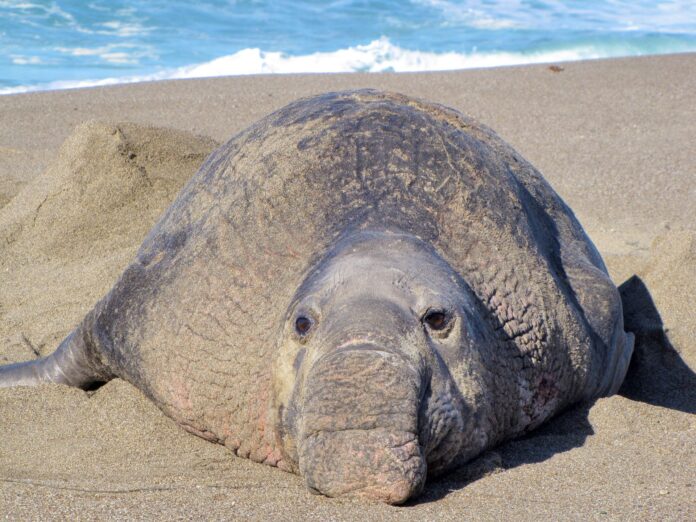
In a worrying first for California, tests have confirmed H5N1 bird flu in seven recently weaned elephant seal pups at Año Nuevo State Park, just north of Santa Cruz. This is the inaugural detection of the virus in the state’s marine mammals and specifically in northern elephant seals — a population that so far has dodged the massive die-offs plaguing their southern counterparts in Argentina, where pup mortality rates hit 70-97% in 2023 outbreaks. The U.S. Department of Agriculture’s lab verified the cases after researchers spotted abnormal signs like tremors, seizures, muscle weakness, and respiratory issues starting around February 19; by now, roughly 30 seals have perished at the site, mostly young pups along with one adult male.
What makes this detection so timely is the rigorous monitoring by teams from UC Santa Cruz, UC Davis, and California State Parks, who track the colony — home to about 5,000 seals during winter breeding, including around 900 weaned pups at the outbreak’s onset — for nearly 260 days a year, ramping up daily during pupping season. Thankfully, only a fraction of the pups seem affected so far, with thousands still appearing healthy on the beaches. Experts suspect the virus jumped from infected seabirds or their carcasses sharing the coastal habitat, and genetic sequencing is underway to pinpoint the strain and check for any mammal-to-mammal spread, as observed in prior South American incidents.
This H5N1 clade has been ruthless globally, decimating wild birds, poultry, and marine life — including over 30,000 sea lions in Peru and Chile, plus tens of thousands of southern elephant seal pups — while also hitting U.S. dairy cattle and a handful of exposed humans, with two fatalities since 2024. In response, park access is shut down, guided tours canceled, and officials urge distance from wildlife and leashed dogs to curb spread.