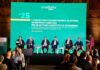

On 30 April, the European Parliament Sustainable Livestock Intergroup holds an event “How can circular feed and feed additives be deployed to reduce emissions in monogastric livestock farming?”. The event (11h-12h30) takes place in the European Parliament in Strasbourg, and can also be followed online. The registration link is available on the website of the Sustainable Livestock Intergroup.
Programme
I. Welcome Speeches
- MEP Benoît Cassart
- MEP Maria Grapini
- MEP Alexander Bernhuber
II. Opening: What are the expectations of the EU Livestock strategy on the decarbonisation of livestock farming?
- Brigitte Misonne (DG AGRI)
III. What are key drivers and examples of reducing carbon emissions through animal feed formulation?
- Christine Parry – (Global Feed LCA Institute) The importance of high-quality datasets on the environmental impacts of animal feed ingredients
- Prof. Jan Værum Nørgaard – (Aarhus University) Using feed additives to enable lower nitrogen and phosphorus excretion
- Sigrid Pauwelyn – (TROTEC) Former foodstuff processing as an example of ‘circular feed’ to reduce GHG emissions related to feed production
IV. Exchange of views with MEPs
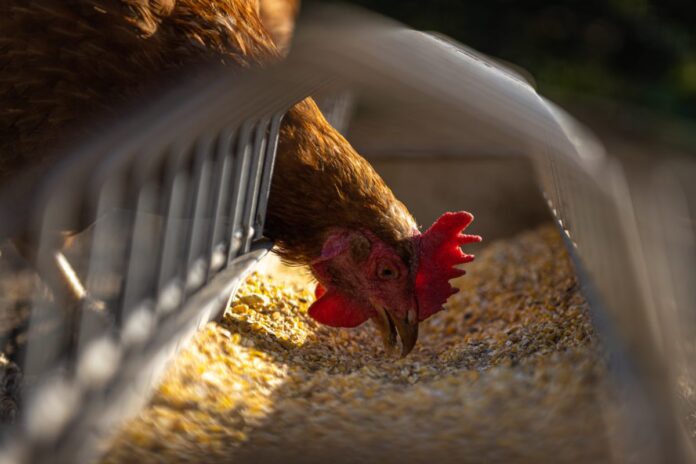
The upcoming EU Livestock Strategy highlights the need for livestock farming to contribute its fair share to the decarbonisation of the EU economy. Previously, the Sustainable Livestock Intergroup addressed the ambitions of reducing direct on-farm emissions, such as methane from enteric fermentation in cattle. For monogastrics like pigs and poultry, the production and sourcing of animal feed are the key determinants of the overall carbon footprint of livestock systems, and therefore the key focus to drive decarbonisation.
Improvements in data development on feed ingredients are a key essential first step to reliably assess where the pressure points lie, to subsequently enable innovation in animal feed formulation for carbon footprint reduction purposes. An increased use of circular feed ingredients is a key strategy in this regard, as it makes use of resources which are not cultivated with a dedicated purpose of being used as animal feed.
This Intergroup session will provide insights into these issues and showcase the main drivers and practical examples for reducing carbon emissions in livestock farming through more sustainable animal feed formulation.
The Sustainable Livestock Intergroup was established at the start of the current European Parliament’s mandate and officially launched in early 2025. Its first co-chairs, who are also the key supporters of the initiative, are MEPs Alexander Bernhuber (AT, EPP), Maria Grapini (RO, S&D), and Benoît Cassart (BE, Renew). The Intergroup aims to provide a platform for Members of the European Parliament to discuss both the diversity of existing farming practices and emerging methods and technologies that support and improve animal farming systems. It also seeks to develop informative tools to raise awareness about food production. By taking a holistic approach, the Intergroup will enable MEPs to better assess and balance both the benefits and challenges of the sector. This will help depolarise current debates and pave the way for realistic, science-based/sustainable solutions in animal farming—including enhanced animal welfare.
Source: FEFAC press release