
Water is often overlooked as a source of disease risk in poultry farming. Yet, when it comes to biosecurity, drinking water is one of the most critical control points. Bacterial contamination in old water distribution systems or tanks with low antimicrobial residuals can significantly undermine flock health and performance.
That’s why on-farm water disinfection is a recommended good practice that offers clear benefits in terms of bird welfare, performance, and mortality reduction—with minimal cost.
Why additional disinfection is needed
 Even if water appears clean, it may carry bacteria, viruses, or other harmful agents. This is particularly true for farms that rely on old or extensive distribution systems, where biofilm can form inside pipes and drinkers, becoming a breeding ground for pathogens.
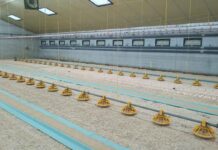
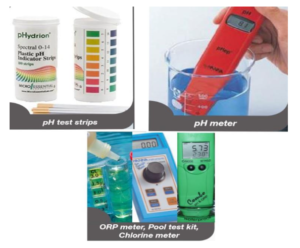
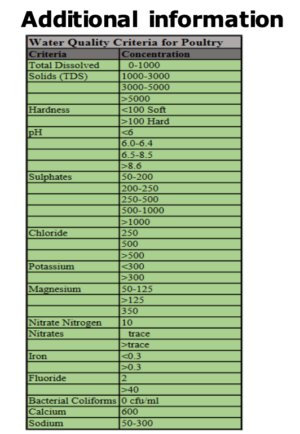
Disinfection is typically applied at the farm’s water tanks, just before the water is distributed to the birds. Carefully selected disinfectants provide a residual effect, helping to keep water clean throughout the delivery system. In some cases, pH correction is also necessary to optimize the efficacy of the treatment.
Safe and supervised application
To ensure the disinfection process is both effective and safe:
-
Bacteriological and chemical tests are performed regularly to monitor water quality.
-
Veterinarians and animal scientists supervise the process to avoid interactions with vaccines, vitamins, or medications delivered through the water.
-
Pre-treatment lab tests are conducted to determine the correct type and dose of disinfectant, which must comply with local regulations for human drinking water.
This approach ensures maximum safety for both the birds and the farm system.
 Tangible benefits for farms
Despite its simplicity, water disinfection has a measurable impact:
-
Reduces mortality and morbidity by at least 2%
-
Improves feed conversion ratio (FCR) by up to 0.05
-
Controls biofilm and prevents drinker leakage, which in turn lowers ammonia levels in the house
-
Enhances bird welfare and environmental conditions
-
Low cost: Around €50 per farm per year
A scalable solution
This practice is suitable for all types of poultry production, not just broilers. Whether you manage a small family-run operation or a large commercial complex, additional water disinfection is a simple, cost-effective biosecurity tool that pays off in both health outcomes and performance gains.
Source:
BroilerNet Factsheet AH1-C1-2 – Water Disinfection
Author: Thomas Paparounis
Funded by the European Union’s Horizon 2020 Programme (Grant No. 101060979)