

Climate control and ventilation are two of the most important factors affecting hatchery performance, which have an impact on both embryonic development and post-hatch chick quality. A hatchery is an artificial replication of the natural brooding environment where the embryo’s normal physiological development is ensured by careful regulation of temperature, humidity, airflow, CO2 and oxygen. In order to produce healthy, uniform chicks with high vitality and lower first week mortality as well as to achieve optimal hatchability, it is vital to maintain a stable microclimate throughout the incubation and hatching process.
What is climate control and ventilation in a hatchery?
The systematic control of temperature, relative humidity, air pressure and gas balance (O2 and CO2) in the incubation (setter and hatcher) and fresh air chambers or rooms is known as climate control in a hatchery.
On the other hand, ventilation involves continuous movement and exchange of air to maintain uniform temperature distribution, provide enough oxygen, remove metabolic heat and CO2 generated by developing embryos. When combined, these systems provide a clean, balanced air environment that prevents embryos from suffocation, dehydration and heat stress.

Relationship with embryonic development and chick quality
The embryo produces CO2 and metabolic heat during incubation. Without proper ventilation, CO2 level rises, oxygen availability decreases and as a result embryonic metabolism slows. Prolonged exposure to these conditions leads to delayed development and higher late embryonic mortality.
Humidity and temperature are equally important. Variations of even ±0.3 °C can change metabolic rates, which can lead to poor chick vitality, unabsorbed yolk sacs and early or delayed hatching.
Excessive humidity inhibits the growth of air cells and excessive dryness speeds up eggs moisture loss, which lowers hatchability and chick uniformity.
Proper climate controls therefore support not only embryonic respiration but also organ formation, muscle development and thermoregulatory capacity of the newly hatched chick.
The biology behind airflow
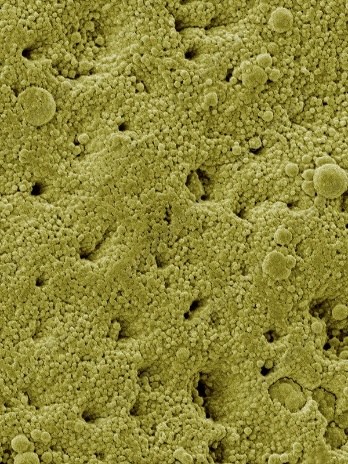
During incubation, embryonic metabolism depends on aerobic respiration. Eggshell contains as many as 7,000-17,000 small holes called “pores” through which oxygen passes from the air to the developing embryo and CO2 diffuses outward.
The efficiency of this exchange is driven by partial pressure differentials between the egg’s internal environment and the surrounding air.
If the air surrounding the eggs becomes saturated with CO2 or lacks oxygen due to poor ventilation, then gas exchanges slow leading to hypoxia and acidosis.
These physiological imbalances affect cardiac development, organ function and muscular growth, ultimately compromising chick vitality.
Furthermore, inadequate air circulation results in temperature layering, where the top trays may overheat while the lower ones remain cool, leading to asynchronous embryo development and reducing hatch uniformity.
How does poor ventilation affect hatch results?
Inadequate or unbalanced ventilation is one of the leading hidden causes of hatch variability. Its impact is both physiological and mechanical:
- High CO₂ concentration reduces oxygen availability, causing delayed hatching and increased embryo mortality.
- Uneven air temperature produces hot and cold zones within incubators, resulting in early or late hatches and uneven chick sizes.
- Low air exchange fails to remove metabolic heat and moisture, increasing condensation, bacterial load and chick dehydration.
- Excessive air exchange leads to low humidity, excessive weight loss and poor hatch uniformity.
Inconsistent air management often manifests as sticky chicks, unhealed navels, malpositions, and weakened post-hatch performance, all of which translate into financial losses for the hatchery.
The ideal ventilation strategy
An ideal ventilation strategy in a hatchery is built on three interdependent principles: air quality, air distribution, and air pressure control, each working together to maintain a stable, uniform environment for developing embryos.
First, air quality control ensures a constant supply of clean, oxygen-rich air and the removal of excess CO₂ and heat. Fresh air entering the hatchery should contain at least 20.6% oxygen, while CO₂ levels inside setters must stay below 0.5%. Air-handling units (AHUs) condition and filter the incoming air to 24–26 °C and 60–70% relative humidity before delivery, maintaining a steady air exchange rate of about 2.5–3.0 m³/h per 1,000 eggs to support healthy embryonic respiration.
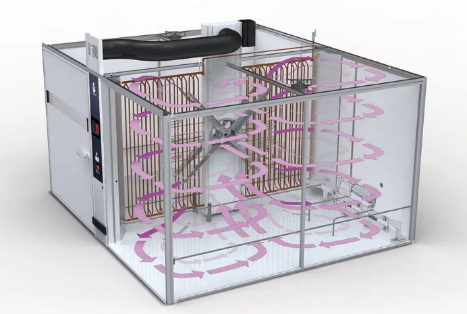
Second, achieving uniform air distribution is essential for temperature balance. Air velocity inside setters should remain around 0.3–0.5 m/s, enough to mix air evenly but not to dry eggs, while in hatchers it can be slightly lower. Proper duct design and diffuser placement prevent dead zones or short circuits, ensuring every egg experiences the same conditions.
Finally, directional airflow and pressure control protect both embryo health and biosecurity. Positive pressure of +5 to +15 Pa in clean areas keeps air moving from incubation zones toward service or the chick rooms, avoiding contamination. Regular maintenance cleaning filters, calibrating sensors and checking ducts keep the system balanced and reliable.
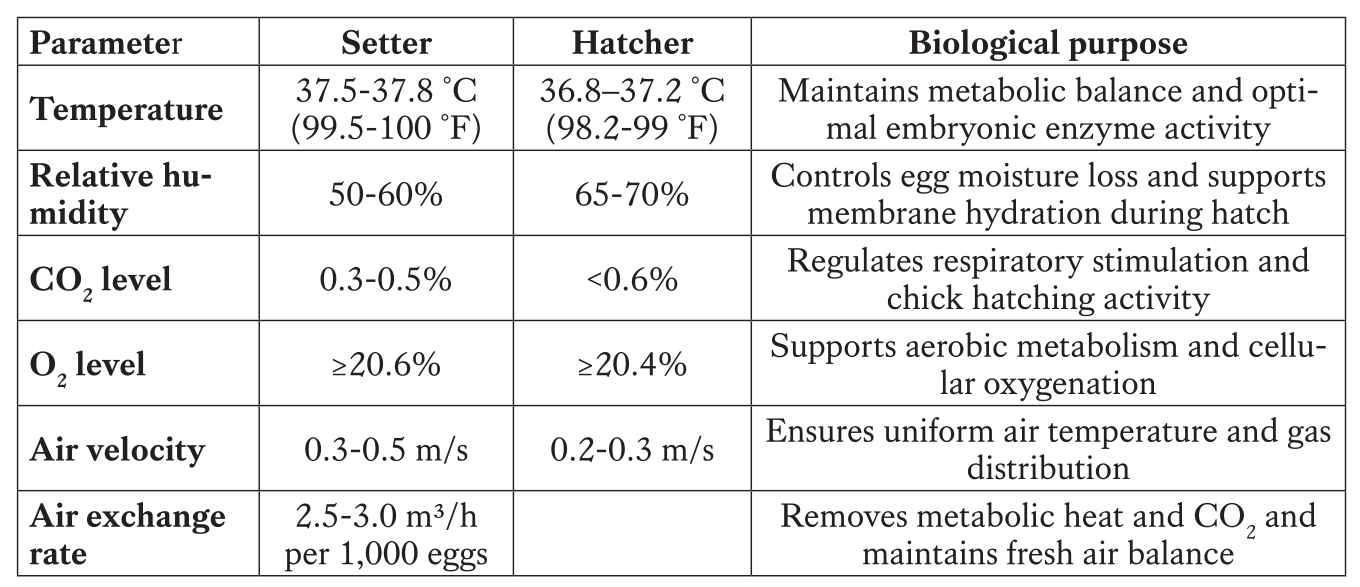
When these elements are correctly synchronized, ventilation becomes more than mechanical movement; it becomes a biological safeguard that translates precision engineering into strong, uniform and healthy chicks.
A sound ventilation strategy must therefore:
- Supply fresh, oxygen-rich air evenly across all machines.
- Remove heat and metabolic gases produced by embryos.
- Maintain uniform air distribution within and between incubators.
- Preserve optimal humidity by controlling air exchange rates.
Equipment and maintenance essentials
Efficient climate and ventilation management rely on:
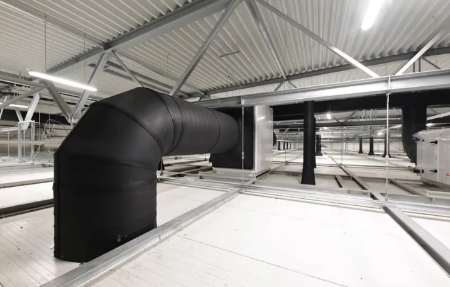
- Air handling units (AHU) with integrated heating, cooling and filtration modules.
- Sensors for CO2, humidity and temperature-calibrated regularly.
- Chillers and heaters to stabilize incoming air temperature.
- Humidifiers/dehumidifiers to manage relative humidity precisely.
- Fans and diffusers with adjustable dampers to direct airflow evenly.
- PLC-based automation systems for control, alarms, and data recording.
Routine preventive maintenance such as clean filters, checking fan bearings and belts, calibrating probes and verifying duct seals is essential to prevent system drift and maintain climate uniformity.
Conclusion
Ventilation is the biological regulator of the hatchery environment and is much more than just air movement. Proper climate control and ventilation strategy translate engineering precision into biological success. When the hatchery atmosphere remains stable, clean, cool and balanced, then every embryo has the same opportunity to develop into a strong, uniform chick. Consistency in climate means consistency in performance.
For every hatchery aiming to convert potential into profitability, climate control is not optional, it is fundamental.