
The Federal Government of Nigeria has announced plans to strengthen oversight of poultry import allocations and enforce stricter performance measures across the industry. The initiative aims to eliminate supply bottlenecks, improve access to day-old chicks (DOC), and support the growth of Nigeria’s poultry sector [original].
The move follows growing concerns over the underutilisation of approved import quotas by operators. This development has contributed to shortages of day-old chicks, increased production costs, and limited opportunities for thousands of poultry farmers nationwide [original].
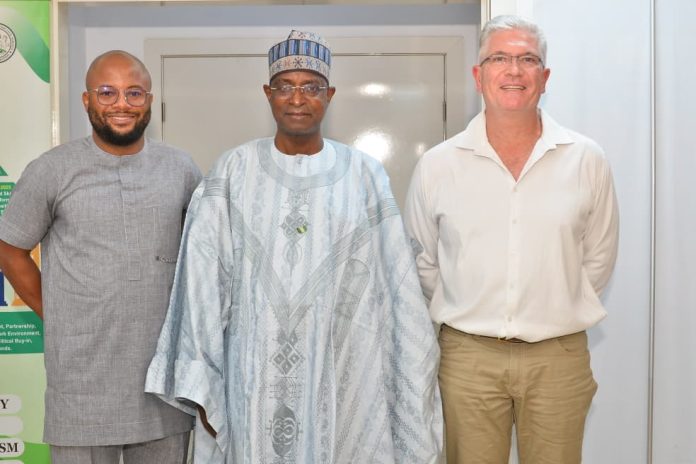
Speaking during a meeting on Wednesday, 10th June 2026, with the Managing Director of Valentine Chickens, Leon Gunter, and the company’s National Operations Manager, Samuel Adediji, the Honourable Minister of Livestock Development, Idi Mukhtar Maiha, said government interventions in the poultry sector must deliver measurable outcomes for farmers and consumers alike.
The Minister disclosed that industry assessments indicate a significant proportion of approved poultry allocations have not been fully utilised, creating supply constraints that have contributed to recurring increases in the cost of day-old chicks.
Valentine Chickens proposes $5.6 million investment in local grandparent stock production
As part of efforts to expand domestic production capacity, Valentine Chickens presented a proposal for a $5.6 million investment in local grandparent stock (GPS) production infrastructure. The project is designed to reduce dependence on imported parent stock (PS) and strengthen Nigeria’s poultry value chain [original].
The project is partnered with Aviagen, the world leader in poultry genetics. The proposal includes the establishment of specialised breeding facilities and advanced biosecurity systems capable of significantly increasing local poultry production and supporting the long-term development of the sector.
At full capacity, an annual import of 116,800 grandparent breeding chicks will yield 2 million parent stock females, translating into:
-
273 million commercial broiler chickens
-
378,000 tons of chicken meat per annum (calculated at a 72 percent carcass yield)
Ministry establishing centralised national database to track GPS and PS
The Ministry is establishing a centralised, national database to track every imported grandparent stock (GPS) and parent stock (PS) egg and chick. This regulatory shift is deliberately designed to:
-
break down entry barriers for smallholder farmers
-
boost Nigeria’s historically low poultry per capita consumption
-
ensure that local supply directly meets the needs of ordinary citizens [original]
Integrated context: DOC shortage, price surges, and national poultry price stabilisation strategy
The new measures are part of a broader context of sustained pressure on Nigeria’s poultry market. Industry sources report:
-
the price of day-old chicks has surged by 67 percent within three months (from December 2023 to February 2024, with further increases in 2026)
-
DOC scarcity is currently considered the main factor constraining sector productivity
-
the chick shortage has reduced poultry production, with direct impacts on egg availability and chicken meat supply
In April 2026, the Ministry had already announced plans to stabilise poultry prices nationwide, focusing on the main cost drivers in the value chain: feed, energy, and production inputs. At that time, it also asked the Poultry Association of Nigeria (PAN) to provide a national inventory of hatcheries to support more data-driven policymaking and address supply gaps.
By February 2026, PAN – Lagos State Chapter – had reported that the unavailability of day-old chicks was “crippling the sector’s productivity”.
In March 2026, the price of an egg crate rose to ₦8,500 in some retail outlets, largely driven by the DOC shortage.
The new June initiative therefore fits into a broader strategy to rebalance the sector, including:
-
stricter monitoring of import allocations
-
linking quotas to operational performance
-
creation of a centralised database for GPS and PS
-
local investment in grandparent stock to reduce dependence on imports
For more on Nigeria’s egg production challenges, read our article on rising chick costs and supply constraints.