
In today’s global poultry industry, hatchery performance is increasingly measured through precise key performance indicators (KPIs) such as fertility, hatchability, hatch of fertile, embryonic mortality pattern, chick uniformity, first week mortality, chick yield and overall incubation efficiency.
While modern hatcheries are investing in advanced incubators, automation and digital monitoring systems, one fundamental truth remains unchanged: hatching egg quality is the single most influential factor behind every hatchery KPI.
No technology, no machine and no incubation profile can compensate for poor quality hatching eggs.
If the biological starting material is compromised, downstream outcomes will always suffer. Therefore, egg quality must be managed as a strategic pillar, not just an operational step.
Why does hatching egg quality determine hatchery performance?
A hatching egg is not just a shell; it is a living biological system containing a highly sensitive embryo that requires optimal structural, physical, microbiological and physiological conditions. When egg quality is good, the embryo develops smoothly, the hatch window stays narrow, chicks come out strong, uniform, active and healthy. When egg quality is poor, hatchability drops, mortality increases, chicks become weak and field performance goes down. Many studies and years of hatchery experience clearly show that approximately 40-70% hatchery performance depends on egg quality and egg handling before incubation. So, if we want strong KPI, the first thing we must protect is the egg.
What does a good hatching egg look like?
A good hatching egg has a clean, strong shell, proper shape, correct size for the breeder strain and age and no visible crack. Inside, it should be fresh, with good albumen quality and stable yolk and air cell. The egg should be microbiologically clean, not heavily contaminated and not too old.
In a few words: a good egg is clean, fresh, strong, uniform and biologically healthy. This egg gives the embryo the best chance to survive and develop well.
Internal egg quality: the hidden driver of hatchery KPIs
Shell quality is only the visible part of egg quality. The real biological performance is determined by the internal egg quality-albumen, yolk and air cell. Which directly control embryo survival, growth rate and chick vitality.
Albumen quality
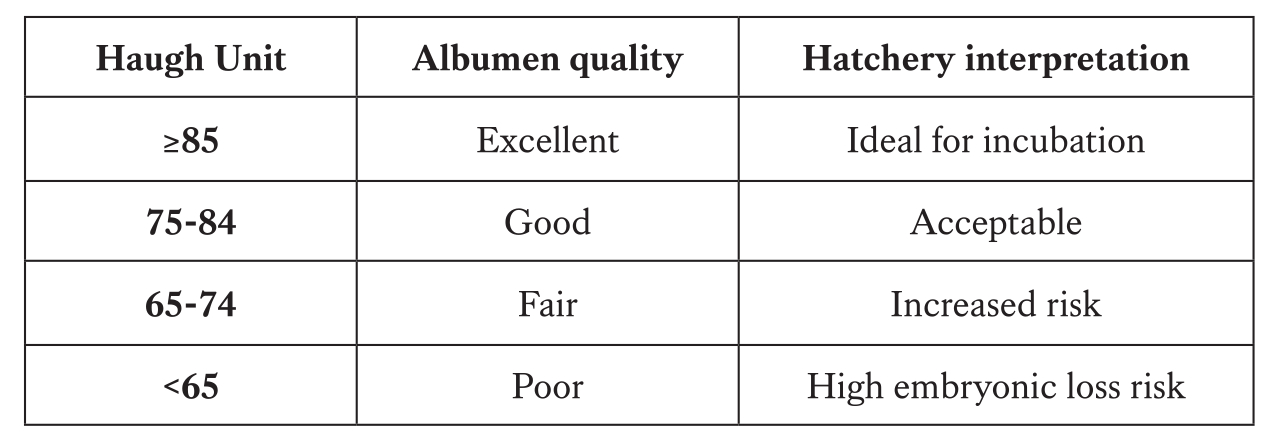
Albumen (egg white) is the primary water, protein and antimicrobial source for the developing embryo. Poor albumen quality leads to higher early embryonic mortality, and weak CAM (chorioallantoic membrane) development.
With poor storage, high temperature, or long holding time, HU drops rapidly and directly, reducing hatchability and chick quality.
Yolk quality
The yolk supplies energy, fat, vitamins and minerals to the embryo. Good yolk quality characteristics are a round, firm yolk, a strong vitelline membrane, stable yolk position, high balanced fatty acid profile, and high vitamin A, E, and carotenoid content. Poor yolk quality causes early embryonic death, weak chicks with low energy, poor immune development, and higher first week mortality.
Air cell quality
The air cell reflects the egg age and the storage quality: fresh eggs have a small, stable air cell; old or poorly stored eggs have a large, unstable air cell.
A large air cell causes excessive moisture loss, delayed internal pipping, weak and dehydrated chicks and higher dead-in-shell rates.
This is why hatching egg quality is the real biological foundation behind every hatchery KPI.
Eggs that should never go into the incubators
Every hatchery should be very strict rejecting unsuitable eggs. Setting bad eggs is not saving eggs, it is actually damaging hatchability, increasing contamination risk and harming overall chick quality.
Eggs that should not be set include:
- Floor eggs
- Dirty or manure-stained eggs
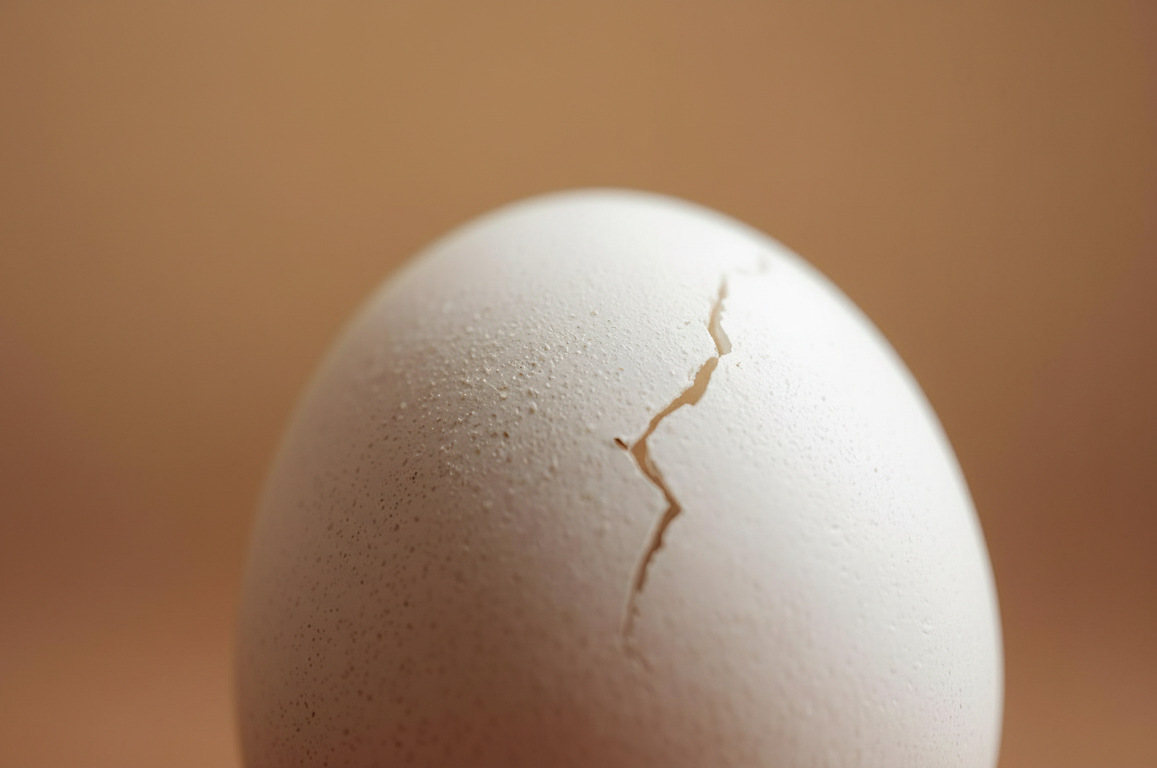
- Cracked and hairline cracked eggs
- Very misshaped eggs
- Double yolk eggs
- Very small or underweight eggs
- Eggs with thin or porous shells
- Very old storage eggs without the proper condition
 When these eggs are set, we actually see higher rates of early deads and late dead-in-shell, more contaminated eggs, more exploding eggs, poor chick quality, weak immunity and higher first week mortality.
So, rejection is not loss, rejection is protection.
What really happens when poor quality eggs are set?
Let’s examine some common bad egg categories and their impact.
 Dirty or contaminated eggs
These eggs carry heavy bacterial and fungal load from feces, litter or environment. Inside the incubator heat and humidity create perfect conditions for bacteria to multiply.
Infection spreads to nearby eggs through air movement, leading to contaminated eggs, rotten eggs, bad smell, exploding eggs and unhealthy chicks. These chicks often develop yolk sac infection and die early.
Floor eggs
Floor eggs absorb moisture, ammonia, dirt and microbes. They usually have weaker shells. These eggs have lower hatchability and produce weak, stressed chicks.
Cracked and hairline cracked eggs
Even very small invisible cracks disturb gas exchange, cause moisture loss and allow bacteria to enter. Embryos in such eggs usually die early or fail to hatch properly. Many fully developed chicks remain dead in shell.
Misshaped or abnormal eggs
If the egg is too round, too long, wrinkled or misshapen, heat transfer becomes uneven and the embryo often malpositions, leading to higher mortality and deformities in hatchlings.
When poor eggs enter the setter, the problem multiplies, not just stays in a single egg. This is why egg selection is a critical biosecurity and performance decision.
How to protect egg quality from farm to incubator?
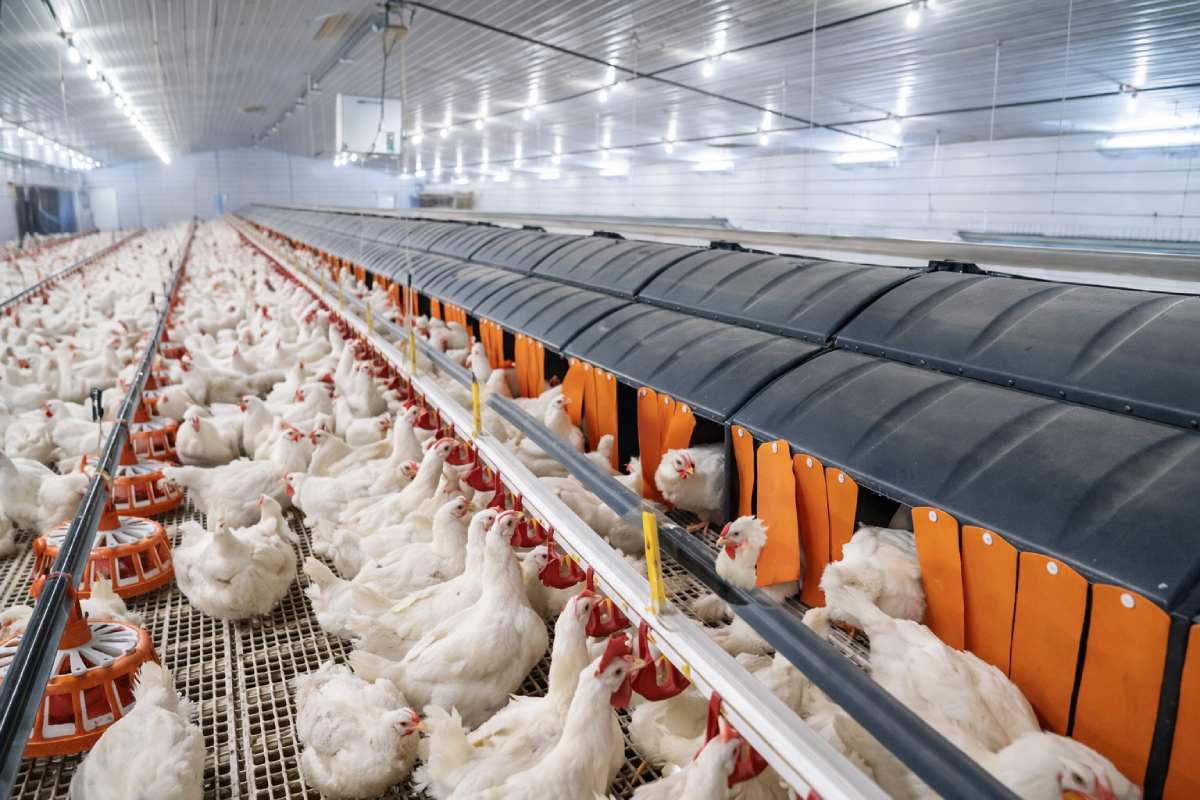
Egg quality management is not only the hatcheries’ duty. It is a full-chain responsibility starting from the breeder farm and continuing until the egg enters the setter.
 1. At the breeder farm
Egg quality is built, not repaired, at the breeder farm.
Nest hygiene and design
Good nest hygiene, comfortable nesting systems and correct nest design are essential. A clean, dry nest reduces dirty eggs and floor eggs. A comfortable nest encourages hens to lay in the nest instead of the floor, which protects shell quality and internal egg quality.
Lighting and flock management
Proper lighting programs and good farm management help hens lay eggs in the nest at the correct time of day. This reduces floor eggs and minimizes the risk of contamination and mechanical damage.
Breeder nutrition and health
Breeder nutrition and health programs play a major role in producing strong shells and high internal egg quality. Balanced calcium, phosphorus, Vitamin D3, trace minerals and good gut health ensure optimal shell strength and albumen quality.
Male management
Male management has a direct impact on fertility and hatchability.
Correct male body weight, uniformity, health and mating activity ensure high fertile egg output and reduce early embryonic losses.
2. Egg collection and on-farm handling
Frequent and gentle egg collection
Eggs should be collected gently and frequently, then placed into clean, disinfected trays. Rough handling causes micro-cracks and internal damage that are often invisible but significantly reduce hatchability and chick quality.
Correct egg orientation
Eggs should always be kept large end up to protect the air cell and embryo position. They should never be stored or transported small end up.
Egg washing and sanitation
Eggs should never be washed in an uncontrolled manner.
If washing is required, it must follow a strict validated procedure with the correct water temperature, sanitizer concentration, and drying; otherwise shell pores open and bacteria penetrate.
3. Automatic/robotic egg collection and handling systems
With automatic or robotic egg collection systems, mechanical precision becomes a major egg quality risk factor.
Key concerns and control points
- Conveyor speed and drop heights. Excessive speed or long drop distances cause hairline cracks and internal shell damage. All transfer points must be cushioned and optimized for minimum impact.
- Roller alignment and belt condition. Misaligned rollers, worn belts or damaged cushions increase vibration and impact stress. Regular inspection and maintenance are essential.
- Egg jams and back-pressure. Mechanical faults that cause egg congestion lead to collision damage and cracked shells. Sensor alarms must be functional, and staff trained to respond immediately.
- Gentle robotic gripping pressure. Robotic pick and place systems must use correct suction or grip pressure. Too much pressure causes invisible shell damage; too little pressure causes drops and cracks.
- Environmental control during collection. Temperature and humidity around the collection system should prevent condensation. Sudden temperature changes increase bacterial penetration and internal egg contamination.
Transport from farm to hatchery
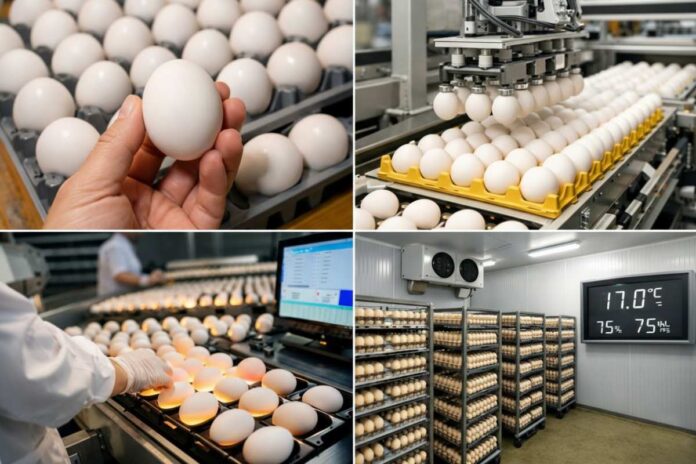
Transport systems must be clean, disinfected, and temperature controlled. Sudden temperature changes, vibration and shocks can damage internal egg structures and encourage condensation. Maintain 18–20 °C and 70–75% RH to prevent shell sweating and moisture-loss shock. Avoid vibration, rough roads, and sudden braking, which cause internal damage.
Egg storage and pre-incubation holding
Egg storage is a critical control point because this is where internal egg quality can either be preserved or lost. The goal of storage is to slow embryo development without damaging albumen quality or increasing microbial risk. For eggs stored for up to 7 days, a temperature of 16 to 18 °C is recommended. If storage extends beyond seven days the temperature should be reduced to 15 to 16 °C to further slow embryonic metabolism and protect albumen quality.
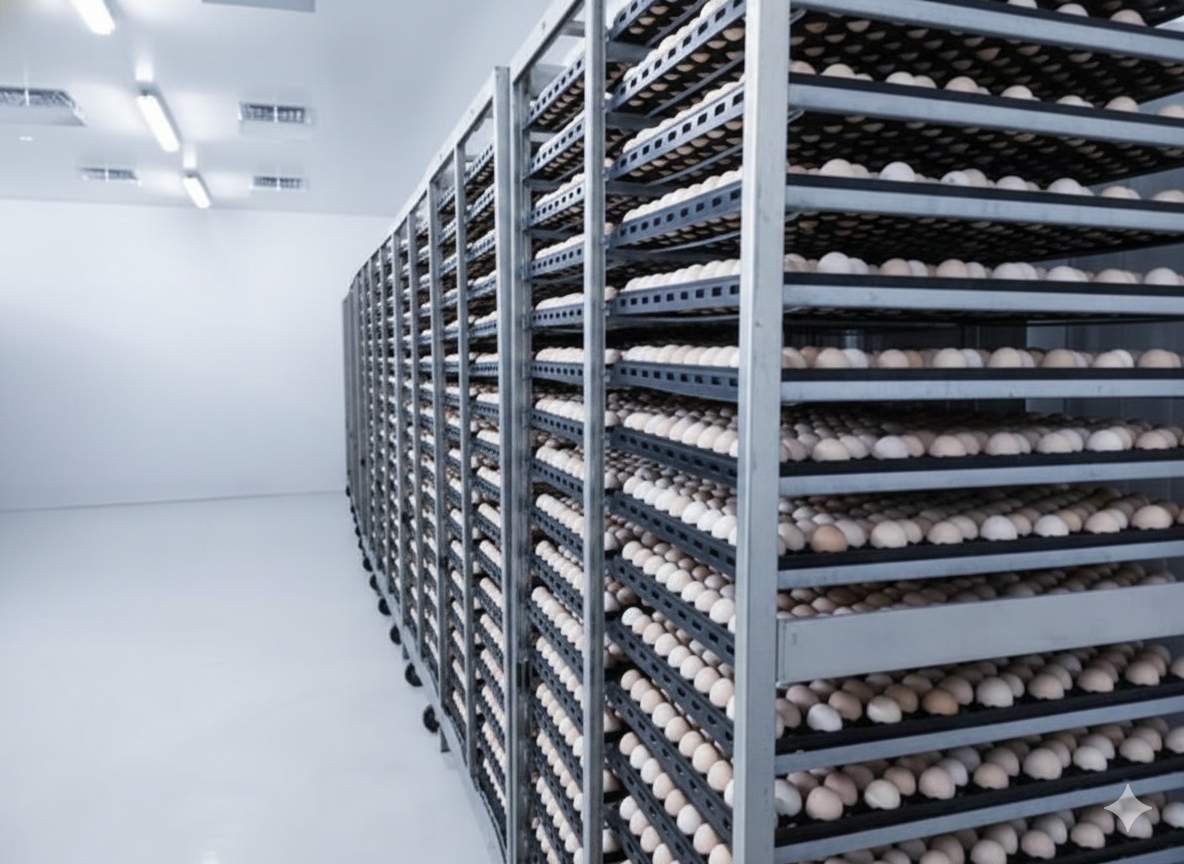
Relative humidity should be maintained between 75 and 80% to prevent excessive moisture loss while avoiding condensation. Too low humidity causes rapid air cell enlargement and dehydration while high humidity increases the risk of sweating and bacterial penetration.
For eggs held longer than seven days, regular turning during storage is essential. Turning prevents the yolk and embryo from sticking to the shell membrane and supports better embryo viability after setting.
Before eggs enter the setter, they must be gradually pre-warmed to 24-26 °C. Slow and uniform warming prevents condensation and thermal shock and allows the embryo to restart development in a controlled manner. Proper storage and pre-incubation holding protect internal egg quality and directly improve hatchability, chick quality, and hatch window uniformity.
Egg grading and sorting
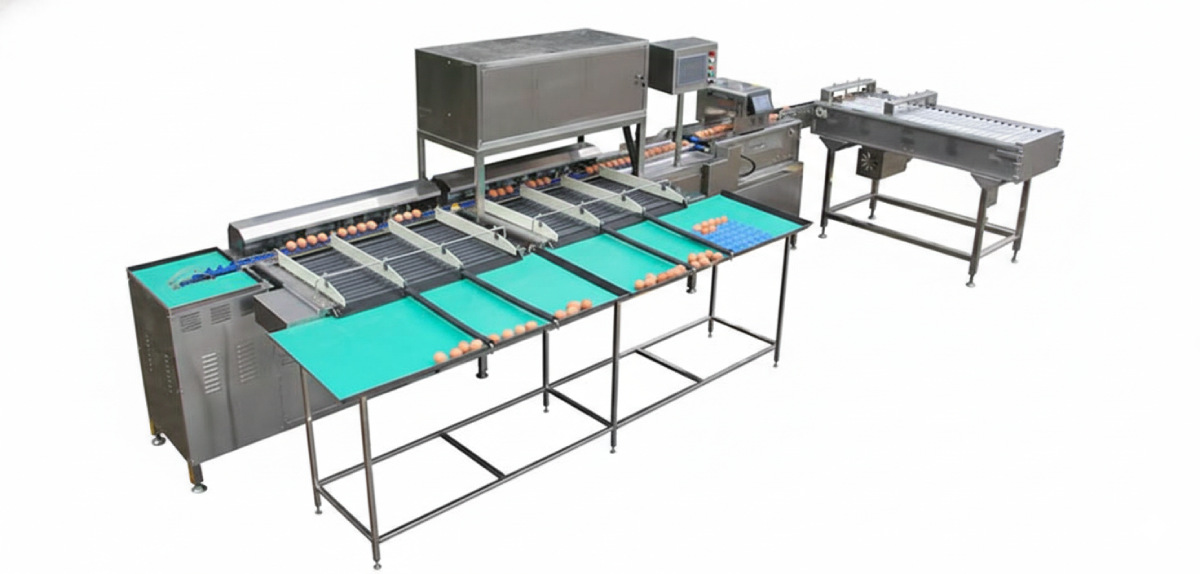
Before setting, eggs must be carefully graded. Modern hatcheries around the world now use technology such as automatic graders, crack detectors, vision systems and scanners to support human decision-making. Grading helps maintain uniform egg size, remove defective eggs and support more synchronized hatches.
What happens to KPIs when egg quality is ignored?
When egg quality is not properly managed, hatcheries face lower hatchability, higher early or late mortality, poor hatch window, weak chicks, greater chick culling, more sanitation problems and higher costs. This problem does not end in the hatchery; it follows the bird into the farm, affecting growth, health, feed conversion ratio (FCR), and overall profitability.
Poor egg quality is not just a hatchery issue; it is full-chain economic loss.
Conclusion
In a world where poultry businesses compete on efficiency, biosecurity and performance, hatching egg quality remains the most powerful driver of hatchery success. The journey to a strong chick begins at the breeder house and continues through every handling step and ends inside the incubator.
Healthy, uniform, high quality chicks are always the result of healthy, clean, well-handled eggs.
Hatcheries that truly respect egg quality will always achieve better hatchability, stronger chicks, improved field results and higher profitability.
In the end, the rule is always true: great chicks start from great eggs.