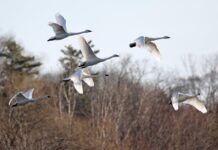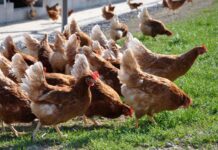

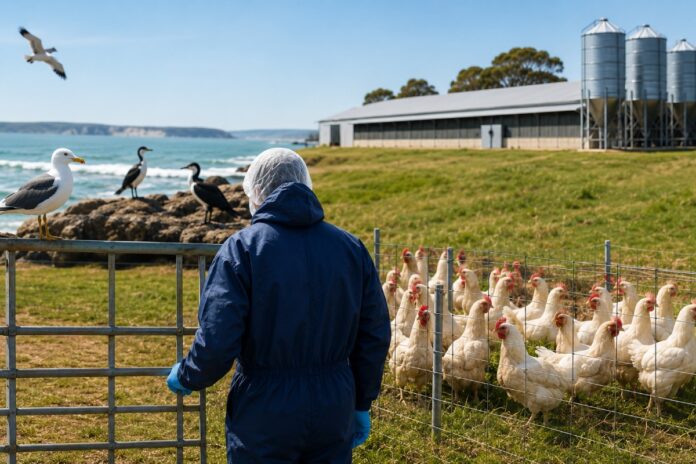
Australia’s poultry industry is strengthening biosecurity following recent H5N1 detections in seabirds in Western Australia and South Australia. No cases have been reported in commercial poultry farms, while federal and state authorities continue preparedness, surveillance and coordination with industry.
According to the Australian Government, preparedness efforts have been underway for several years and involve collaboration between federal and state governments, industry organisations and scientific experts. A dedicated HPAI Preparedness Taskforce was established in 2024, while national surveillance programmes continue to monitor wildlife and poultry as preparedness activities continue across the country.
Poultry producers have also increased on-farm biosecurity. In Western Australia, Ingham’s announced a lockdown of its poultry operations, restricting non-essential access to farms. The company has also announced measures aimed at reducing contact between poultry and wild birds.
Routine biosecurity measures across the industry include strict controls on farm access, restrictions on staff movements between poultry sites, deterrence of wild birds, and rodent and insect control.
Australia has previously dealt with H7-type avian influenza outbreaks in poultry farms. The most recent outbreaks, between 2024 and 2025, affected farms in Victoria, New South Wales and the Australian Capital Territory before being declared eradicated in July 2025.
Unlike those earlier H7 outbreaks, H5N1 has caused severe losses in birds and marine mammals in other parts of the world, making prevention and early detection a priority for the Australian poultry sector.
Australia does not routinely vaccinate commercial poultry against H5N1. Current policy is based on maintaining Australia’s avian influenza-free status without vaccination, supporting international trade in poultry products.
The Australian Government has committed more than AUD 113 million to strengthen surveillance, preparedness and response capacity for a potential H5N1 incursion. National response arrangements include wildlife and poultry surveillance, border biosecurity measures, emergency response plans and coordination with industry to minimise animal health and trade impacts.
Source: www.agriculture.gov.au
Read also: Avian flu reaches all continents: Australia confirms second H5N1 case in wildlife