
This document provides practical advice for managers to reduce the effects of heat on flocks by modifying management and nutritional practices to improve bird comfort and reduce the impact on flock performance.
The following points instigate the main factors of management and nutrition to help support commercial birds:
Management
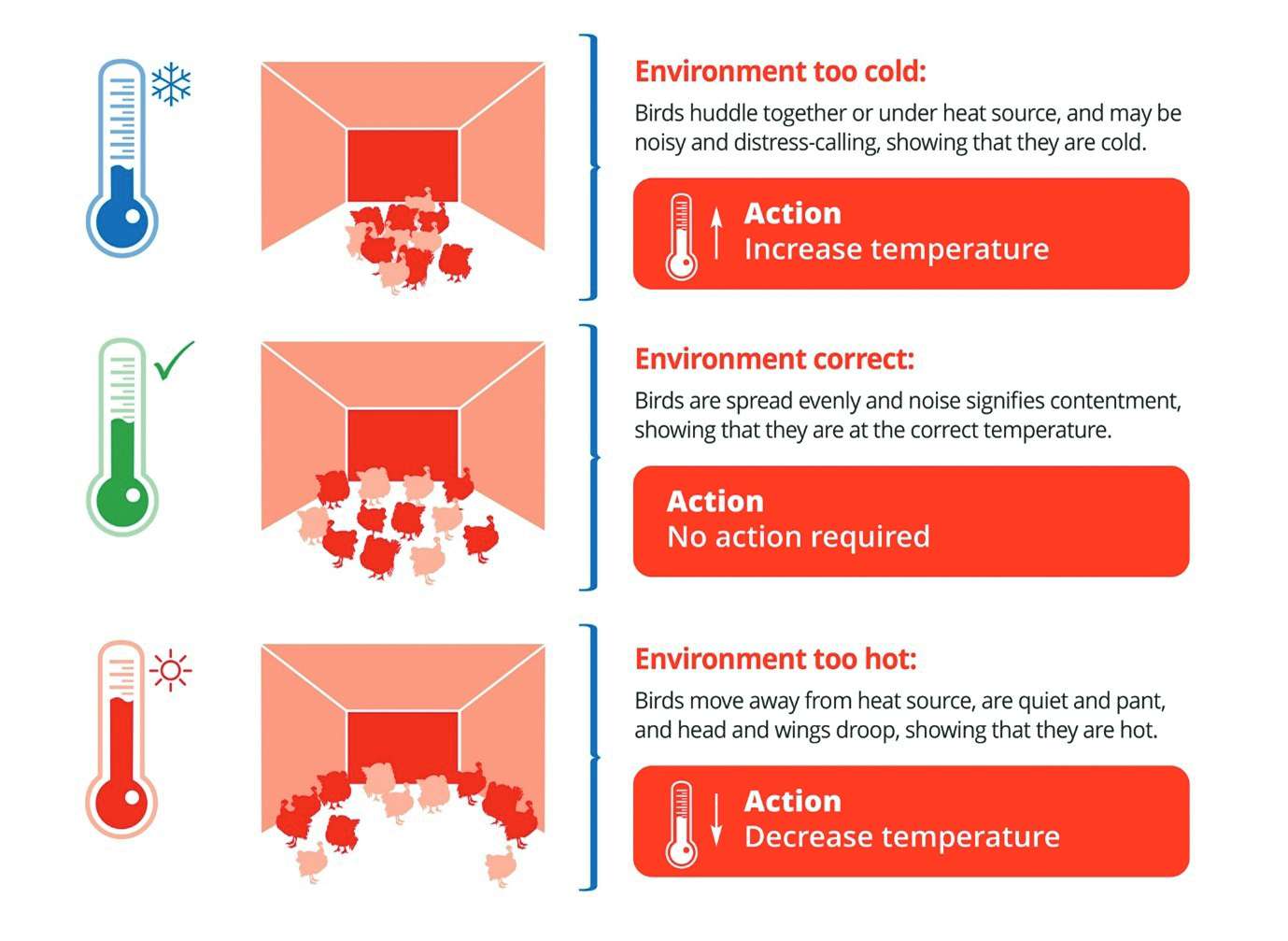
Monitor birds closely
Watch for signs of heat stress like panting, wings spread, reduced activity, or not eating. Take quick action if you see these signs.
Increase ventilation
Make sure all fans are working and clean, and lower thermostat settings during cooler times to help birds recover from heat. Ensure all fan belts are tightened and fan housings are kept free of dust.
Use fans and air movement
Provide extra fans or circulatory fans to increase air speed over the birds, which helps them lose heat and feel cooler. (1 fan per 120m² floor space, spaced 10–15m apart).
Use evaporative cooling
In dry weather, use misting or fogging systems to reduce air temperature in the house. Only use when humidity is not too high.
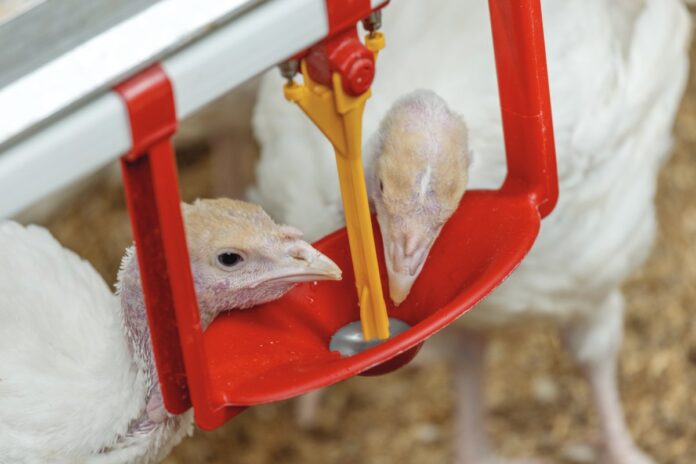
Offer plenty of fresh, cool water
Check water lines and drinkers regularly, and increase water availability as birds will drink more in hot weather (can be double). Water can be cooled by flushing water lines at regular intervals.
Reduce bird density
If possible, lower the number of birds in the house at placement to help keep temperatures down and improve airflow as the majority of heat is produced by the birds themselves.
Insulate houses
Make sure the house is well insulated to prevent heat from building up inside. Poor roof insulation can create an “oven” effect so even if the air temperature isn’t too warm then it can heat the house up.
Keep litter dry
Avoid wet litter, as wet litter can make heat stress worse and increase humidity in the shed.
Work schedule
Avoid handling or moving birds during the warmest time of day. If required, events such as bird movements, weighing, vaccination, re-bedding/litter tilling etc. should be done at cooler times of the day.
Encourage feeding
Encourage feeding behaviour in the morning and evening and/or feed during the night during the cooler periods.
 Nutrition
Assess the degree of reduction in feed intake during the period of warm weather and calculate the degree of increase in feed nutrient density required to compensate for the reduction in feed intake. Feed intake can reduce by as much as 30% during warm weather. Intake of critical nutrients associated with growth is affected.
Provide higher density diets to support performance in warm weather conditions. Increase the digestible amino acid density and mineral density of the diets.
Focus dietary changes on the grower and finisher diets. Heat output is highest in larger, faster growing birds.
Maintain the energy density of diets, higher energy density can tend to reduce feed intake which compromises performance.
Reduce the proportion of starch in the diet. Starch has a higher heat increment of feeding than lipids. Increase oil addition to the diets, oils have a higher effective energy value and hence are metabolized without the same degree of metabolic load on the bird as carbohydrates.
Minimize excess dietary crude protein. Minimising excess crude protein reduces the metabolic load on the bird during heat stress and will reduce the energy cost of excreting surplus nitrogen. A reduction in dietary crude protein level of as little as 0.5% (while maintaining amino acid density and balance) has been associated with improved production during hot weather.
Maintain the amino acid balance of the diet, especially lower order amino acids.
Supplement the diet with increased electrolytes, this will help replace electrolytes lost during a heat stress period. Supplementing the feed with vitamins A, D, C, E and B group vitamins can support performance and liveability. Increase the micronutrient intake by the bird at the onset of warm weather and maintain intakes through the period of heat stress.
Provide trace minerals in an organic form as these are considered more bioavailable than inorganic forms and will support the bird during heat stress periods.
Optimise feed physical quality, both crumb and pellet quality, in order to facilitate efficient feed intake and reduce the time and energy spent eating a meal.
This article is provided by © Aviagen Turkeys