
Brazil has confirmed an outbreak of Newcastle disease at a commercial turkey farm in Nova Itaberaba, in the southern state of Santa Catarina. Agriculture and Livestock Minister André de Paula announced the case on 19 October 2026, following laboratory confirmation the previous day.
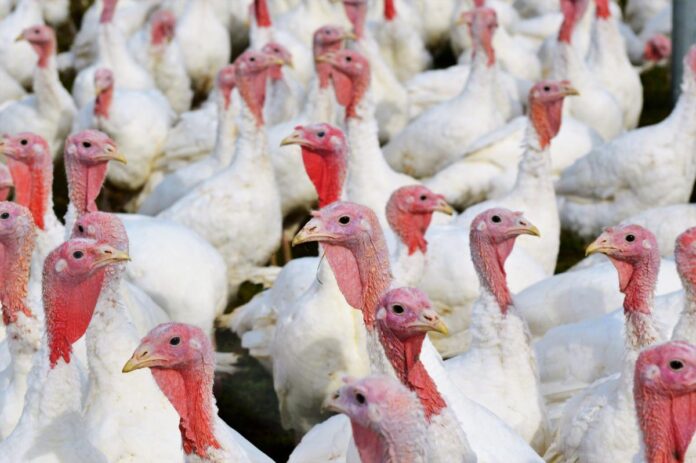
The affected farm houses approximately 6,000 meat turkeys. According to Brazil’s Ministry of Agriculture and Livestock (MAPA), none of the birds had left the premises or entered the food supply chain.
The infection was detected during an epidemiological investigation, although no clinical signs were observed in the birds, according to Brazilian poultry industry associations. Laboratory confirmation came on 18 October from the Federal Agricultural Defence Laboratory in São Paulo (LFDA-SP), a reference laboratory recognised by the World Organisation for Animal Health (WOAH).
Measures adopted
Santa Catarina’s Official Veterinary Service has placed the farm under quarantine and suspended bird movements. The planned response includes sanitary culling of the flock, followed by cleaning and disinfection of the premises.
Surveillance will also cover approximately 133 properties in the affected area, spanning four municipalities. Veterinary teams are expected to visit the properties, examine birds and collect samples for laboratory testing to check for possible further infections.
Animal health emergency
The Brazilian government has declared a 60-day animal health emergency in four municipalities in western Santa Catarina: Nova Itaberaba, Águas Frias, Coronel Freitas and Nova Erechim.
The declaration, established by MAPA Ordinance No. 962 of 19 October 2026, provides the framework for intensified surveillance and disease control activities.
According to Brazilian officials, WOAH was notified of the outbreak on 18 October. MAPA also said it was informing Brazil’s trading partners in accordance with international animal health requirements.
The ministry stressed that poultry products subjected to official sanitary inspection remain safe for human consumption.
Impact on exports
The outbreak has raised concerns over Brazil’s poultry exports, particularly shipments to China, one of the country’s largest markets.
According to Bloomberg, the affected farm supplies MBRF Global Foods exclusively, delivering turkeys to its processing facility in Chapecó. The farm was closed by veterinary authorities, while MBRF declined to comment on the case.
Trade restrictions have become an immediate concern. Ricardo Santin, president of the Brazilian Animal Protein Association (ABPA), told Reuters that the sanitary agreement between Brazil and China requires Brazilian poultry exports to be suspended following confirmation of Newcastle disease.
The AgriBiz reported that the suspension was due to take effect on 19 October. Chinese authorities will determine whether the restrictions should apply nationwide or be limited to Santa Catarina or the area surrounding the outbreak.
Mexico has also suspended imports of poultry products from Brazil. The measure, announced by Mexican agricultural authorities on 19 October, covers poultry meat, offal, fertile eggs, chicks up to three days old and several categories of live birds. The suspension is intended to protect Mexico’s domestic poultry industry.
The impact on Brazilian exporters will depend partly on how long these restrictions remain in place and whether importing countries agree to limit them to the affected region.
A risk for the poultry supply chain
Newcastle disease is a highly contagious viral infection affecting chickens, turkeys and other avian species. It can cause respiratory, nervous and digestive symptoms, with severe cases leading to high mortality and substantial production losses.
Infections may also occur without obvious clinical signs, as reported at the Santa Catarina farm, making surveillance essential for early detection.
For Brazil’s poultry industry, the immediate priority is to contain the outbreak and prevent further transmission. The results of the epidemiological investigation will also influence when affected export markets can reopen.
See also:
Newcastle disease: fourth outbreak in the Utiel area raises concerns for Valencia’s poultry sector