
Portugal’s Directorate-General for Food and Veterinary Affairs (DGAV) has issued a new warning on avian influenza, urging travellers returning from affected areas to avoid contact with birds for at least four days. The recommendations, published on 20 October, come as autumn migration raises the risk of the virus spreading across Europe.
DGAV warns that avian influenza can be introduced through direct contact with infected birds or contaminated materials, including faeces, feathers, clothing, footwear and other objects brought back from affected regions.
Precautions for travellers
People travelling to countries or regions affected by avian influenza are advised to avoid contact with wild birds and visits to live-bird markets, poultry exhibitions, zoos and other bird-related recreational activities.
DGAV also reminds travellers that certain birds and avian products cannot be brought into Portugal from areas subject to sanitary restrictions or from third countries where avian influenza has been confirmed or where the risk of infection is considered high. These include poultry and other birds, poultry meat, eggs, derived products, untreated feathers and untreated hunting trophies.
DGAV recommends avoiding contact with birds for at least four days after returning to Portugal, as part of its measures to prevent the inadvertent introduction of avian influenza.
Avian influenza risk remains in Europe
Portugal regained its status as a country free from highly pathogenic avian influenza (HPAI) on 13 March 2026, following the control of outbreaks recorded in 2025. Nevertheless, the virus has continued to circulate among wild birds. DGAV reported three H5N1 detections in wild birds collected between May and August 2026, with no outbreaks in poultry or captive birds reported in its 2026 surveillance update.
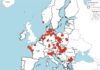
Across Europe, the situation remains a concern. According to the European Food Safety Authority (EFSA), almost 8,000 avian influenza outbreaks were detected between October 2025 and June 2026. Detections in wild birds were four times higher than during the previous winter, while most infections in poultry holdings were linked to indirect contact with wild birds.
Biosecurity measures remain in force
Although DGAV lifted some restrictions in April 2026, poultry keepers must continue to follow biosecurity requirements.
Under Edital No. 49, the authority removed the previous mandatory confinement of domestic birds in high-risk areas and lifted restrictions on certain indoor poultry events. However, suspected cases must still be reported immediately, and poultry keepers are required to take measures to prevent direct or indirect contact with wild birds.
The document also sets out conditions for live-bird fairs and markets, including the separation of different bird species, cleaning and disinfection procedures, and requirements for the origin and health of birds offered for sale.
Additional rules remain in place in areas classified as high-risk under Aviso No. 21, issued in December 2025. Poultry kept outdoors must be protected from wild birds, while feed and drinking water must be provided in sheltered areas. Water from surface reservoirs accessible to wild birds cannot be used unless appropriately treated.
These precautions are also central to the European #NoBirdFlu campaign, promoted by EFSA and the European Commission ahead of the autumn migration season. The campaign encourages farmers and backyard flock owners to control access to their premises, maintain cleaning and disinfection routines, prevent contact with wild birds, keep poultry species separate and report suspected disease promptly.
DGAV has been promoting the campaign in Portugal, calling on poultry keepers to maintain preventive measures even in the absence of outbreaks on commercial farms.