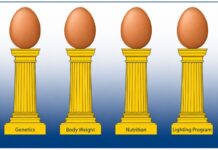

The production cycle of laying hens conventionally ends before 80 weeks old as laying persistency declines rapidly, and cumulative egg production takes a toll on birds’ health, robustness, and egg quality. However, maintaining optimal performance until week 100 can be done due to recent advancements on genetic improvement, layer nutrition, and poultry welfare.
Common endpoints of layer production cycles
Layer flocks are often replaced before week 80 as saleable egg production declines due to lower laying persistency over time (below 80% after this time) and high cumulative mortality/removal rate. A healthy, well-nourished hen can lay (almost) one egg daily, yet laying ceases if birds struggle to keep up with this laying rate over a long period of time. Thus, laying persistency goes down rapidly as the number of birds capable of retaining such performance shrinks over time. Due to genetic improvement, current commercial lines of laying hens reach higher peaks of laying rate (>95%), sooner (<20 weeks of age), and for longer (>90% until week 60). To achieve this genetic potential, a clear understanding of the interaction between environment, metabolic status, and nutritional demands is paramount to sustain poultry health, liveability, and production outcomes as flocks age.
Laying one egg daily for more than a year is nutritionally challenging, and hens carry on with such demand by mobilizing nutrients from body reserves and feed intake. Therefore, developing and maintaining a proper body condition during rearing and lay is the first step to achieve high laying persistency in old flocks. Failure to do so results in poor egg quality (e.g., breakable eggshell and soft eggs), skeletal disorders, and cessation of laying. Feeding programs should then ensure that hens consume and satisfy their nutritional needs particularly as they age since old hens lay heavier and bigger eggs over time. This raises daily nutritional requirements and the risk of complications during late lay. From pre-lay to late lay, the liver regulates nutrient mobilization for steady, long-term egg production while excessive liver fattening and other disorders jeopardize egg quality leading to laying cease and sudden death in severe cases. Also, high mineral demand for eggshell formation weakens hens’ skeleton over time resulting in locomotory difficulties and bone disorders (e.g., fractures and deviations) as hens age. Besides feeding strategies to ameliorate this problem, designing facilities to prevent collisions, avoiding competition for resources, and facilitating bone-loading exercises before bone calcification are practical solutions to reduce these osteoporosis-related problems and associated mortality.
How to support laying hens’ longevity
Extending the production cycle of laying hens must come along management and nutritional improvements that boost hen longevity and long-term performance without jeopardizing their health or well-being. To attain this goal, proper caretaking of layer flocks must start during early rearing since last minute improvements benefit old flock performance in the short term. Birds start aging at hatch, and lifetime stress accelerates this process lowering lifetime expectancy and survival odds. Physical, emotional, and nutritional stress trigger metabolic mechanisms to help cope with immediate challenges but may carry negative long-term effects, especially in immunocompromised and poorly resilient individuals. Stress prevention, stress-relief practices, physical activity, and nutritional supplementation with vitamins, antioxidants, and immunostimulants are powerful tools to support poultry longevity and lifetime performance by increasing resilience and robustness.
Optimal skeleton and muscle development during early rearing is crucial to sustain long-term egg production. Providing quality diets and stimulating feed intake during the rearing help pullets reach target body weight, support proper organ development, build up nutrient reserves, and enlarge feeding capacity before lay onset. Compromising any of these aspects during development puts at risk the end goal of accomplishing long-living, productive hens. For example, implementing chick feeding strategies that support feeding patterns with two peaks, at dawn and dusk, promotes feed intake before lights go off during lay, facilitating nutrient availability when the egg forms. The rearing phase is also a sensitive phase for strengthening the pullets’ immune system through a thoughtful vaccination plan and provision of probiotics and dietary immunostimulants, on top of complying with high biosecurity practices throughout the production cycle.
Management practices that support liver health, bone strength, and muscle development in laying hens are paramount for long-term egg production. During lay, phase feeding helps birds meet the increasing demands for minerals, protein, and fat required to sustain a long-term laying rate. The liver mediates this nutrient turnover, and employing feeding strategies to safeguard proper liver functioning prevents performance decline and high mortality as the flock ages. Up-to-date studies suggest that adequate layer nutrition (well-balanced diets, proper fatty acids profile, and dietary supplementation with vitamins, minerals, and phytogenics to lower inflammation and oxidative stress) can prolong hen lifetime performance and longevity.
Long-term egg production cycles can benefit poultry egg industry to produce more efficiently and sustainably due to improved lifetime egg production per hen and a lower flock replacement rate. Still, the decision-making process behind increasing the production cycle of laying hens up to week 100 must align with proper hen quality (physically healthy, resilient, and robust), good egg quality, and optimal laying persistency. Otherwise, production efficiency drops, welfare concerns may rise, and replacing flocks sooner becomes cost-effective.