
Introduction: the 2050 protein challenge
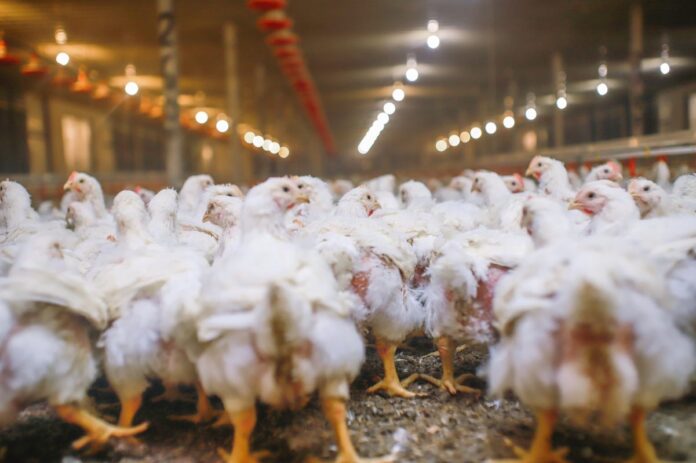
Global demand for animal protein is projected to rise by more than 70% by 2050, driven by population growth and urbanization. Poultry, as a relatively efficient protein source, will play a central role in meeting this demand. However, sustainability challenges—environmental impact, resource efficiency, and animal welfare—must be addressed to ensure resilience. Recent reviews emphasize the need for integrated nutritional and environmental strategies to balance productivity with ecological responsibility1.
Nutritional innovation for sustainable growth
Feed formulation is a critical driver of sustainability. Traditional reliance on soybean meal (SBM) contributes to deforestation and high carbon footprints. Studies highlight the potential of alternative protein sources such as insect meal, algae, and agro-industrial by-products, which can reduce SBM dependence by 20–40% while maintaining bird performance. Optimized carbohydrate utilization and microbial management further enhance feed efficiency, lowering nitrogen excretion and greenhouse gas emissions.
Circular resource management
Circular economy principles are increasingly applied to poultry systems. Manure valorization into biofertilizers, renewable energy adoption, and water recycling are proven strategies to reduce waste and emissions. Life cycle assessment (LCA) studies confirm that combining feed innovations with environmental management yields greater reductions in carbon footprint than isolated measures. This integrated approach aligns poultry production with climate-smart agriculture goals2.
Digital and biotechnological frontiers
Emerging digital tools and biotechnology are reshaping sustainability pathways. Precision feeding systems, sensor-based monitoring, and AI-driven resource optimization improve efficiency and reduce environmental burdens. Biotechnology advances, such as nanomaterial-based feed additives and microbial engineering, open new frontiers for sustainable protein production. These innovations support the transition toward a circular bioeconomy, where poultry production contributes to broader food system resilience3.
Policy and global collaboration
Scientific progress must be reinforced by policy frameworks and international collaboration. Regulatory incentives for renewable energy, sustainable feed adoption, and waste valorization are essential. Moreover, global partnerships—linking academia, industry, and governments—can accelerate the scaling of innovations. Evidence suggests that region-specific sustainability plans, supported by digital technologies, will be crucial to adapt strategies to local contexts while meeting global protein needs.
Conclusion
Advancing sustainability in poultry production requires a multi-dimensional strategy: nutritional innovation, circular resource management, digital integration, and supportive policy frameworks. By aligning these elements, the poultry industry can meet the projected 2050 protein demand while minimizing environmental impact. The convergence of science, technology, and governance offers a pathway toward resilient, climate-smart poultry systems that safeguard both food security and ecological integrity.
References:
- Nutritional, microbial and environmental perspectives in sustainable broiler production (2026).
- Sustainable Poultry Production Through Novel Nutrition and Circular Resource Management (2026).
- Digital innovation integration into biotechnology for development of sustainable protein frontiers for poultry nutrition in a circular bioeconomy (2026).