
The European broiler production sector stands at a crossroads. On one hand, growing demand for animal protein drives the need for efficiency; on the other, regulatory and consumer pressure for a shift toward more sustainable practices and higher animal welfare standards. Against this backdrop, slow-growing broiler breeds represent a promising alternative, provided they are applied within large-scale, sustainable models that balance economic implications with strategies to reduce environmental impact. The sector’s success will depend on integrating science, market, and communication.
Innovation and new challenges for the European poultry chain
 Today the European broiler production sector stands at a crossroads. On one hand, growing demand for animal protein continues to drive the need for efficiency; on the other, regulatory and consumer pressure for a shift toward more sustainable practices and animal-friendly approaches. In Italy, as in many other European countries, conventional intensive farming systems are often associated with high resource use and greenhouse gas emissions, as well as concerns about animal welfare and meat quality. Nevertheless, it is worth noting that broiler production systems are among the least impactful within livestock production in terms of greenhouse gas emissions (de Vries & de Boer, 2010; Poore & Nemecek, 2018), although they contribute significantly to nitrogen and phosphorus emissions, which may lead to acidification and eutrophication. Within the European Union, poultry and pig production systems are estimated to account for approximately 85% of total ammonia emissions.
Against this backdrop, it is essential to identify strategies that can reduce environmental impact, improve animal welfare, and meet consumer demands. Slow-growing chicken breeds represent a promising alternative. Although they require longer production cycles, they offer significant benefits in terms of animal welfare and meat quality, while also presenting new challenges in resource management.
The European thematic network BroilerNet
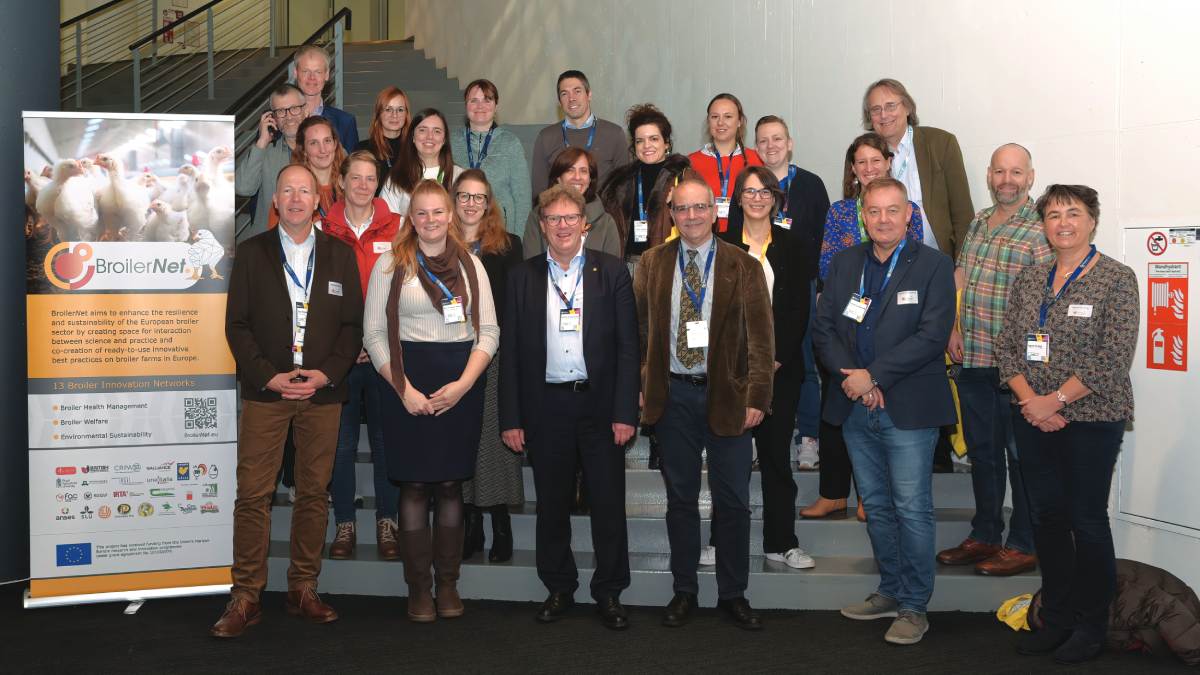
The BroilerNet thematic network for innovation in broiler production (https://broilernet.eu) brings together farmers, researchers, veterinarians, and advisors from 13 European countries. Funded by the Horizon Europe research and innovation programme, the initiative aims to enhance the resilience and sustainability of the European broiler sector by creating a platform where science and practice can interact, fostering the co-creation of ready-to-use innovative best practices for broiler farms across Europe. Italian partners in the project include CRPA in Reggio Emilia (leader of the work package on environmental sustainability) and Unaitalia.
BroilerNet has identified and assessed the feasibility of innovative best practices and ready-to-apply research solutions addressing the most urgent innovation needs in three key areas: environmental sustainability, animal welfare, and health management. The use of slow-growing broiler breeds emerged as one of the poultry sector’s main challenges, a finding also confirmed through consultations with breeder associations in the BroilerNet partner countries. The use of such breeds is required under European organic production rules and recommended in free-range farming.
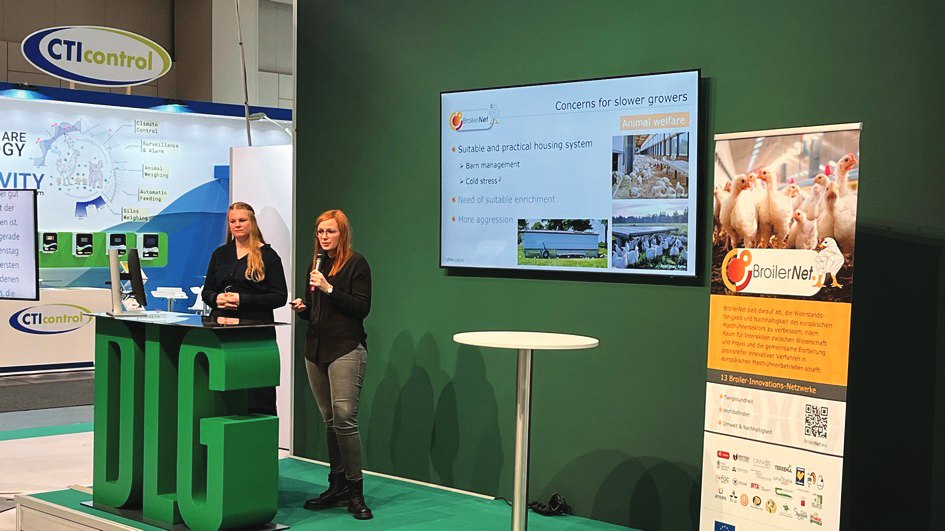
Ingrid de Jong and Jamie Kater of Wageningen Livestock Research organised a BroilerNet workshop on the topic of slow-growing breeds on November 15, 2024, in Hannover (Germany), during the international EuroTier fair. The event served as an important forum for discussion among researchers, farmers, and industry stakeholders, with the aim of identifying key innovation needs and sharing best practices to support the sustainability of production systems based on slower-growing chicken strains.
Several priority needs emerged from the workshop. These included the need to define a clear maximum growth rate, establish shared metrics to assess animal welfare benefits associated with different genetic lines, and develop common tools and indicators for comparing the sustainability of various production systems. Participants also underscored the importance of reliable auditing procedures to certify slow-growing poultry systems.
Another central issue concerned the design of environmental enrichments and outdoor spaces, such as verandas or “winter gardens”, for organic and free-range farms, as well as the optimization of ventilation and heating in low-density housing. Participants also emphasised the need for vaccination programmes tailored to slow-growing breeds, together with strengthened biosecurity measures, which must be maintained for longer periods in outdoor systems where there is a higher risk of contact with wild birds or predators.
From a nutritional standpoint, it was reiterated that slow-growing breeds require specific feeding programmes that ensure gradual yet consistent growth while safeguarding bone, muscle, and immune health. From a management and economic perspective, participants identified financial uncertainty, investment risks, and competition from imported meat as key barriers to the large-scale adoption of these production systems.
Communication with consumers also emerged as a crucial factor. Participants expressed the need to educate the public on the sustainability attributes and ethical values associated with poultry meat from slow-growing breeds, using supply chain data to enhance product value and differentiate it from conventional production.
To address the most pressing challenges, the workshop proposed several best practices, including increased investment in staff training and capacity building in animal welfare, biosecurity, and management of birds in alternative systems. Economically, the group suggested developing fairer value chain agreements to distribute margins more evenly, alongside adopting cost-reduction strategies such as using alternative feed ingredients or producing raw materials on-farm, solutions that could also improve the overall environmental footprint of poultry farms.
European Chicken Commitment: higher welfare standards
In parallel with the research and experimental activities promoted by BroilerNet, market players and civil society organisations are also driving change in the sector. The European Chicken Commitment (ECC), an initiative launched by more than 30 animal protection organisations and endorsed by over 300 retailers and food companies (source: Chicken Watch), plays a key role.
The ECC has introduced farming standards that go beyond the minimum requirements laid down in European legislation, including the use of slow-growing breeds, increased space allowances, access to natural light, environmental enrichment and more welfare-oriented slaughter methods. Slow-growing breeds reduce common health issues seen in conventional genetic lines, such as skeletal deformities and lameness, and support the expression of natural behaviours like foraging and dust bathing.
By contrast, fast-growing lines show higher post-mortem rejection rates due to “technopathies” such as ascites, discolouration, cellulitis, perihepatitis, and pectoral muscle myopathies (Barbut, 2020; Baxter et al., 2021; Rayner et al., 2020). Improving welfare can therefore also have positive effects on environmental impact by reducing mortality and carcass rejection at slaughter (Kyriazakis et al., 2024).
Pros and cons of slow-growing chickens
Slow-growing breeds offer clear advantages: enhanced animal welfare, fewer health issues, expression of natural behaviours, and superior organoleptic meat qualities. However, they require longer production cycles and greater resources to reach slaughter weight, resulting in increased feed and water consumption, as well as effluent production and nitrogen/phosphorus emissions.
From an economic perspective, higher costs translate into elevated retail prices, limiting adoption without market support or incentives. As reported by Sell-Kubiak et al. (2017), genetic selection for better feed efficiency in broilers has yielded benefits in faster growth, lower feed conversion ratio, and environmental sustainability through reduced greenhouse gas emissions.
Progress requires more than general efficiency gains; understanding genes influencing nutrient utilisation is key. For example, selecting chickens with an improved capacity to digest wheat can cut solid droppings by up to 61%, liquid by 56%, nitrates by 13%, and phosphates by 30% (De Verdal et al., 2011).
The gut microbiota plays a pivotal role by recycling nitrogen through uric acid breakdown and converting ammonia into bacterial proteins, promoting sustainable nutrient use in poultry farming. Better insights into microbiota-host interactions could enhance feed digestion, further cutting waste and associated greenhouse gas emissions.
Environmental and economic impacts: ECC and WUR study results
Environmental assessments highlight the complexity of the issue. Several studies have produced variable results on the carbon footprint impact of slow-growing farming, depending on the methodological approach adopted.
A recent study commissioned by AVEC and conducted by the UK agriculture consultancy ADAS estimated that adopting ECC standards in European broiler systems would increase greenhouse gas emissions by 24.4%, rising from 6.68 to 8.31 kg CO₂e per kilogram of produced meat. This increase is largely due to the longer growth cycle of slow-growing chickens, higher feed consumption, and lower meat yield compared to conventional broilers. In other words, more time and resources are needed to produce the same amount of final product, raising emissions per kilogram of saleable product.
A more moderate estimate comes from Wageningen University & Research’s (WUR) Greenwell Project, which calculates an average emissions increase of about 6.3% compared to conventional broilers. In the Dutch model, higher-welfare systems show slightly lower feed efficiency, but the emissions rise is less pronounced than in the ECC study.
The difference between the two results largely depends on methodological differences. The ECC analysis measures impact per kilogram of saleable meat, including post-farming stages like slaughter and processing, and accounting for lower yields from slow-growing breeds. In contrast, WUR uses liveweight kilogram at slaughter as the reference, without post-slaughter losses.
From an economic standpoint, adopting ECC standards would significantly raise production costs, estimated by ADAS on behalf of AVEC (the EU umbrella association for national poultry sector representatives) at ~+37.5% per kilogram of meat versus conventional systems. Beyond this operational hike, maintaining current EU chicken production levels under ECC standards would require building about 10,000 new barns, with an estimated investment of €8.243 billion based on ~€420 per m² of production space.
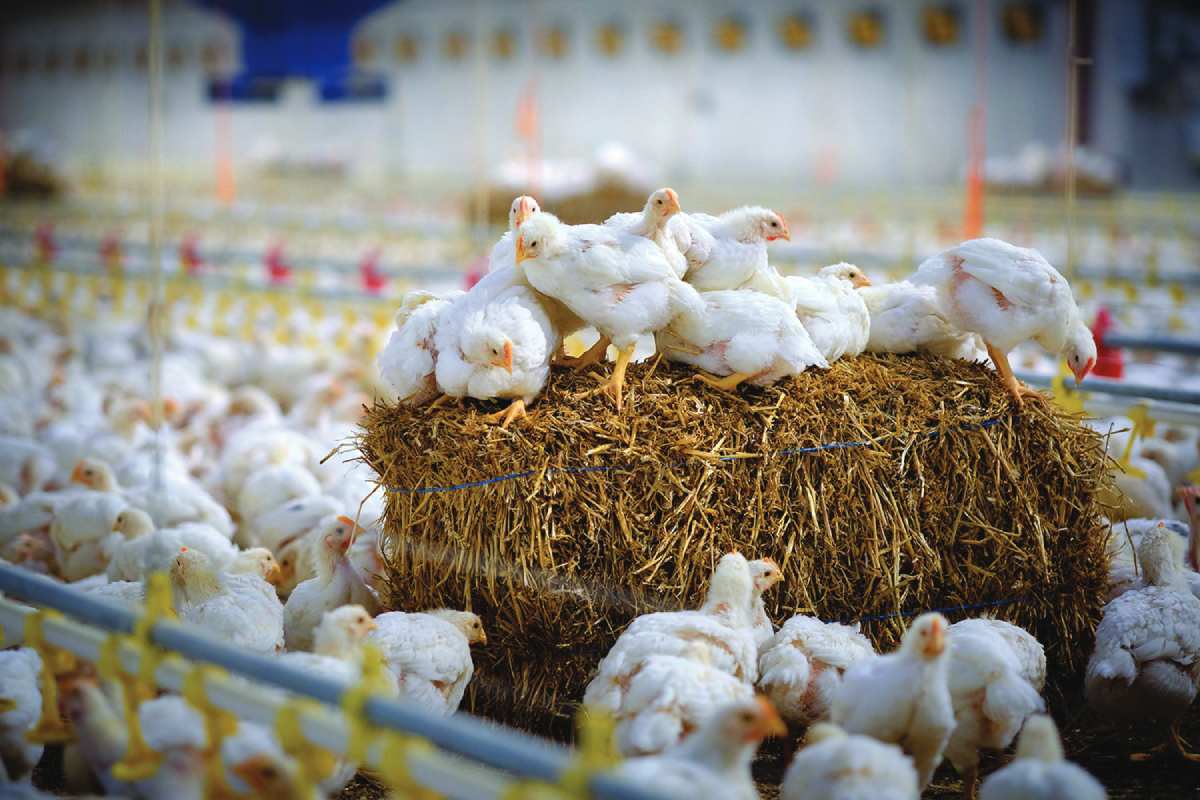
Source: Wageningen Livestock Research.
Studies by Wageningen University & Research (WUR) under the Greenwell project confirm cost increases but at a lower level (+19% at farm level). However, the higher market value of products from higher-welfare systems can partially offset these costs, allowing farmers to maintain profitability levels comparable to those of conventional systems.
Conclusion
The future of broiler production in Europe will increasingly be shaped by consumer choices. A portion of these consumers is sensitive to sustainability issues but also to market prices, which remain one of the main purchase factors alongside taste and food safety (Ferrari, 2024).
Slow-growing broiler farming can offer a practical solution that balances animal welfare and meat quality. Achieving sustainability at scale requires an integrated approach that also addresses economic implications and strategies to mitigate environmental impact. Only by combining science, market dynamics, and effective communication can slow-growing poultry become a benchmark model for more ethical and sustainable food production in Europe.