
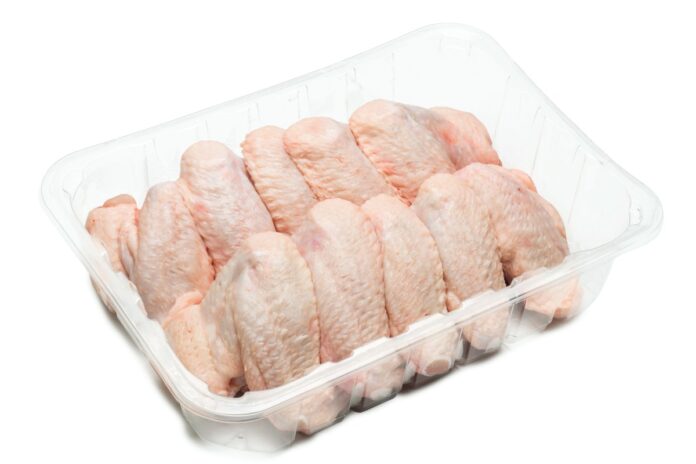
The wings are the least physically prominent part of broiler carcasses, representing some 12% of their dry, dressed weight, and their least meaty portion, as well. Additionally, at the dawn of the modern broiler industry era, because they did not share the same anatomical and organoleptic attributes of the breast and legs, the wings had been seen as a byproduct of the cutup process with an unnoticed commercial value. Therefore, they were used for broth and other unappetizing culinary preparations.However, wings’ fate underwent a meaningful overturn late in 1964, when Teressa Bellissimo, the co-owner of Anchor Bar, Buffalo, in upstate New York, served deep-fried leftover wings tossed in hot cayenne pepper sauce as a late-night meal for her son and his friends, thus reportedly creating the famous Buffalo wings. Teressa couldn’t ever imagine that her improvised meal would change, dramatically and forever, the commercial image enjoyed by the wings, which moved in the following years from the backstage to under the spotlight of the modern broiler industry scenario. Added to the menus of other countless food joints across the US, including fast-food giants’ stores, over the following decades, the spicy fried wings gained ground and became a very popular staple among consumers in the country and around the world, as well. The steady increase in the consumption of wings has finally opened the broiler industry’s eyes, that recognizing their commercial potential, raised the cut from low-profile category all the way up to the premium category!Today’s broiler reaches market weight much younger than its ancestors a few decades ago did, but, in contraposition, is physically fragile due to lacking maturity. Therefore, they require careful handling alongside the processing chain to prevent the intrinsic threats entrenched in each step they go through, from day one through processing,ending up injuring their sensitive anatomy. Carcass damages are very unwelcome for increasing the percentage of salvaging and downgrades and lowering the saleable weight and processing yield, as well, what weakens the plant’s economic performance and the business’ profitability.Although the entire carcass is susceptible to bruises, experience shows the wings are more vulnerable to injuries than breast and legs. Wings bruises, fractures and pop-ups, defects that plague the global poultry industry, originate from several operations (farm, catching, transportation, and processing plant) and causes. Therefore, to shield the wings from injuries it is essential to deploy a holistic approach of the processing chain.
At farm, securing the flocks’ calmness, especially at older age, to avoid birds’ unrest, fluttering, and pileups lead to injured carcasses and wings, is a crucial management practice. However, in frontal opposition to it, flock thinning is still widely adopted by the poultry industry, although being a proven cause of wing bruises among other drawbacks (Table 1).
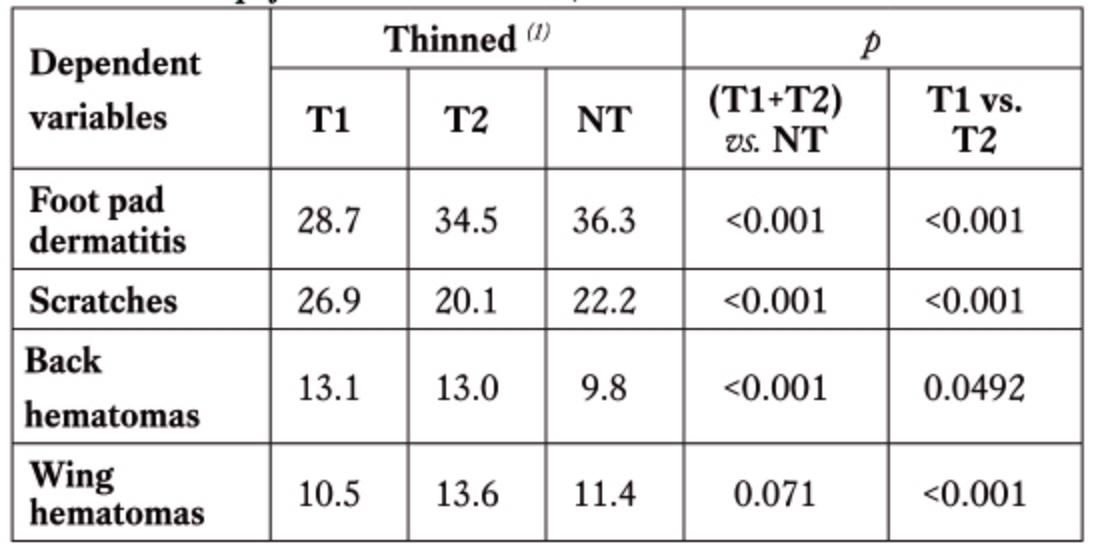
Source: transcript from Villarroel et.al., 2018.
(1) T1 = Birds transported after thinning, T2 = birds remaining after thinning, NT= non-thinned flocks
It is critical to secure the drinkers and feeders to birds’ ratio allows for ad libitum, hassle-free access to water and feed, thus guaranteeing the daily intake of nutrients while preventing birds from fighting for slots to eat and drink, a proven cause of bruises, particularly in unsexed flocks. Concomitantly, securing a high flock’s health status boosts the absorption and utilization of those nutrients towards growth and skeletal strength of the birds.
The house stocking density must be managed aiming at an optimal balance between profitability and carcass physical wholesomeness. Privileging profitability is detrimental to the flock’s performance and carcass quality, alike, as the incidence of damages to wing, besides other downsides, keeps an almost linear cause-effect relationship with the stocking density (Graph 1). Whatever the stocking density set for the farm, it is greatly recommendable using partitions to prevent the free migration of birds across the house disrupts it.
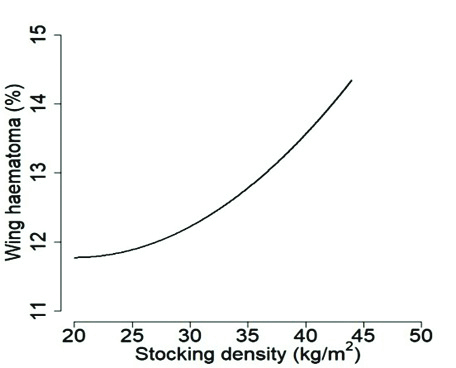
Villarroel et.al., 2018.
The live loads from the farms to plant must be scheduled having not just the killing line speed in mind, but the catching work timing, as well, to guarantee a gentle, hassle-free handling of the birds.
The catching crew must be accurately staffed and properly trained to guarantee the protective and well-timed handling of the birds. Close crew supervision prevents the gentle birds’ handling derails while work progresses, and crew tiredness escalates. Catching the birds individually, yet slower and more costly compared to other methods, is most protective of the carcasses, as the hands placed on both wings, while moving the broilers from the floor to the container, prevent the birds from fluttering. Never catch the birds by wings or feet!
Keeping the transport units in good condition reduces the risk of injuries during crating and transportation. The stocking density of the transportation units must be set having its correlation with the occurrence of carcass and wing damages in mind (Table 2). Training the drivers and monitoring the trips contributes to the gentle and timely delivery of the live loads to the plant, thus minimizing carcass and wing damages.
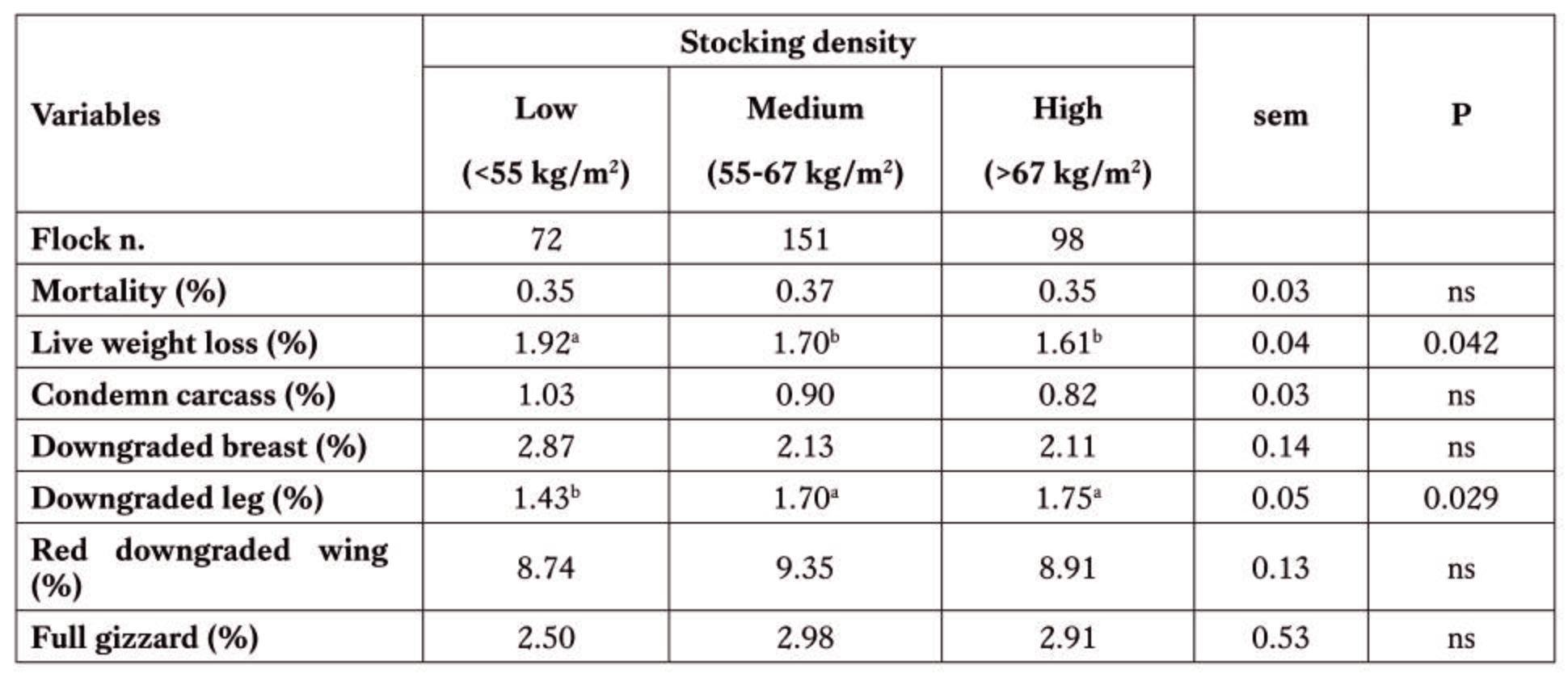
Transcript from Petracci et. al, 2005.
ns = not significant.
a, b means within a row followed by different superscripts letters differ significantly (P <0.05).
At plant, manage the live loads lairage time to reduce the likelihood of wing damages (Graph 2). If birds are transported in crates or drawer containers, hoist them by their legs, only, for shackling. If transported in shelves containers, the bruises, notably on the wings, resulting from the unavoidable dumping of the birds, are regrettably unmanageable.
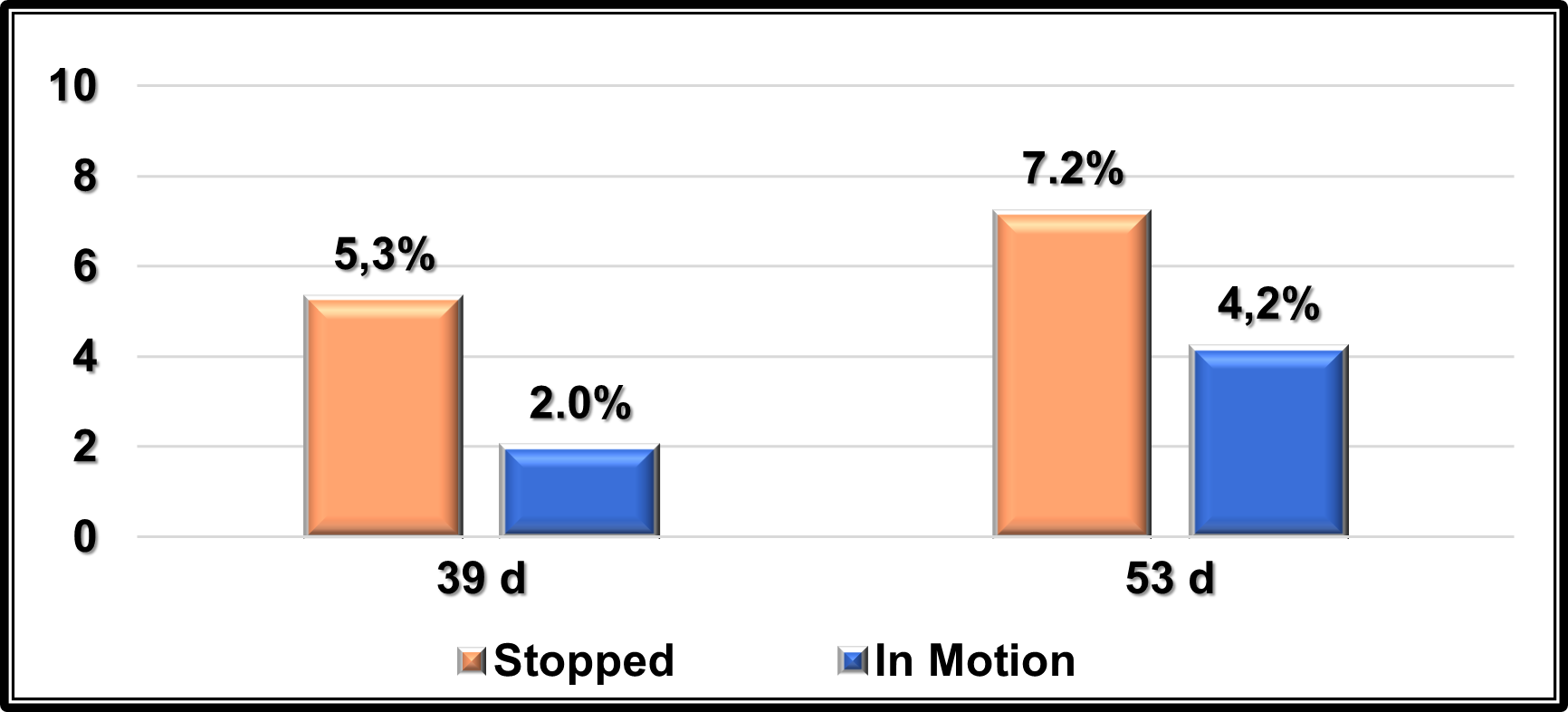
Transcript from Bilgilli & Hess, 1995.
At the hanging station the interaction among workers and equipment must be fully ergonomic to allow for smooth handling and comfortable shackling of the birds. It is strongly advisable that the overhead conveyor from hanging to stunner be the straightest possible to prevent birds’ unrest and flapping, secures obstacle-free flowing of birds, and pairs with a breast comforter to calm birds down, preventing them from fluttering while heading to stunner.
To optimize the electrical stunning and minimize the likelihood of wings injuries, birds must approach the tub and sink only the heads vertically into water, which requires the continuous adjustment of the apparatus to the flock’s size. The tub must be built to match birds’ live weight and prevent their pre-stunning, a recognized cause of wings bruises, and the voltage delivered across the water must be stable and consistent. If CAS (Controlled Atmosphere Stunning) is in place, adhere to manufacturer’s operational instructions for optimal results. Whatever the stunning method used, secure the birds are properly stunned and do not regain consciousness before killing, to prevent the violent flapping, and severe damages to wings, in response to the killing pain.
The bleeding time varies across countries and plants. Set whatever time is best for the plant, having in mind the shortest, the best, to retard the onset of rigor mortis, therefore minimizing its impact on smoothness of scalding and defeathering, and secure it enhances the exsanguination and renders all birds dead.
The scalder and pluckers must operate in symbiotic partnership, with the scalder transferring to the follicles, in a timely manner, the suitable amount of heat required to soften the feathers, and the pluckers securing the thorough defeathering with minimal to no damages to the carcasses and wings.
For an optimal scalding, set the immersion time x temperature binomial in response to the role the killing line speed, bleeding time, birds’ weight, and the scalder technology and physical characteristics play in the plant. For an optimal defeathering, minimize scalder-to-pluckers distance, fine-tune pluckers-birds interaction constantly, use rubber fingers of appropriate hardness and maintain them always in great physical condition, and use lukewarm water in the pluckers.
As seen above, wings became a sought-after chicken cut, whose demand and market value play an important economic role in the business. Therefore, the wing bruises, because they reduce product availability and profitability, are unwelcome and must be tackled to the source. As bruises are of multi-factorial origins, their mitigation requires a holistic and integrated approach to broiler handling, from the farm to the plant, by a multidisciplinary work team focused on finding and working on their root causes.
Literature available from the author upon request.