
The European Commission has placed livestock at the heart of its long-term vision for European agriculture with the adoption of its first-ever Livestock Strategy, a policy framework designed to strengthen the sector’s competitiveness, resilience and sustainability. Accompanied by a Protein Action Plan, the initiative also aims to reduce Europe’s dependence on imported oilseeds and protein crops used for animal feed while reinforcing the EU’s food security.
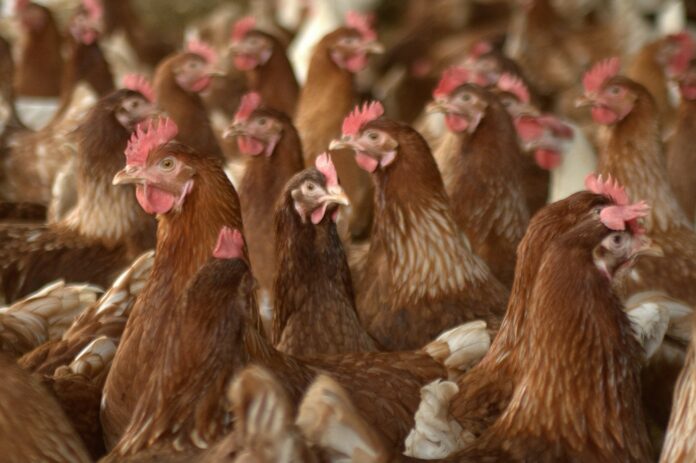
For the poultry industry, the new policy marks an important shift. Alongside measures to improve disease preparedness and support investment, the Commission has confirmed that targeted revisions of animal welfare legislation for laying hens and broilers will be prepared on the basis of scientific evidence, with appropriate transition periods and financial support.
The Commission acknowledges the economic importance of livestock production across the European Union. The sector accounts for around 40% of the EU’s agricultural added value, generates approximately €400 billion in annual turnover and provides employment for about 7 million people on 4 million farms. At the same time, it recognises that producers are operating in an increasingly challenging environment, shaped by rising production costs, animal disease outbreaks, changing market conditions and growing expectations regarding environmental performance and animal welfare.
A central element of the strategy is improving preparedness for future crises. The Commission plans to strengthen risk-management tools, explore new insurance and reinsurance schemes, and help Member States improve disease prevention, early detection and response. Investments to increase climate resilience and reduce dependence on imported inputs also form part of the package.
Improving competitiveness is another key objective. The Commission intends to facilitate investment in innovation, circular economy initiatives and biomass valorisation, while exploring ways to improve access to finance, including support for the transition to cage-free systems. It also plans to strengthen international competitiveness through greater reciprocity in trade, better alignment of production standards where appropriate, and expanded agri-food diplomacy to create new market opportunities.
The sustainability chapter adopts a tailored approach that reflects the diversity of European livestock systems. Alongside future revisions of animal welfare legislation for laying hens, broilers and pigs, the Commission will develop harmonised methods for calculating farm-level livestock emissions, promote better nutrient management and encourage more efficient use of natural resources.
The strategy also highlights the importance of maintaining livestock production across Europe’s rural regions. Planned initiatives include support for locally integrated livestock value chains, measures for vulnerable farming areas and the development of a roadmap for low-capacity and mobile slaughterhouses aimed at reducing animal transport while strengthening regional economies.
Another objective is to increase the visibility of European livestock production. The Commission intends to reinforce EU origin labelling, introduce a European Excellence scheme recognising higher production standards and sustainability, and further promote EU livestock products through dedicated promotion policies and quality schemes.
Alongside the Livestock Strategy, the Commission has introduced a Protein Action Plan to strengthen Europe’s self-sufficiency in feed protein. In 2025, only 25% of the protein derived from oilseeds and protein crops used in the EU originated from European production. The objective is to increase this share to 35% by 2035 by supporting protein crop cultivation, encouraging innovation and strengthening links between food, feed, energy and industrial value chains.
The package has been welcomed by the European Association of Poultry Processors and Poultry Trade (AVEC), which described it as an important change in the way livestock is viewed within EU policy.
According to Birthe Steenberg, AVEC Secretary General, the new approach recognises livestock not only for its production but also for its contribution to food security, resilience and Europe’s strategic autonomy. The association also welcomed the stronger emphasis on disease prevention through surveillance, vaccination, regionalisation and improved early-warning systems, together with the Commission’s commitment to simplify legislation, strengthen circularity and reinforce origin labelling and reciprocity in international trade.
At the same time, AVEC stressed that implementation will determine the strategy’s success. While supporting the Commission’s intention to present targeted revisions of animal welfare legislation for laying hens and broilers by the end of 2026, the association emphasised that future requirements should be based on sound science, robust impact assessments, workable transition periods and financial support that enables producers to invest.
Among the measures AVEC considers particularly important for the poultry meat sector are EU/non-EU origin labelling for products containing poultry meat, simplified permitting procedures, stronger biosecurity and vaccination policies, and genuine reciprocity for imported products.
For the poultry sector, the publication of the strategy marks the beginning rather than the end of the process. Its practical impact will depend on how the proposed measures are translated into legislation, funding and practical support over the coming years. AVEC has made clear that science-based policymaking, workable legislation and fair competition will be essential if the strategy is to deliver lasting benefits for European poultry producers.