
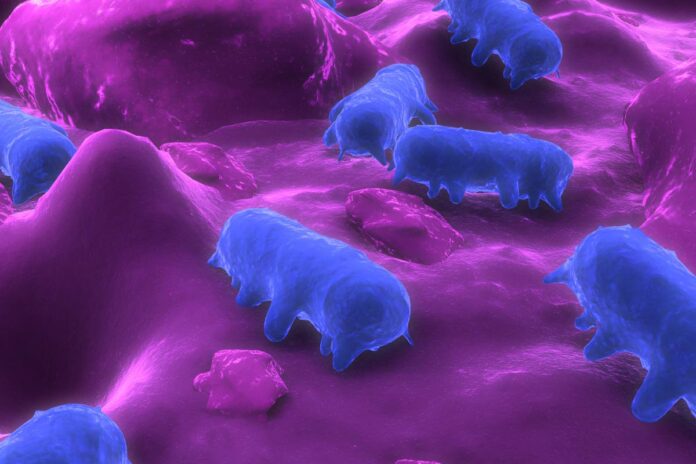
New artificial intelligence (AI)-based tools could help poultry producers detect Salmonella more quickly using smartphone images and bird activity patterns, according to a newly published study conducted at the University of Georgia. The project was funded by the USPOULTRY Foundation to advance innovative solutions for poultry health and food safety. The research is part of the Association’s comprehensive research program, which encompasses all phases of poultry and egg production and processing, and is made possible in part through proceeds from the International Poultry Expo, part of the International Production & Processing Expo.
Project # F-114: Salmonella detector: a mobile application for on-site broiler Salmonella infection diagnosis
(Dr. Guoming, Li, Department of Poultry Science and Institute for Artificial Intelligence, University of Georgia, Athens, Ga.)
A research team led by Dr. Guoming Li explored whether AI and computer vision technologies could provide a faster, more practical approach to monitoring Salmonella in poultry flocks. The project had two primary objectives. First, the team developed and evaluated an AI system capable of predicting the presence of Salmonella using smartphone images of poultry feces. Second, researchers investigated whether changes in bird activity and daily movement patterns, known as the Broiler Activity Index, could serve as early indicators of Salmonella infection.
The findings demonstrate the potential for AI and computer vision to provide rapid, low-cost tools for monitoring Salmonella on poultry farms, offering producers new opportunities to strengthen flock health management and biosecurity.
The research summary can be found on the USPOULTRY website. Information on other Association research may also be obtained by visiting the USPOULTRY website.
Source: U.S. Poultry & Egg Association press release