
The Western egg industry is transitioning to cage-free housing, creating new welfare challenges for hens genetically adapted to battery cages. Research highlights that early-life experiences with structural complexity and load-bearing exercise are crucial for adaptation to aviary systems and long-term skeletal health. Feather pecking remains a significant issue, with new studies exploring the gut-brain axis and effective enrichment strategies. Future progress relies on optimizing genetics, refining pullet management, and developing automated, real-time monitoring tools to enhance welfare standards.
Summary
Whether through changes in animal welfare regulations or corporate commitments for cage-free eggs, most of the egg industry in the Western world is transitioning to cage-free housing for laying hens. The current genetics of commercial hybrids, as well as feeding and management practices were developed for life in conventional cages, and it is not surprising that new welfare problems have emerged. Multi-tiered aviary systems are commonly used for cage-free production to increase stocking capacity in barns. However, behavioural adaptation to these complex housing systems and skeletal health problems, such as keel fractures, are both significant challenges in aviaries. Recent research indicates that pullets’ early-life experiences with environmental complexity, specific structural elements (e.g., perches, ramps), and load-bearing exercise are crucial for their success in adapting to aviaries and for their long-term health and welfare. Feather pecking behaviour, a problem that can result in plumage damage, injury and cannibalism, occurs in all types of housing systems. However, the consequences can be worse in cage-free systems. New areas of research include investigations into the role of the gut-brain axis, the effects of early-life experiences, and effective edible enrichments to prevent feather pecking. Overall, new research is focusing on optimizing hen genetics and pullet management to match the birds to cage-free housing and reduce skeletal and behavioural problems. Finally, research into the development of automated methods for real-time assessment of hen welfare will help prevent problems in the barn and improve animal welfare audits for consumer-driven animal welfare assurances.
Introduction
The last 80 years have witnessed tremendous changes in the way eggs are produced and in the laying hens that produce them. In the decades following World War II, egg production underwent industrialization, transitioning from small, cage-free flocks to larger, cage-based operations as the use of battery cages began in the USA and later spread globally. At the same time, techniques in quantitative genetics were applied in earnest, and selection for production traits produced commercial hybrids with substantially earlier sexual maturity and higher egg production rates. The field of poultry science also flourished, with advances in nutrition and health management. These changes in genetics, housing, and feeding resulted in the production of one of the most nutritious animal proteins with one of the lowest environmental footprints. However, the use of conventional cages also came at a cost. Public perception of battery cages is largely negative and supported by scientific evidence that housing hens in barren cages compromises some important aspects of hen welfare.
Today, whether driven by legislation or corporate commitments, the entire Western world is experiencing another 360 ° shift in housing systems for laying hens. Societal concerns about hen welfare demand the elimination of conventional cages and a return to cage-free, or at least enriched, systems. However, this time, cage-free housing is being implemented on an industrial scale, with flocks of thousands or tens of thousands of hens housed in complex aviary systems. Additionally, we are using a knowledge base developed for the feeding and management of laying hens that were genetically selected for life in cages. Across countries, this shift is occurring through different means, at varying rates, and often with differing standards. The welfare trade-offs between conventional cages versus cage-free housing for laying hens are well established in the scientific literature (Hemsworth, 2021). Therefore, it is no surprise that the shift to cage-free housing presents challenges for producers, new welfare issues for laying hens, and a need for new areas of research to address them.
In this paper, I aim to provide an overview of the changing status of egg production in Europe, USA and Canada, current requirements for laying hen standards and assurances, and some of the animal welfare challenges associated with the change to cage-free housing. I will also discuss new and future areas of research needed to improve the welfare of laying hens.
Status of the egg industries in Europe and North America
Current legislation and corporate commitments
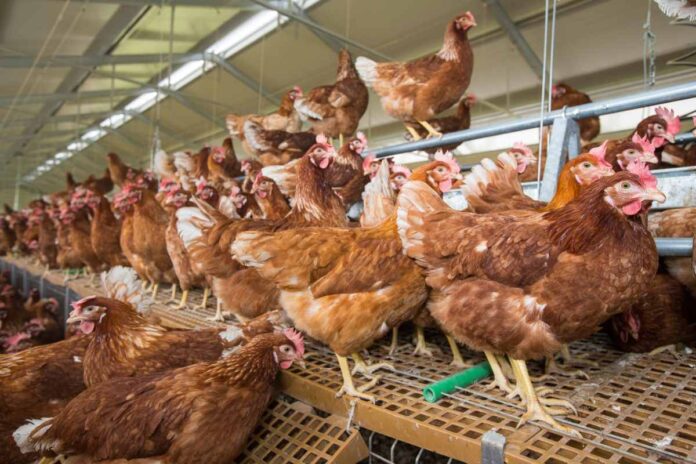
In Europe, the 1999/74/EC Directive on the keeping of laying hens came into effect in January of 2012, allowing cage-free systems and enriched cages with specific requirements for space, nests, perches, foraging, and dustbathing substrate. Some EU member countries have independently banned all types of caging systems. In 2018, a European Citizens’ Initiative (ECI) “End the Cage Age,” calling for an EU-wide ban on the confinement of poultry, pigs, rabbits, and calves, as well as regulations for imported products derived from these systems, was registered with the EU Commission (European Commission, Animal Welfare). The “End the Cage Age” ECI registered 1.4 million signatures by 2019, with many signatures coming from the Netherlands and Germany (where cages are already prohibited). The EC responded by commissioning an updated Scientific Opinion on the welfare of laying hens (EFSA, 2023) and by initiating public consultation, an impact assessment, and a policy initiative to phase out cages in the EU completely. To date, no changes have been made, although the 2025 “Vision for Agriculture,” strategic planning document indicates consideration for updating the EU animal welfare regulations. In 2021, around 47% of eggs in the EU were produced in furnished cages, 36% in cage-free barns, 11% in free-range, and close to 6% in organic, with significant regional differences across EU countries in the housing systems used (Majewski et al., 2024).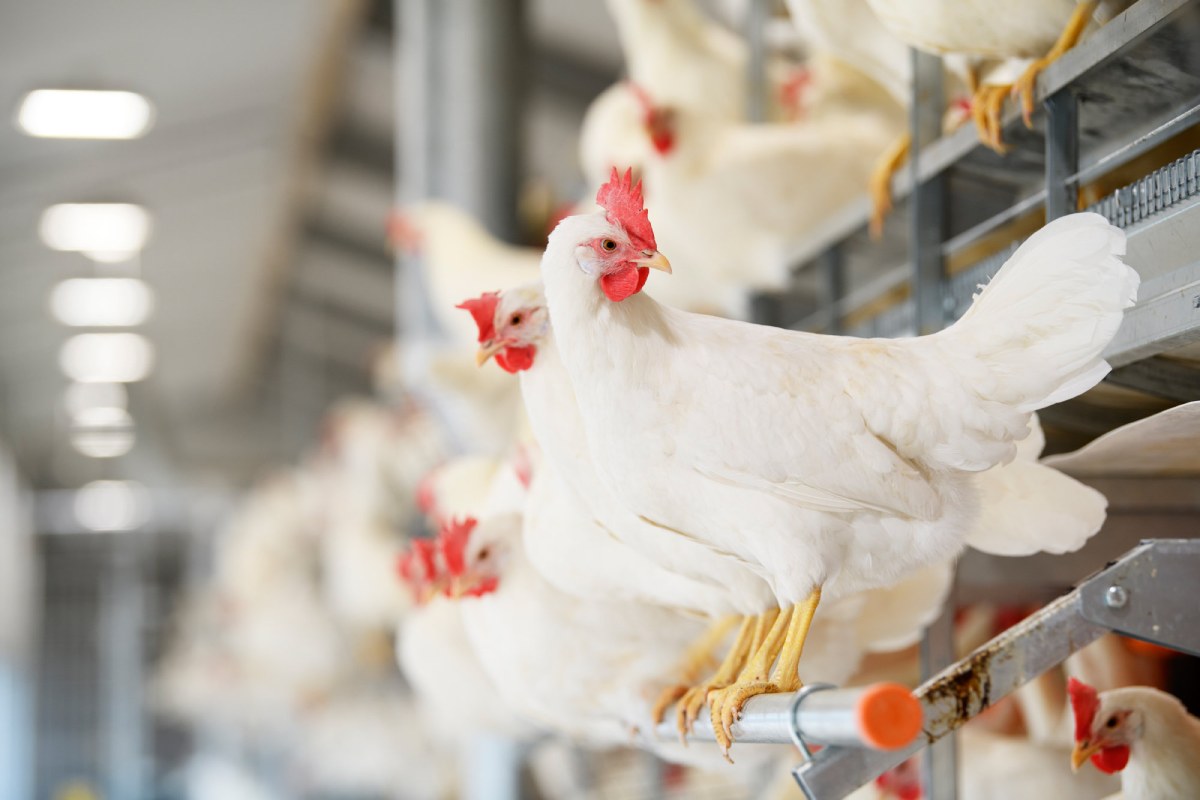
Following the adoption of Brexit in 2020, the United Kingdom maintained the minimum standards set by the EU Directive, which had been formalized into UK legislation in 2006 and 2007 (The Welfare of Farmed Animals (England) Regulations, 2007). Although a large segment of the British egg industry had already moved to enriched cages by 2012, several major supermarket chains made commitments in 2016 to sell only cage-free eggs with a 2025 deadline. According to the Department for Environment, Food and Rural Affairs (DEFRA, 2025), 71% of egg production is free-range, and 17% is enriched cage, with the balance in barn and organic systems.
As of 2024, 10 U.S. states have enacted laws on the production or sale of cage-produced eggs. The impact of these laws was projected to surpass 16% of the hen inventory in the USA by 2026 (USDA Economic Research Service). However, a much greater impact on the US egg industry has been the 2015/2016 corporate commitments by retailers and food service to only sell eggs produced in cage-free systems by 2025. Although not all commitments have been met, the inventory of cage-free laying hens in the US as of October 2025 was estimated at >136M laying hens, or around 46% of the national hen inventory (USDA Egg Markets Overview). Of the cage-free hens in the US, the vast majority are in barns, with a small percentage (~16%) in organic systems and even fewer in free-range or pasture-based systems. The other 54% of US hens are in conventional cages.
The Canadian egg industry is also transitioning away from conventional cages, but on a very different pathway. In 2016, the Egg Farmers of Canada (EFC) announced that they would voluntarily stop using conventional cages by 2036. The Code of Practice for the Care and Handling of Pullets and Laying Hens was published the following year, requiring that all hens be provided with amenities for nesting, perching, and foraging by 2036, and all enriched cage systems installed after 2032 to include amenities to provide opportunities for dustbathing (NFACC, 2017). As a supply-managed industry, the EFC embarked on a steady, organized transition to prevent market disruptions. Although the global wave of corporate commitments also hit Canada in 2016, the Retail Council of Canada, representing the major grocery store chains, retracted their cage-free pledge in 2021, instead indicating support for the National Farm Animal Care Council, the multi-stakeholder body that develops the Codes of Practice for Canada (Edmiston, 2025). When the 2017 Code was published, close to 90% of hens in Canada were housed in conventional cages. As of 2024, just over 43% of the flock was in conventional cages, with close to 37% in enriched and 13.5%, 4.9%, and 1.4% in cage-free barn, organic and free-range systems, respectively (EFC Annual Report, 2024). To date, most Canadian egg producers have opted to transition to enriched cage systems.
Welfare standards, labeling and assurance schemes
In the EU, the table egg industry is the only food animal industry with a harmonized compulsory animal welfare labelling scheme (European Commission, Animal Welfare Labelling). Eggs are stamped with the production method based on EU legislation for laying hens, which defines minimum standards of care for housing in enriched cages and cage-free systems. Across EU countries and the UK, there are also a variety of voluntary and private animal welfare assurance schemes developed to demonstrate higher welfare standards to consumers, such as the Dutch SPCA 3-star Beter Leven system in the Netherlands and RSPCA Assured in the UK.
In the USA, state legislation and corporate commitments for cage-free production generally do not specify any housing or husbandry standards. The United Egg Producers (UEP) developed their own national, industry-led Animal Welfare Guidelines for Cage-free Housing in 2017. Since 1999, the UEP has been working with an independent scientific advisory committee to establish and regularly update animal care guidelines for hens in cages. The scientific committee comprises poultry welfare scientists, veterinarians and an ethicist. The UEP Certified Program involves annual third-party audits of farms to ensure compliance with its guidelines and represents 90% of the eggs produced in the USA (UEP Certified, 2024).
In Canada, the Code of Practice has specific requirements for floor, feeder, nest, perch, and litter or scratch mat space allowances, as well as husbandry and euthanasia practices for pullets and hens across all types of housing systems. The Codes for all farm animals are developed by multi-stakeholder committees (including farmers, processors, government, veterinarians and representation from animal advocacy and retailers) and informed by a Scientific Committee Report on priority welfare issues. Egg farmer compliance with all requirements in the Codes is assured through the national EFC Animal Care Program. Annual on-farm audits are conducted on 2/3 of farms by EFC or provincial field inspectors, with the remaining farms receiving third-party audits. The Animal Care program is bundled with the Start Clean-Stay Clean® food safety program for Egg Quality AssuranceTM certification (available at: https://eggquality.ca).
Animal welfare challenges and research needs
a. The importance of early-life experience
Most cage-free housing today comprises multi-tier aviary systems that allow for increased bird density within the barn. In aviaries, resources such as feeders, drinkers, perches, and nests are located on stacked tiers elevated well above the litter (ground floor). While an aviary may seem like a natural fit for a bird, laying hens are Galliformes, a heavy-bodied, terrestrial species better suited to life on the ground. Although laying hens do still prefer to roost in high places at night, the numerous aerial transitions required to navigate between different tiers and structures in an aviary often prove challenging for them.
When aviaries were first developed in Europe, it soon became apparent that pullets destined for these complex housing systems had to be reared in similarly complex systems (Janczak and Riber, 2015). When not well-prepared for aviary housing, hens are less able to navigate the system and find (or reach) food, water, and nests, resulting in higher mortality and substantially more eggs laid outside the nest and on the floor. Providing perches early in life was found to be particularly important (Gunnarsson et al., 1999), as was providing resources, such as food and water, at multiple levels (Colson et al., 2008), so that pullets can learn to access vertical space. Up until very recently, there was a lack of any husbandry standards or welfare guidelines for pullets, and little research on pullet behavioural and physical development (Giersberg and Rodenburg, 2023). Now that the success and welfare of laying hens in cage-free housing depends on a bird that is calm, experienced, and physically fit, research in this area has been rapidly growing.
In terms of behaviour, rearing experience affects cognitive development, spatial navigation, use of structures, and fearfulness (Campbell et al., 2019). Pullets reared in aviaries versus conventional cages have been shown to perform better on tests of cognition. For example, young hens reared in commercial aviaries were faster to find rewards and had better working memory in a spatial task (Tahamtani et al., 2015) and better success in a T-maze learning task (Rentsch et al., 2023a) than birds reared in conventional cages. Experience with structures such as perches, ramps, and elevated platforms also results in birds performing better on tests of navigation, such as ascending a series of offset platforms to receive a food reward (Gunnarsson et al., 2020; Rentsch et al., 2023b). Early experience with specific structural elements is also important. For example, exposure to ramps in the first weeks of life increases hens’ ramp use in the layer house and reduces hesitancy when moving between levels (Norman et al., 2021). Finally, rearing in more complex environments, such as aviaries, has been shown to reduce fear of novelty (Braenstater et al., 2016; Rentsch et al., 2024a) and improve overall use of 3-dimensional space (Braenstater et al., 2016).
As one might expect, musculoskeletal development is also affected by the rearing environment, as the amount of load-bearing exercise performed increases with the complexity of the rearing system (Pufall et al., 2021; Anderson et al., 2024; Rentsch et al., 2023c). Pullets reared in aviaries versus conventional cages have increased muscle mass (Casey-Trott et al., 2017a), larger keels (Casey-Trott et al., 2017a; Rentsch et al., 2024) and greater cortical cross-sectional area and breaking strength of the long bones (Regmi et al., 2015; Casey-Trott et al., 2017a). The addition of multi-tiered perching structures alone improved load-bearing activity, muscle mass, bone strength and biomarkers of bone formation in growing pullets housed in floor pens (Anderson et al., 2024). Specific designs of rearing systems can also affect pullet development, as there are considerable differences in the amount of vertical space, the number of structures requiring jumping, and the amount of horizontal space available for running, especially in the brooding sections where chicks are kept for the first few weeks (Pufall et al., 2021).
Interestingly, some of the effects on behavioural and musculoskeletal development mentioned above depend on the genetic strain of the bird. White-feathered strains tend to use more and higher structures in the environment and perform more aerial transitions between tiers (Pufall et al., 2021; Rentsch et al., 2023a); they also reap more of the benefits of growing up in a complex aviary than brown-feathered strains (Rentsch et al., 2023b,c).
b. Skeletal health
While the load-bearing exercise inherent to cage-free systems does improve bone strength, fragile bones and, in particular, keel bone fractures, are still a significant problem in laying hens. The prevalence of keel fractures is high; estimates from commercial farms range from 20 to 96%, and the condition can impair mobility and is likely painful for hens, at least in the early stages (see Toscano et al., 2020).
Egg production rate and its associated calcium demand is assumed to be a contributing factor for fragile bones, including the keel, but the etiology of keel fractures is complex. Fractures on the medial section of the keel apparently result from collisions with environmental structures. In contrast, fractures located in the caudal area of the keel are non-traumatic in nature, possibly related to the early onset of lay and the repeated strain from laying eggs prior to complete ossification of the keel (Thøfner et al., 2020). Now that egg production rates are close to their biological limit with hens laying nearly an egg per day, breeding goals for laying hens are focusing on laying persistency and maintaining egg quality to support extended production to over 100 weeks of age. One of the significant challenges of extended laying cycles will be maintaining the skeletal health of laying hens in non-cage systems, and research in this area is ongoing (Gautron et al., 2021). Bone traits are moderately heritable, and one study of genetic correlations between production and bone traits indicated that early onset of puberty, rather than egg production persistency, was associated with a loss of bone quality in laying hens (Dunn et al., 2021). Research is also targeting the identification of behavioural phenotypes associated with stronger bones and fewer keel fractures (Toscano et al., 2020).
More research is needed to optimize rearing for lifelong musculoskeletal health and behaviour. Enhanced bone characteristics, such as increased cortical (structural) bone area resulting from prepubertal load-bearing exercise, are maintained throughout adulthood (Casey-Trott et al., 2017b). Lower prevalence and severity of keel fractures have been observed at the end of lay when pullets were reared in high complexity aviaries versus conventional cages (Casey-Trott et al., 2017c) or less complex aviaries (Rentsch et al., 2024b). Fewer fractures could be due to better navigation skills, differences in keel bone properties or both. Hens reared in aviaries versus cages experienced fewer and less forceful collisions when subsequently housed in enriched systems (Pullin et al., 2020) and laying hens reared with ramps not only used ramps more but also had fewer keel fractures (Norman et al., 2021).
c. Feather pecking
Despite decades of research into its causes and prevention, feather pecking remains one of the major welfare issues in laying hen production. Severe feather pecking, which is the forceful pecking and pulling out of group-mates’ feathers (sometimes followed by feather eating), causes damage to plumage and integument and can lead to cannibalism (van Staaveren and Harlander, 2020). Feather pecking has economic as well as welfare implications, as plumage damage results in increased heat loss and thus, increased energy requirement. Although feather pecking occurs in every type of housing system, it can be worse in non-cage systems as it can spread quickly throughout a large flock through behavioural contagion. In countries that prohibit both beak trimming and cages (e.g., the Netherlands, Germany, Austria), feather pecking outbreaks can be devastating for flock welfare.
One hypothesis for feather pecking is that it is a form of redirected foraging behaviour. However, the problem is much more complex with underlying differences in brain chemistry in birds that perform feather pecking (van Staaveren and Harlander, 2020). Factors influencing feather pecking are numerous and multi-factorial, including lack of foraging substrates, genetics, nutritional factors such as feed composition and form, changes in diet, environmental stressors such as stocking density, air quality, social disruption, and the list goes on. One emerging area of research is the microbiota-gut-brain axis, which is known to influence behaviour (van Staaveren and Harlander, 2021). Populations of laying hens selected for feather pecking have been found to have distinct microbiota profiles, although the relationship between gut microbes and feather pecking is still unclear.
Another area of more applied research on feather pecking is the identification of effective environmental enrichments. Pecking blocks, which are edible enrichments, have been demonstrated to improve plumage condition in laying hens. Commercially available pecking blocks differ in nutrient composition, with some primarily mineral-based and others containing more grains, molasses or fibre (Ehigbor et al., 2025). Interestingly, preferences for different pecking blocks vary across genetic strain, and their use varies across individual birds and time of day, with high calcium mineral-based blocks consumed more at the end of the day, corresponding with calcium appetite. Pecking blocks offer opportunities to reduce feather pecking and give individual birds some choice over the nutrients in their diet.
The rearing experience of pullets can contribute to the development of feather pecking, even when the behaviour does not emerge until later in the bird’s life (Giersberg and Rodenburg, 2023). Research is needed to determine how experience with different foraging materials, interruptions in foraging availability, and dietary changes during rearing predict feather pecking in the layer barn. Additionally, research is needed into how nutritional interventions during rearing, especially during critical periods, might influence feather pecking by altering the microbiota, gut function, or feeding/foraging motivation (Mens et al., 2020).
d. Animal welfare assessment
Animal welfare audits are a reality for many producers worldwide, and there is a sub-discipline within animal welfare science that focuses on practical animal welfare assessments. Since both farmer livelihoods and assurance of animal welfare depend on sound assessment instruments, measures of animal welfare need to be valid (accurate measures of animal welfare), reliable (good inter- and intra-observer repeatability), and feasible (practical and cost-efficient in the field). Although it has long been acknowledged that animal-based measures (ABMs) (e.g., real-time measures of health, mortality and behaviour) are the best animal welfare indicators, most practical assessments still rely on resource- or management-based measures (e.g., checking compliance with housing or husbandry standards), particularly in poultry. One area of research with considerable effort in Europe is the development of animal welfare surveillance systems through tracking of ABMs, for example, at slaughter plants (EFSA, 2021). In some slaughter plants, these measures are already in place for internal food safety monitoring. For laying hens, potential ante- and post-mortem animal welfare measures include feather condition, DOA (dead on arrival), lesions, broken bones, broken keels, and condemnations, which can be tracked at the farm level. There is also considerable research effort to deploy intelligent technologies based on environmental sensors and computer vision in barns to provide real-time monitoring of laying hen health and welfare (Ma et al., 2025). Potential measures include auditory analysis of hen vocalizations and the identification of changes in flock behaviour to enable early detection of illness or outbreaks of feather pecking. A multidisciplinary effort will be critical for validating automated behaviour and welfare measures.
References are available on request.
From the proceedings of the Australian Poultry Science Symposium 2026, by courtesy of Professor Tina M. Widowski