

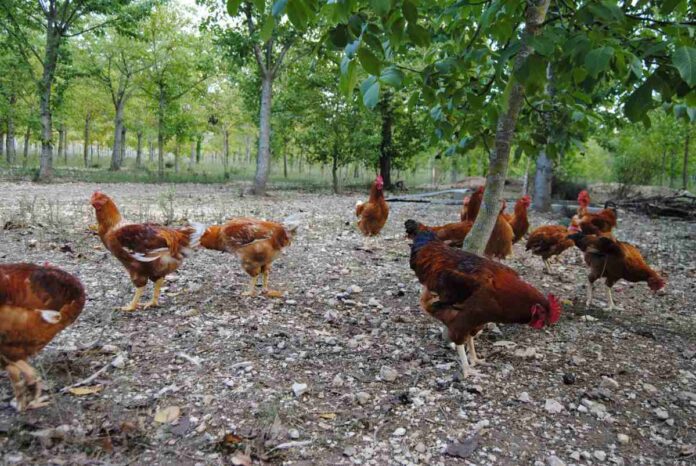
Eight broiler production concepts produced different breast meat profiles, but consumers distinguished far less between them. In the three concepts tested with consumers, juiciness was the only liking attribute that differed significantly.
Breast meat from more extensive broiler production systems can differ substantially in composition, firmness and sensory properties. Whether consumers value those differences is another matter.
A study from the EU-funded mEATquality project compared eight production concepts in the Netherlands and Germany, combining different genotypes, diets, stocking densities and environmental enrichment. Across the physicochemical and sensory data, the authors identified genotype as the principal driver of eating quality.
The consumer test produced a narrower picture. Among the three concepts evaluated, overall liking, appearance, taste, tenderness and texture did not differ significantly. Only juiciness separated two of the samples.
A distinctive profile for S757N
The eight concepts included Hubbard JA757, JA787 and S757N birds in higher-welfare non-organic production in the Netherlands, and JA757, dual-purpose ÖTZ Coffee birds and Lohmann male-layer strains in German organic production. All birds sampled were male.
One concept stood apart in several measurements. Breast meat from S757N-R-30-E contained 24.3% protein and 0.17% fat, resulting in a protein-to-fat ratio of 197.7. It also showed relatively low water losses.
The trained panel scored S757N at 6.2 on a 0–15 juiciness scale. The three higher-welfare non-organic JA757 concepts ranged from 8.1 to 9.4. S757N also had the highest shear force, 10.90 N, and received the highest first-bite hardness and lowest tenderness scores.
The authors relate the lower sensory juiciness of S757N to its very low fat content and firmer texture, discussing the roles of lubrication and water release during chewing.
Consumers were less discriminating
The consumer trial involved 76 Danish adults and three production concepts: JA757-R-39-NE, S757N-R-30-E and organic JA757-R-21-E. The results reported in the paper refer to the blind evaluations.
S757N-R-30-E received a significantly lower juiciness liking score than JA757-R-39-NE. Its scores for overall liking, tenderness and texture were numerically lower, without reaching statistical significance. Overall liking and liking of appearance, taste, tenderness and texture did not differ significantly among the three concepts.
Colour followed a similar pattern. Instrumental measurements and the trained panel distinguished the samples, while consumers did not rate their appearance differently.
The consumer findings concern three of the eight production concepts and a group of 76 Danish participants.
Genetics within a production concept
The integrated analysis placed the JA757 concepts closer to sensory characteristics such as tenderness and juiciness, while S757N had a firmer, less juicy profile. From the combined results, the authors identified genotype as the main driver of eating quality.
Each production concept, however, combined genetics with diet, space allowance and enrichment. These factors were not tested independently in a fully factorial design, so the experiment cannot assign separate causal effects to individual extensification measures.
The JA757 comparisons offer some indication of how limited those individual effects could be within the conditions tested. Roughage supplementation produced no consistent texture differences, nor did higher versus lower stocking density.
Cooking conditions varied between parts of the study as well. Instrumental cooking-loss and texture measurements used vacuum-packed samples heated in water; the trained panel and consumers evaluated oven-roasted meat. Future work proposed by the authors includes matched cooking methods for tenderness and juiciness and factorial experiments capable of separating genotype, diet, stocking density and enrichment.
For now, those factors remain bundled within the production concepts tested. Among the three concepts that reached the consumer panel, the many differences measured in the meat ultimately produced one significant difference in liking: juiciness.
Source
Yigitturk, S., Grønbeck, M.S., Barbut, S., Mielby, L.A., Steenberg, B., Erasmus, S.W. (2026). Can we taste extensiveness? Linking production concepts of extensification factors to the eating quality and consumer liking of chicken breast meat. Poultry Science, 105, 106379. DOI: 10.1016/j.psj.2026.106379.
Licensed under the Creative Commons Attribution License (CC BY 4.0) (http://creativecommons.org/licenses/by/4.0/)
Text summarized and editorially adapted by the Zootecnica – Poultry Magazine editorial team.