
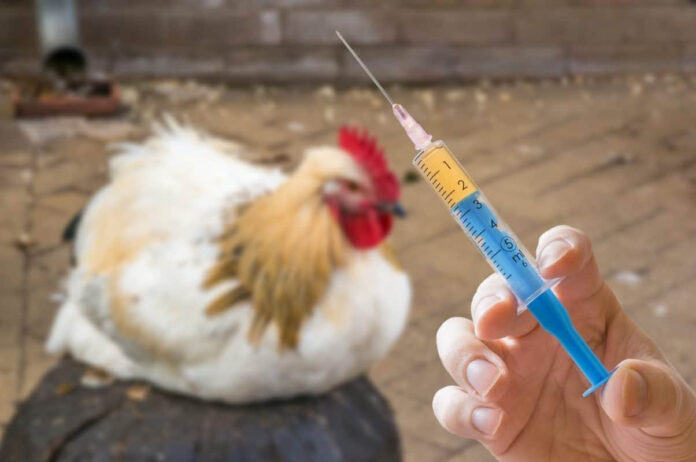
The inactivated vaccine was developed in Bhopal and targets H5N1 clade 2.3.2.1a, which has been detected in Indian poultry.
India has developed its first indigenous H5N1 avian influenza vaccine for chickens, according to the Ministry of Agriculture and Farmers Welfare.
Scientists at the Indian Council of Agricultural Research–National Institute of High Security Animal Diseases (ICAR-NIHSAD) developed the vaccine. In an announcement on 18 November, the ministry said Agriculture Minister Shivraj Singh Chouhan was scheduled to present it at the institute in Bhopal on 20 November 2026.
The inactivated vaccine targets clade 2.3.2.1a of the highly pathogenic H5N1 virus. According to the ministry, this clade has been responsible for most avian influenza outbreaks in chickens. At the time of the announcement, no commercial vaccine specific to the clade was available in India.
A joint assessment by the FAO, WHO and WOAH reported detections of clade 2.3.2.1a in poultry in India and Bangladesh between 1 July 2025 and 1 March 2026. It also reported H5N1 outbreaks involving another clade, 2.3.4.4b, in Indian poultry. The ministry’s announcement does not say whether the new vaccine protects against that clade.
The announcement does not include efficacy trial results or details of regulatory approval, commercial availability or how the vaccine would be used on farms.
Recent outbreaks
India has reported more than 500 outbreaks involving the H5N1 and H5N8 subtypes since its first confirmed outbreak of highly pathogenic H5N1 in poultry in 2006, according to the ministry. Outbreaks can lead to large-scale culling, trade restrictions and financial losses for poultry farmers.
In Tamil Nadu, H5N1 was confirmed in Cuddalore district after birds died on poultry farms. By 13 November, 35,647 birds had died in the affected area, The Federal reported. Authorities began culling within one kilometre of the affected premises and restricted poultry movements.