
Around the world, demand for wing products is strong and growing. In China, the mid-wing is the most popular chicken piece, with five times the price per kilogram of breast fillet. In the USA, chicken wings are a popular snack for  decades, eaten both at home and in fast-food restaurants. After breast meat, wings are the second most favorite portion for US consumers. Chicken wings are also a feature of major sporting events. Over 1.4 billion wings were eaten during this year’s Super Bowl, enough to go round the world three times.
Automation saves labor
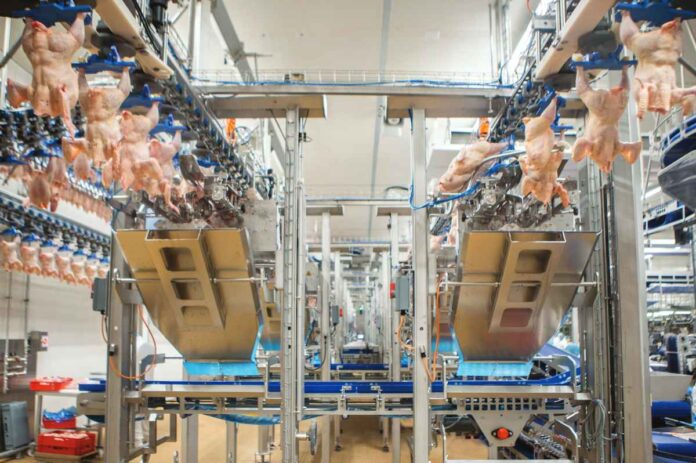
Wings are the smallest chicken portion. When done manually, wing cutting is very labor-intensive. Today, lack of staffing in their plants is, however, the biggest threat for poultry processors. Around the globe, many of them have difficulties finding staff. Processors are therefore looking for automated solutions: equipment that will cut wings efficiently and consistently and accurately. Automatic cutting in JBT Marel’s ACM-NT wing cutting modules is the perfect labor-saving answer.
Maximized yield
Poultry processors are also looking for equipment, thatmaximizes yield. Some companies supplying QSR fast food chains need to cut wing portions with a medallion of breast meat attached. Others want to leave all breast meat on the breast with the added option of being able to harvest some back meat with the wing portion. Whatever type of cut is needed, retail, bulk or fast food, JBT Marel can offer all options.
Special QSR needs
Some QSR chains insist that any cutting line for their products be exclusive to them. The line can handle no cuts for other customers.
JBT Marel offers an approved ACM-NT line to do a special nine-piece cut for a major international QSR chain. What is important for the chain is that all pieces take the same amount of time to fry, resulting in unique wing, breast, thigh and drumstick cuts. To ensure this is achieved, carcasses for cutting into the nine pieces are taken from a very narrow weight band.
Stretching, guiding and anatomical cutting
Accurate wing processing demands that wings are presented precisely to automatic cutting equipment. This means stretching them. An automatic wing stretcher always precedes a JBT Marel wing cutting operation.
Accurate cutting is essential for a successful automatic wing operation. This requires the correct guiding for correct presentation to the cutting blades and the correct cutting technique. These will be different for different situations. At JBT Marel, separation of the inner wing joint from the carcass is anatomical, except where this joint must be cut with a medallion of breast meat. Separation of inner and middle joints is also anatomical.
Growing demand
Given growing demand worldwide, automatic equipment must be capable of cutting ever more wings, ever more accurately into an expanding range of wing products. There is also scope for improving product flows and for saving labor for inspection and packaging.
Three examples of innovative ACM-NT wing processing solutions are the Wingstick module, the HY second-joint wing cutter and Q-Wing.
Wingstick
The ACM-NT Wingstick module cuts a wing snack product that is very popular in markets such as France, Poland and Turkey. Volume processors in all these markets are now using the module. A Wingstick is an inner wing joint where the bone is bared to form a handle, making it easier to pick up and eat. Wingstick does all these operations automatically.
WingMaster
The WingMaster module perfectly cuts the second joint, producing a mid-wing, aka wingette. WingMaster offers adjustable skin coverage for ideal presentation of both mid-wing and drumette. This is ideal for the Chinese market, which demands a carefully cut mid-wing presented with a flap of skin from the inner joint. Independent left and right wing cutting ensures optimal yield and the best destination for each piece, especially when integrated into JBT Marel’s Q-Wing setup.
Q-Wing
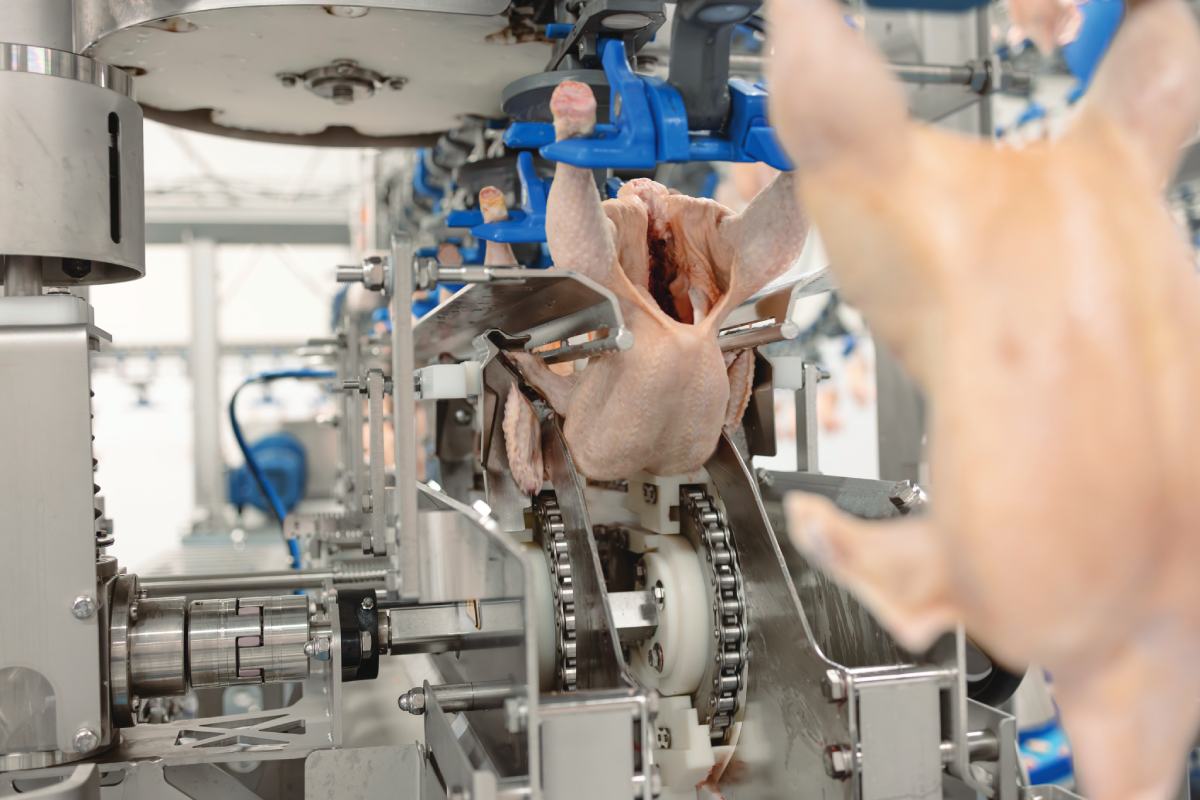
Q-Wing is an innovative combination of its IRIS vision system and ACM-NT wing processing modules. It is the perfect solution to deal with damaged and undamaged wings. An IRIS vision system scans the wings or their individual joints of the incoming products. Each wing cutting module is doubled, so that A-grade wings are cut by one module, while damaged wings are cut by the other. This results in two separate product streams, which is a logistical advantage as A-grade wing components will usually be packed differently to downgrades. With this completely automated wing grading and cutting system, manual inspection becomes redundant. Q-Wing will handle wings with or without tips at capacities of up to 14,400 wings per hour.
Visit the link for additional information on the Q-Wing system:
https://prd-jbt.marel-envr.com/en/products/q-wing/