
This Aviagen Brief has been written specifically for producers in Asia and the Middle East where typical ambient temperatures can range from below freezing to above 50 °C (122 °F). This advice may be useful in other regions, but this must be discussed with your local Technical Service Manager.
Introduction
Water is an essential biological ingredient of life. Not only is it a vital nutrient, but it is also involved in many essential physiological functions such as:
- digestion and absorption, where it supports enzymatic function and nutrient transportation;
- thermoregulation;
- lubrication of joints and organs and the passage of feed through the gastrointestinal tract;
- elimination of waste;
- essential component of blood and body tissues.
Chickens consume about twice as much water as feed, although this ratio can be much higher during hot conditions. About 70% of a chick’s weight is water (this can be as high as 85% at hatch), therefore, any reduction in water intake or increase in water loss will have a significant effect on the lifetime performance of the chick.
Due to the essential role that water plays in the health and performance of biological systems, it is vital to ensure that an adequate, clean supply of water is provided if optimal bird performance is to be achieved.
This Aviagen Brief provides information on the factors that influence water consumption and water quality, highlighting methods to maintain and/or increase water intake, and discussing what constitutes good water quality and how to maintain it.
Water losses
The water intake of the body should remain in balance with water loss if dehydration is to be avoided. The main sources of water loss are respiration, transpiration, and excretion of feces and urine. Fecal water loss is about 20–30% of the total water consumed, but the most important loss of water is via the urine. The characteristics of water loss will change, depending on the environment and the humidity, for example, while evaporative heat loss may represent only 12% of the water loss in birds at 10 °C (50 °F), it can increase to 50% when the environmental temperature reaches 30 °C (86 °F). This is a critical factor with regard to the chick where water represents a larger proportion of its weight.
What influences water consumption in chicks?
Age
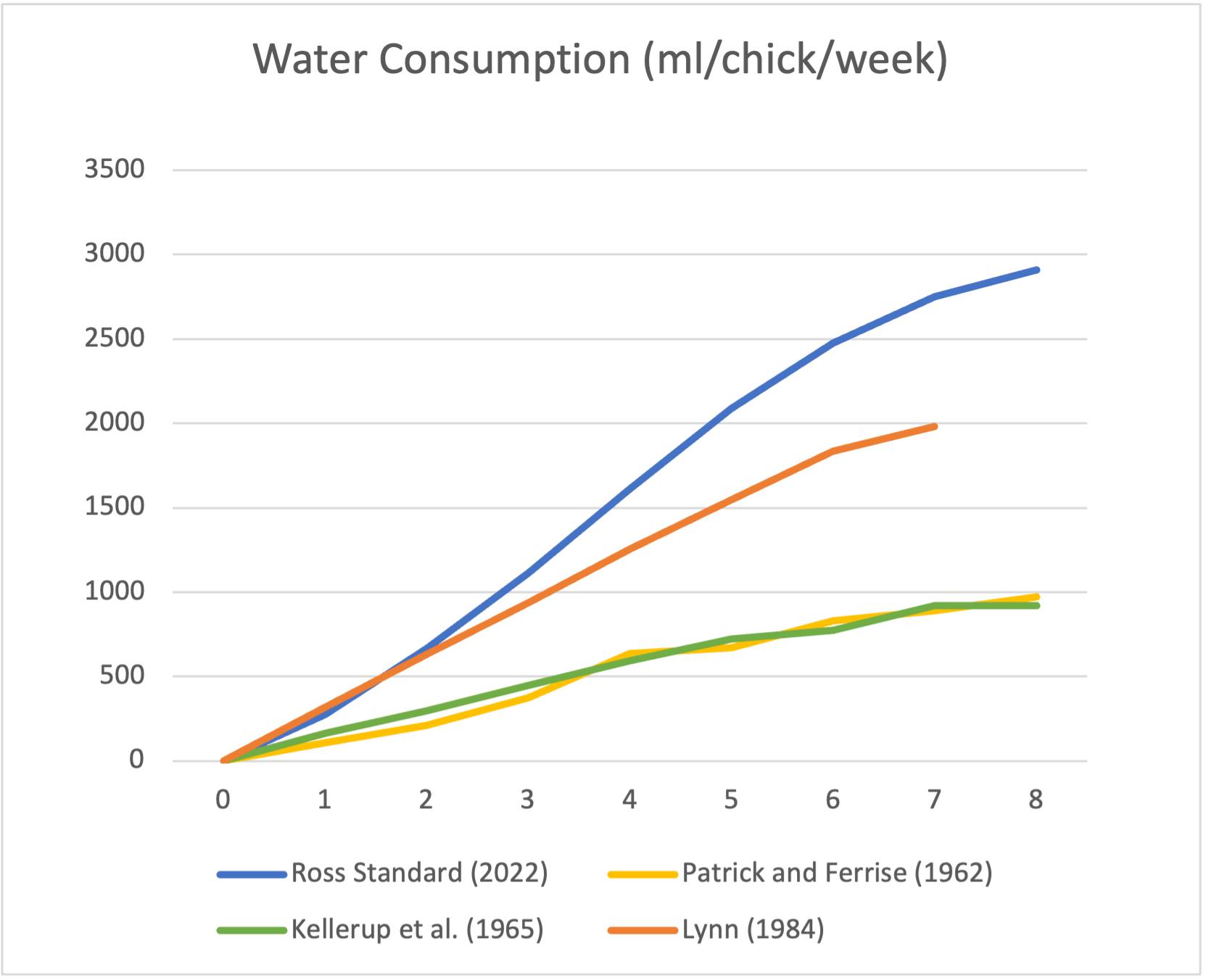
Water intake is closely linked to feed intake and bird age (growth response). As the bird gets older, the demand for water will increase (Figure 1). Water quality and availability, therefore, have the potential to impact heavily on the growth performance of the modern broiler, and any husbandry technique that limits water (such as part house brooding or failing to increase drinker space in the first 10 days) will have a parallel negative effect on growth.
Sex
The sex of the bird will also affect water intake. The water intake of males will be greater than that of females from the first week of life. Water:feed ratio is also higher in males than in females. Adipose tissue differences between the sexes explain these differences in water intake (females being fatter than males; fat has a lower water content than protein).
Key point
- Immediate water availability when chicks are placed in the house is important if permanent damage to the biological performance of the flock is to be avoided.
Environmental temperature
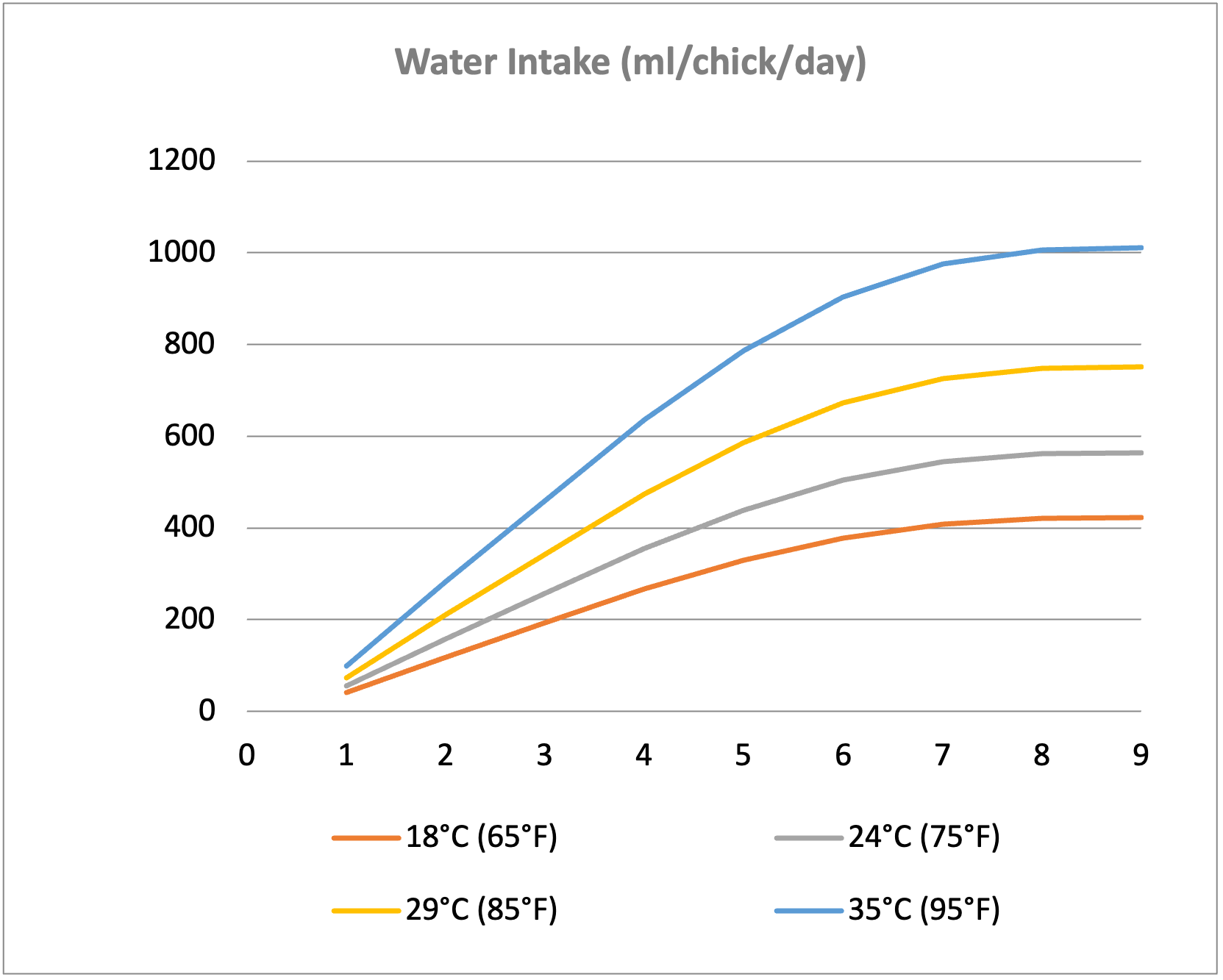
Environmental temperature can impact heavily on water intake (Figure 2). The water intake of chickens is approximately double that of feed intake (1.8:1, at a temperature of 21 °C (70 °F) in bell drinkers). However, in heat-stressed birds this level will be increased. A chicken’s water intake will increase by 6–7% for each degree above 21°C (70°F, NRC, 1994).
 It is strongly recommended that each house has a water meter installed and that accurate daily records of water intake are maintained.
Key point
- Increases in water intake will occur with age and environmental temperature.
- Water availability must reflect these changes if performance is not to be restricted.
- Each house should be fitted with a water meter.
Water temperature
With the exception of water used for vaccination, little thought is given to the temperature of the water presented routinely to birds. Stored water tends to be at a similar temperature to that of its environment. This is not significant in cold climates, but in hot climates water consumption will be reduced as the water temperature increases. Work by Beker and Teeter (1994) found the preferred water temperature of birds to be around 10 °C (50 °F), with water temperatures of 26.7 °C (80 °F) and above leading to significant reductions in water consumption and daily weight gain. It is therefore important to regularly monitor water temperature. If it regularly exceeds 24 °C (75 °F), then thought should be given to developing methods of cooling water temperature in hot weather. This may involve running the drinker supply pipes through a cool pad reservoir or even across the face of the cool pad airflow.
Positioning the water tank and supply pipes underground will also help to protect the water from the ambient air temperature, keeping it cool. Pipes and tanks that are exposed to the sun should be insulated and shaded to prevent heat gain. It is also good practice to flush the drinker lines at regular intervals in hot weather to keep the water as cool as possible.
For vaccination the target water temperature should be <20 °C (68 °F). In hot weather this can be achieved through the addition of ice to the storage tank before vaccination commences. It is important to ensure that all the ice is melted before addition of the vaccine to prevent non-uniform mixing.
Key point
- In most broiler units, nipple drinkers are the system of choice. Good management of these systems is critical with water line maintenance, drinker line location, water pressure, and nipple flow rate all affecting water intake.
- Regardless of the water system in place, drinker height and provision of adequate drinking space is critical.
Drinking systems
In most modern broiler units, nipple drinkers are the system of choice; these have the advantage of reducing disease spread, providing cleaner water, and reducing the labor requirements for clean out. However, good management is necessary for the proper operation of nipple drinker systems. Management factors that influence water intake in such systems are water line height (birds should lift their heads to reach the nipple drinker which should be higher than the birds’ back to prevent bumping and leakage, see Figure 3), water line maintenance (regular flushing and cleaning), drinker line location, and water pressure.
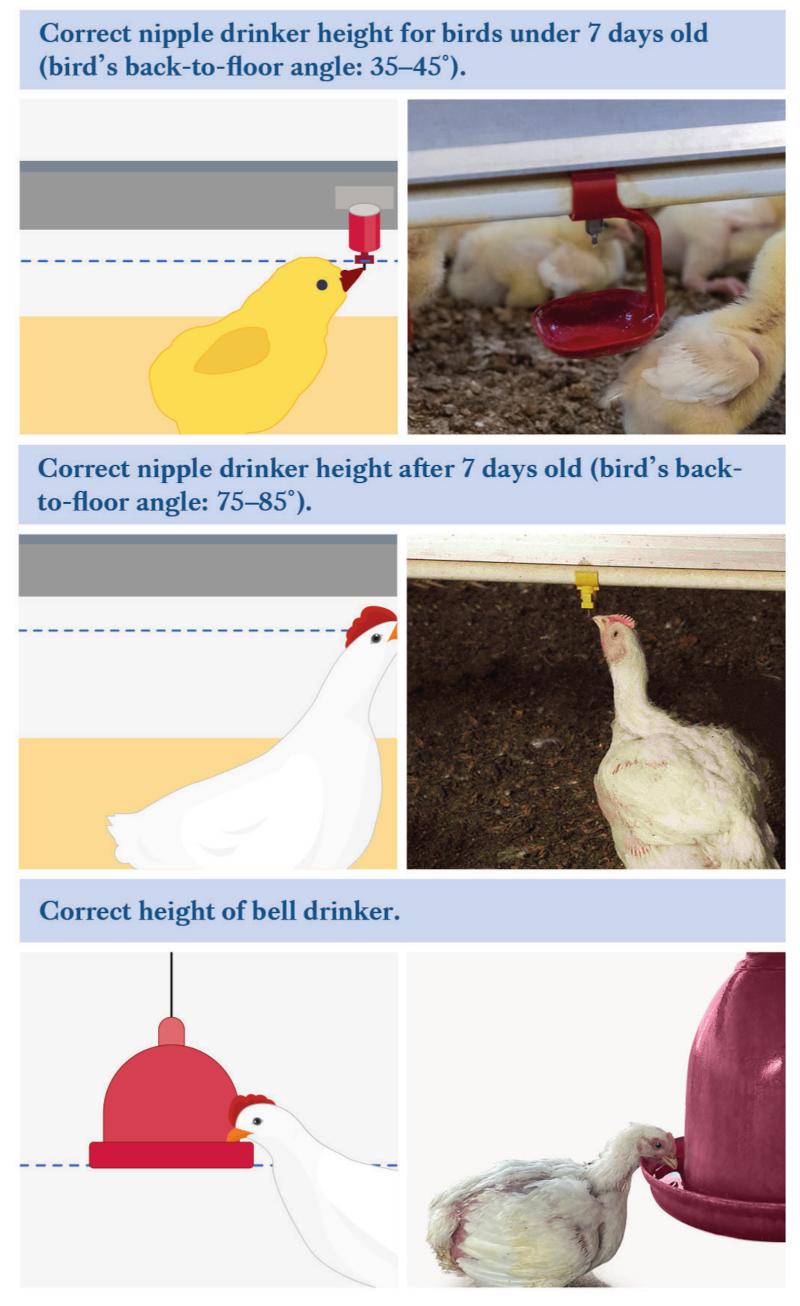
Nipple flow rate will also influence water consumption and should be checked regularly against the manufacturer’s recommendation. The flow rate should be correct in all drinker lines throughout their entire length. For young chicks, water pressure (and flow rate) should be low.
Pressure should be gradually increased with age and weight so that water flow is increased as birds get older in accordance with demand. As a general rule, water pressure should be adjusted so that there is a flow rate of at least 60 ml/min available from each nipple. To achieve good performance the nipple lines should be controlled to meet the birds’ requirement rather than to simply protect the litter. In general, the systems with higher flow rates produce better growth rates by increasing both feed and water consumption, but water leakage and litter deterioration is more likely.
The negative growth impact of low nipple flow rates is most commonly seen in birds growing to higher weights (>2 kg [4.4 lb]), where the increased water demand cannot be met and feed intake is reduced. The effect of low nipple flow rates is even clearer if the stocking density is increased and the bird:nipple or bird:drinker ratio is high. As a useful guide, use the Lott equation to calculate static weekly flow: (weeks of age)* 7 + 20 ml/min may be a helpful reference.
Where bell drinkers are the system of choice, drinkers should be cleaned daily to prevent the build up of organic matter. Height should be adjusted so that the base of the drinker is level with the broiler’s back from 18 days onward (Figure 3).
No matter what drinker system is installed, the provision of adequate drinker space is essential if water intake is not to be reduced. As a guide, 83 nipples or 8 bell drinkers per 1000 birds should be provided post-brooding. Where ambient temperatures and/or heavier liveweights (>2 kg [4.4 lb]) are used, drinker space should be increased by up to 50% of these guidelines.
Feed effect on water intake
Any nutrient that promotes mineral excretion through the kidneys also promotes increased water consumption. Therefore, excess minerals in feed or water above nutritional requirements will lead to an increase in water intake. This is also true for high protein diets where any protein not used for protein synthesis is deaminated and excreted in the urine. This energy-demanding process is associated with an increase in water loss.
In particular, the presence of inorganic elements such as sodium (Na), potassium (K), and chloride (Cl) will be associated with increased water consumption and wetter droppings. A moderate increase in dietary sodium is not normally a problem where birds have access to low sodium drinking water; they will increase the water intake if the diet is high in salt and excrete the excess. However, in areas where water sodium levels are elevated, it is important to factor this added supply into practical diet formulation, otherwise unevenness and poor growth rate will occur.
Recent Ross Nutritional Specifications specify 0.18–0.23% sodium in broiler diets. These reflect total sodium intake and, therefore, any contribution from the water should be included.
The dietary requirement for potassium is low, with 0.6–0.9% being adequate, levels of intake above this may, however, have a thirst-inducing effect, increasing fecal moisture. This is normally seen where soya is used as the single protein source to provide high protein starter diets. The general standard should be to control dietary potassium to a total intake of <0.9%.
Chloride levels should equal sodium levels (0.18–0.23%). The total chloride level is generally constrained by delivering a proportion of the sodium requirement as sodium bicarbonate rather than as salt (sodium chloride). Deficiency states are uncommon.
Water quality
A supply of clean, uncontaminated water should be freely available to the birds at all times. However, depending on the source, the water supplied to the birds may contain excessive amounts of various minerals or be contaminated with bacteria. Acceptable levels of minerals and organic matter in the water supply are given in Table 1.
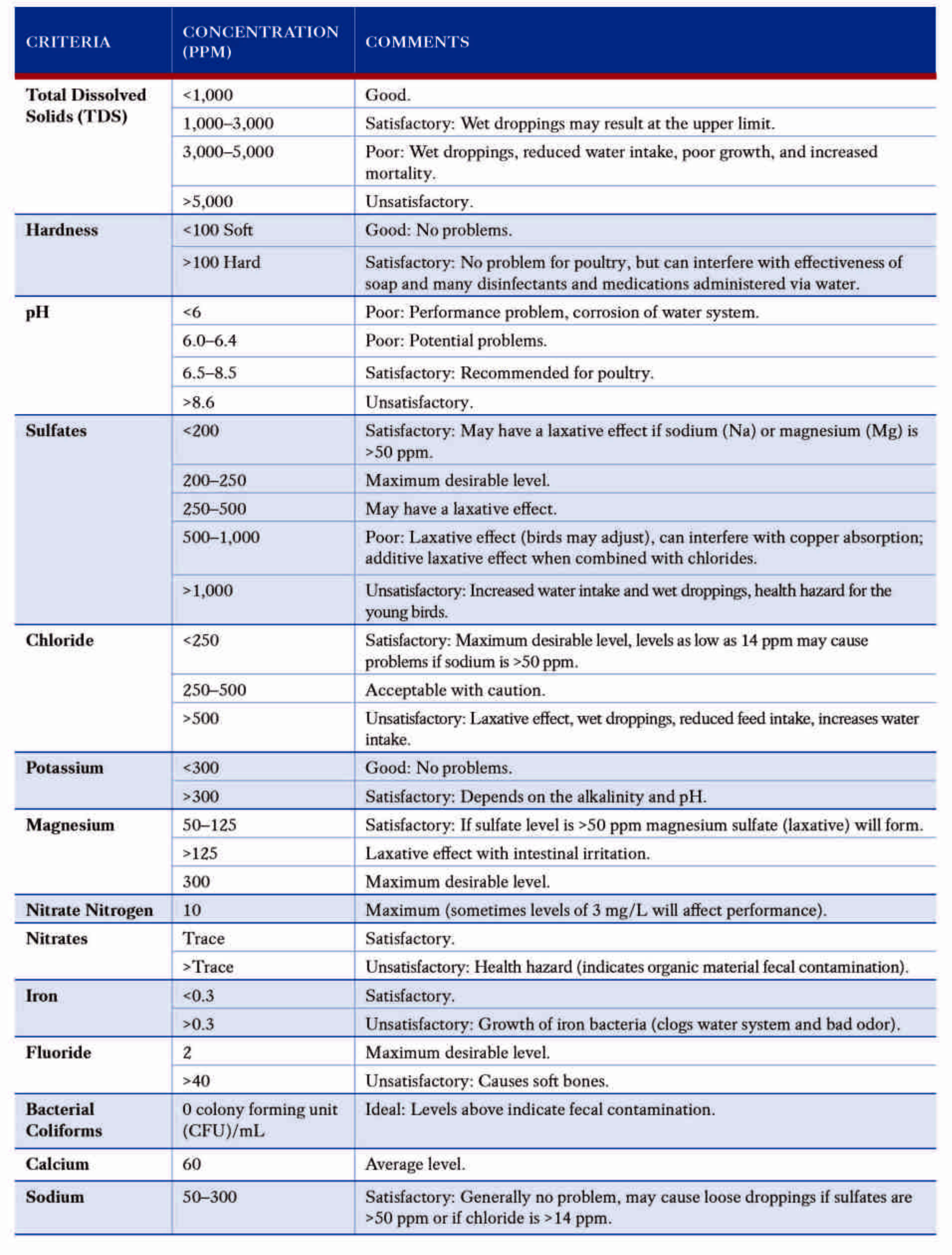
Regular assessments of water quality throughout the production period itself should also be made. Ideally, these should be taken from a tap between the tank and the first drinker. Where the facility of a tap does not exist, the water sample should be taken from the first drinker. The main water connection at the top of the drinker should be removed and drained so that any build-up of bacteria and debris can be flushed through allowing an accurate water sample to be taken. Water should be left running for at least 2 to 3 minutes before the sample is taken. As with all testing, the results should properly reflect the water status and, therefore, care to avoid contamination either during sampling or during transport to the laboratory is necessary.
If proper maintenance of the water line does not occur, microbial contamination can build up, affecting bird performance, reducing the effectiveness of medication and vaccination, and reducing nipple flow rate. Implementing a regular water sanitation and line cleaning program will prevent the build-up of microbial contamination. Controlling bacterial load is much more difficult with open drinker systems as they are exposed to contamination by fecal dust and the oral and nasal secretions of birds as they drink (Table 2).
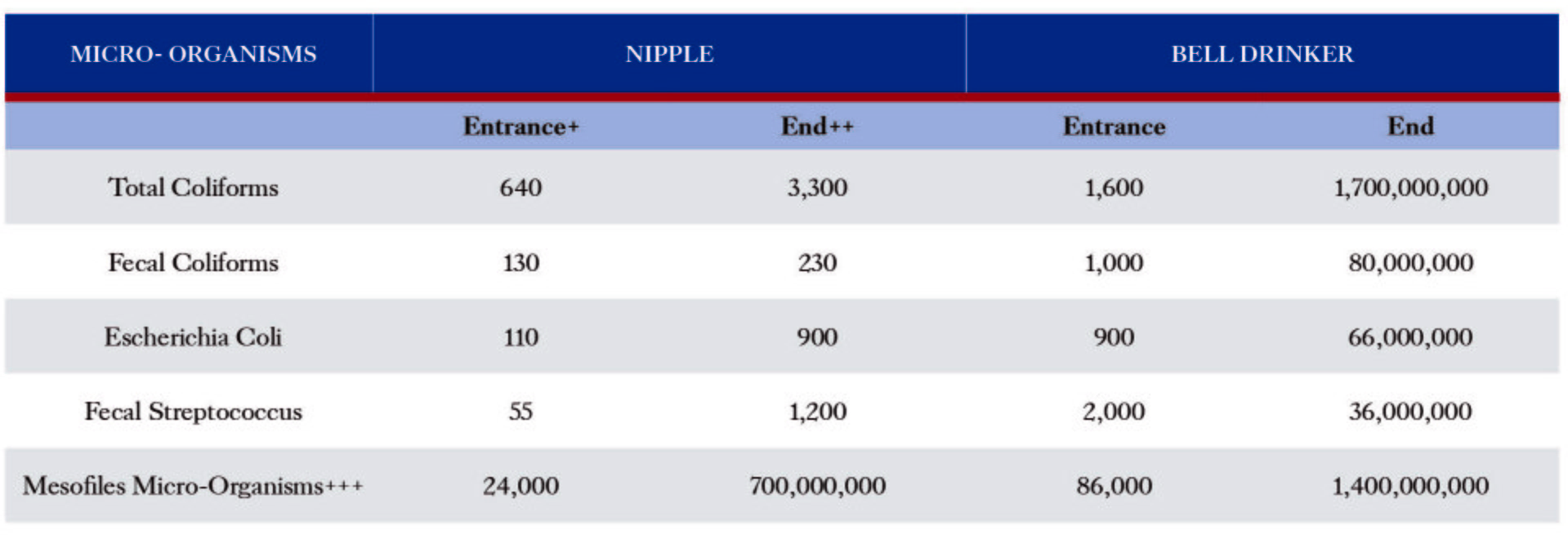
Adapted from Macari and Amaral, 1997.
NOTES
+ Entrance means the first drinker in the chicken house.
++ End means the last drinker in the chicken house.
+++ Mesofiles Micro-Organisms – total count of saprophytes and pathogenic microorganisms.
The water was not treated.
Closed nipple systems have the advantage of reducing disease spread, but even with these, dosing with a sanitizer that is effective in the presence of organic load and biofilms is regularly required. Chlorination to give between 3 and 5 ppm at drinker level (using, for example, chlorine dioxide), or UV radiation are effective means of controlling bacterial contamination. Treatment should occur at the point of water entry into the house.
High levels of calcium salts or iron in the water may lead to the valves and pipes of the drinker system becoming blocked. Where this is a problem, it is advisable to filter the supply using a filter which has a mesh of 40–50 microns.
Key point
- Excess levels of some inorganic elements such as Na, K, and Cl will increase water intake and the occurrence of wetter droppings.
- Dietary levels of these elements should be in line with Aviagen nutritional recommendations.
Conclusion
Water is an essential ingredient for life, a clean supply of which should be readily available from placement throughout the production period. Any restriction in water intake or contamination of water will ultimately affect the growth rate and overall performance of the bird. There are many factors that can affect water intake including age, sex, environmental temperature, water temperature and the drinker system type. The bacterial and physical quality of water should be monitored regularly, and where required, corrective action should be taken to ensure that bird performance is not compromised.
Key point
- A supply of clean, uncontaminated water should be freely available at all times.
- Regular assessments of water quality should be made to ensure microbial load and mineral content are within acceptable levels.
In summary
- Unrestricted access to a source of good quality water at an appropriate delivery temperature (10–12 °C/50–54 °F) should be available.
- Provide adequate drinker space and ensure that drinkers are easily accessed by the whole flock.
- Monitor the feed to water ratio daily to check that birds are drinking sufficient water.
Make allowances for increased water intake at higher temperatures (6.5% increase per degree over 21 °C (70 °F)).
- In hot weather, take steps to ensure that water is as cool as possible, e.g. flush drinker lines, use a cool pad, position tankers and drinkers underground or insulate.
- Regular testing of the water supply for temperature, bacterial load, and mineral content should occur and, where necessary, appropriate corrective action should be taken.
References
Bailey, M. (1999). The water requirements of poultry. In J. Wiseman & P. C. Garnsworthy (Eds.), Recent developments in poultry nutrition (Vol. 2, pp. 321–337). Nottingham University Press.
Beker, A., & Teeter, R. G. (1994). Drinking water and potassium chloride supplementation effects on broiler body temperature and performance during heat stress. Journal of Applied Poultry Research, 3(1), 87–92.
Macari, M., & Amaral, L. A. (1997). Importância da qualidade da água na criação de frangos de corte: Tipos, vantagens e desvantagens. In Anais da Apinco (pp. 121–143). Campinas, Brazil.
National Research Council. (1994). Nutrient requirements of poultry (9th rev. ed.). National Academies Press.
Singleton, R. (2004). Hot weather broiler and breeder management. Asian Poultry Magazine, September, 26–29.