

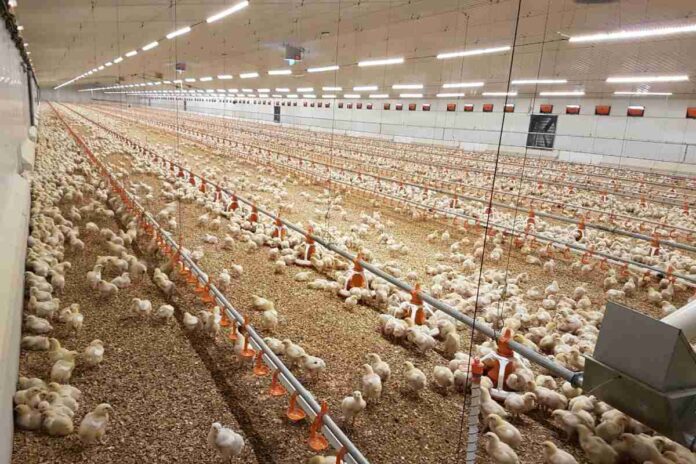
The government of Goa has established the Goa State Poultry Development Corporation Ltd., a new public company tasked with promoting, organising and supporting the development of the state’s poultry sector. The move is part of a broader strategy to strengthen local poultry production, improve market organisation and support a more structured and efficient value chain.
According to the information available, the corporation is expected to play a key role in implementing the state’s poultry development policy by supporting initiatives related to production, biosecurity, farmer awareness and the overall organisation of the poultry value chain. While the detailed scope of its operational responsibilities has not yet been fully outlined, the corporation is intended to contribute to the development and oversight of the sector.
The decision comes at a time when Goa continues to rely heavily on poultry supplies from other Indian states, a situation that the government has identified as a constraint on the long-term development and self-sufficiency of the local poultry industry. Strengthening domestic production is therefore one of the central objectives of the new initiative.
The new corporation could become an important tool for the development of Goa’s poultry industry. Beyond supporting production, it may help reduce dependence on poultry supplies from outside the state, improve the availability of locally produced poultry products and create a stronger institutional framework for the sector’s long-term growth.
From an industry perspective, the move is notable because it introduces a dedicated public body focused on poultry development and sector coordination. By supporting biosecurity initiatives, value chain organisation and the implementation of state poultry policies, the corporation could contribute to greater stability and more strategic planning for the industry.
For the wider Indian poultry industry, Goa’s initiative offers an interesting example of how public intervention can be used to strengthen and better organise the sector. The key question now is whether the new corporation will be be able to translate its objectives into tangible improvements in production, efficiency and market stability.