
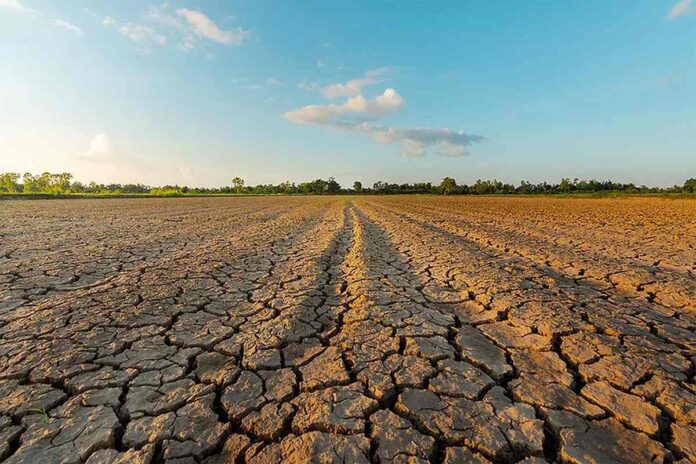
Record temperatures and drought are adding pressure to Europe’s poultry sector, affecting bird welfare, farm productivity, water availability, feed costs and logistics. While EU chicken meat production is still expected to grow in 2026, recent developments in Germany and France show how extreme weather is creating significant challenges for individual poultry producers.
German poultry production falls
Germany provides one of the clearest indications of the pressure currently facing the sector. During the first half of 2026, German commercial slaughterhouses produced approximately 755,000 tonnes of poultry meat, 3.2% less than in the same period of 2025. This was the lowest first-half production level since 2017.
The number of poultry birds slaughtered also declined by 0.8%, to 343.2 million.
The decline in German poultry production has several possible causes and should not be attributed to heat and drought alone. The sector has also been affected by animal diseases, including highly pathogenic avian influenza, while Newcastle disease has affected poultry production elsewhere in Europe.
The figures therefore point to a challenging operating environment in which animal health, weather conditions and production costs are all important factors.
Heat stress becomes a direct production risk
The scale of the climate challenge became particularly evident in western Europe during June and July. According to the Copernicus Climate Change Service, western Europe experienced its warmest June–July period on record, with an average temperature of 21.62°C, 2.79°C above the 1991–2020 average.
For poultry producers, the significance of these figures lies not in the temperature record itself, but in its effect on birds and farm management.
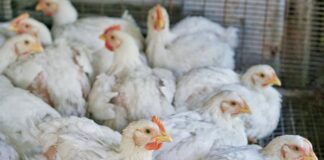
As temperatures and humidity rise, poultry have increasing difficulty dissipating body heat. Heat stress can reduce feed intake and production performance and, under severe conditions, cause mortality. Extreme temperatures are also a recognised animal-welfare risk during catching, handling and transport.
The risk is particularly significant in poultry houses with inadequate ventilation or cooling capacity. Reliable electricity and functioning ventilation systems are therefore important components of heat-stress management.
France shows the immediate impact
The effects have already been visible in France. During the late-June heatwave, hundreds of thousands of poultry died, according to agricultural organisations cited by Reuters. The losses were severe enough to overwhelm carcass collection services in some areas.
The episode illustrates how quickly extreme heat can move from a weather event to a direct production problem for poultry farms.
The main measures available to producers include:
- effective ventilation and cooling systems;
- adequate access to drinking water;
- regular checks of electrical systems and emergency generators;
- monitoring of temperature, humidity and bird behaviour;
- reducing handling and catching during the hottest hours;
- avoiding unnecessary transport during periods of extreme heat;
- reducing loading densities where appropriate to improve ventilation.
European animal-welfare guidance identifies high temperatures as a major risk during animal transport and stresses the importance of ventilation, appropriate space allowances and minimising journey times under challenging thermal conditions.
Drought could add pressure on feed costs
The effects of drought extend beyond the poultry house. Reduced rainfall and soil moisture can affect cereal production, potentially increasing volatility in the availability and price of feed ingredients.
The situation is uneven across Europe. In Germany, the German Farmers’ Association expected an average grain harvest for 2026, while warning of significant regional differences.
For poultry producers, the key issue is not simply the size of the cereal harvest, but whether weather-related production losses translate into higher prices for feed ingredients.
Any sustained increase in the cost of cereals, protein sources or other feed components can put additional pressure on poultry producers’ margins. However, a direct increase in European poultry feed prices attributable specifically to the 2026 drought has not yet been established.
Low river levels add a logistics risk
Low water levels on major European rivers are creating an additional challenge for agricultural supply chains.
The Rhine has been particularly affected. In early August, water levels at Kaub reached record lows, with the disruption forcing greater reliance on road transport and contributing to higher freight rates. The situation has become severe enough for several German states to suspend Sunday driving restrictions for trucks in an effort to ease the pressure on supply chains.
For poultry production, the relevance is primarily through the movement of feed ingredients and other inputs. Cereals, soybean products, feed additives and fuel all depend on reliable logistics.
If low water levels persist, higher transport costs could add further pressure to poultry production costs. The extent of the impact will depend on the duration of the disruption and the ability of suppliers to switch to alternative transport routes.
Disease remains a major threat
Extreme weather is only one part of the risk picture. Animal disease continues to have a direct impact on European poultry production.
Newcastle disease was particularly significant in Poland during 2025. According to USDA data, Poland reported 53 Newcastle disease outbreaks in commercial broiler farms, out of 83 outbreaks in poultry farms overall, leading to the culling of almost 7.1 million broilers.
Spain reported its first Newcastle disease case on a chicken farm in December 2025, with additional cases reported in early 2026. Newcastle disease was also detected in Slovakia and Bulgaria during 2025.
Highly pathogenic avian influenza remains another important risk for the European poultry industry, although the USDA expected HPAI pressure in the EU to be lower in 2026 than in previous years.
For producers, disease prevention therefore remains a critical part of risk management alongside measures to protect birds from extreme temperatures.
EU production still expected to grow
Despite these pressures, the broader European poultry market remains on a growth trajectory.
According to the USDA Foreign Agricultural Service, EU chicken meat production is forecast to reach 12.25 million tonnes in 2026, compared with 12.09 million tonnes in 2025 and 11.73 million tonnes in 2024. The forecast represents growth of approximately 1.3% compared with 2025.
Poland is expected to remain the EU’s largest chicken meat producer, accounting for more than 22% of total production. France and Spain are also expected to increase output.
These figures show that the impact of heat, drought and disease is not uniform across Europe. While some producers are experiencing significant operational pressure, the overall EU market is still expected to expand.
However, the USDA forecast was published in March 2026, before the full extent of the summer heatwaves and drought became apparent. It therefore provides a baseline for the market outlook rather than a final assessment of the impact of the 2026 summer.
What comes next for poultry producers?
For the European poultry sector, the key issue is how effectively farms and supply chains can adapt to increasingly challenging weather conditions while maintaining animal health and production efficiency.
The main factors to watch during the second half of 2026 will be:
- heat-related mortality and reductions in bird performance;
- availability and cost of drinking water;
- cereal and protein feed prices;
- new HPAI and Newcastle disease outbreaks;
- reliability of ventilation and cooling systems;
- electricity availability during extreme heat;
- transport conditions for feed and other inputs.
EU poultry production may still increase in 2026, but the experience of Germany and France shows that growth at market level does not necessarily mean that individual farms are operating under favourable conditions.
For poultry producers, the growing challenge is the interaction between heat stress, animal disease, feed costs, water availability and logistics. Extreme weather is therefore becoming an increasingly important production risk for the European poultry industry—not as a single cause of market disruption, but as an additional pressure on an already complex production system.
See also:
Alternative feed additives to help broilers cope with heat stress
Summer heat stress is detrimental to broiler chickens
France: extreme heat causes hundreds of thousands of losses in poultry farms