


Walk into any technologically advanced hatchery today and you will see sophisticated single-stage/multi-stage incubators, automatic controllers, modern ventilation systems, smooth-running fans, and digital touchscreens displaying seemingly perfect readings. Yet, behind these impressive systems lies a biological reality more delicate than any technology: the embryo’s absolute dependence on precise temperature. What is often underestimated is how small a temperature change can make a big biological difference. A deviation of only 0.2°C can change embryo development, widen the hatch window, increase mortality, and silently reduce chick quality even when machines appear to be working normally. This article explains why this small temperature difference is not a tolerance margin but a deciding factor between success and loss in incubation.
Why does such a tiny temperature change matter so much?
The avian embryo is a highly sensitive biochemical system. Its growth is controlled by enzyme‑driven reactions that work best in a very narrow temperature range. Even a tiny change affects the whole process.
Research shows that an increase of 0.1 °C can raise embryo metabolic rate by 7–8%. At 0.2 °C higher temperature, the heart beats faster, heat production increases, oxygen demand rises and carbon dioxide builds up more quickly. Development is pushed too fast and organs may not form correctly.
A 0.2 °C lower temperature slows metabolism. Development is delayed, hatching is late and chicks lose uniformity and strength.
Unlike mammals, the embryo cannot control its own temperature. It depends on the incubator microenvironment. Therefore, 0.2 °C is not a small number – it decides whether development is balanced or stressed, whether the hatch is uniform or spread out and whether chicks are strong or weak.
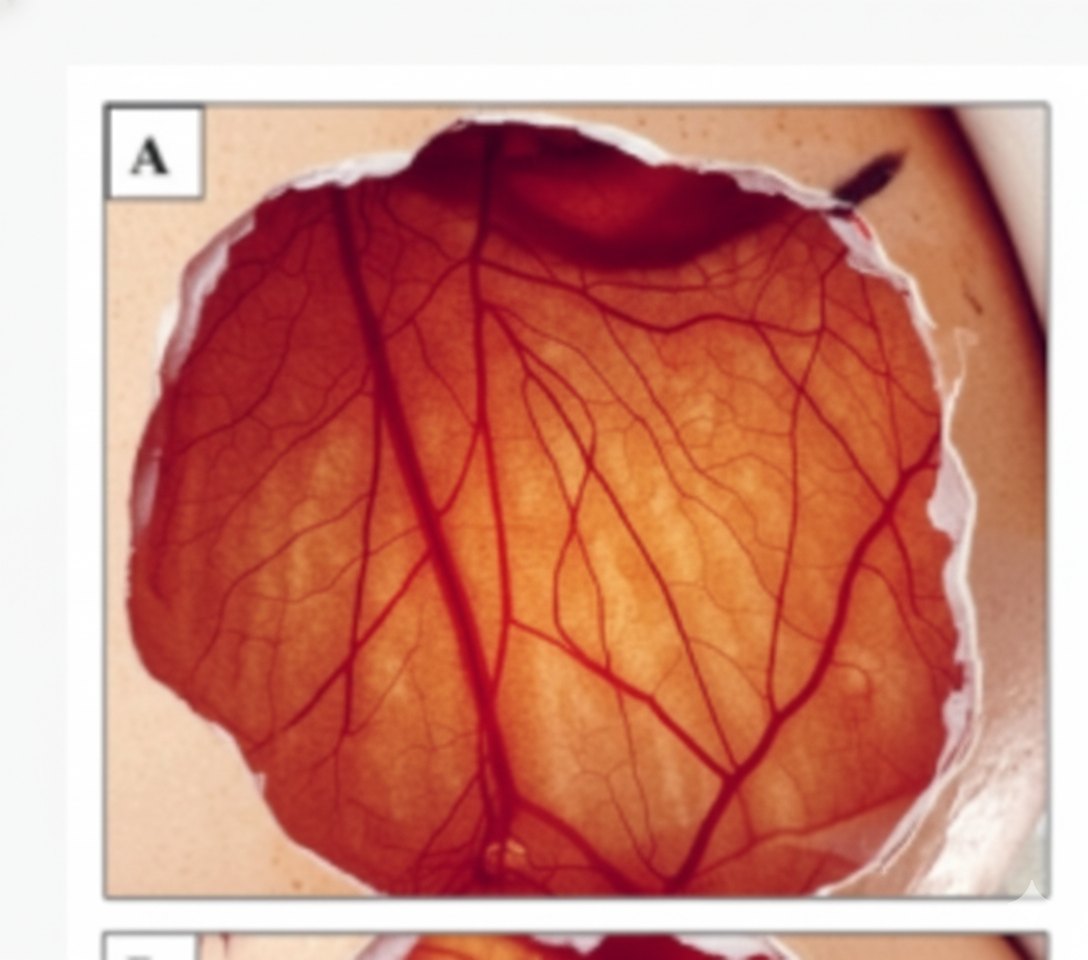
How 0.2° C influences embryo development across incubation
Embryo development is a temperature-driven biological process. Enzyme activity, cell division, vascular growth, and organ formation all depend on a very narrow thermal range. A deviation of only 0.2 °C changes metabolic rate enough to shift the entire developmental pathway. The effects are different at each phase of incubation, but the consequences always appear later as chick quality problems.
Early phase (days 0–7): the foundation of life
The first week of incubation is when the embryo starts forming heart, brain, neural tube, blood vessels, early organs, and the chorioallantoic membrane (CAM). This stage is very sensitive. Even small temperature changes can have lasting effects.
If the incubator is slightly too warm, development speeds up too quickly. Early structures may form abnormally, organs may lose symmetry, and the embryo can become stressed. The CAM may be weaker, limiting oxygen supply later. This small 0.2 °C difference can affect the embryo all the way to hatching.
If the temperature is slightly too low, development slows; cell division and milestones are delayed. Embryos survive but hatch later, may struggle with temperature regulation, and the batch can become uneven. This can affect chick performance after hatching.
In summary, the first week sets the stage for life. Keeping the temperature precise ensures healthy, uniform embryos and gives every chick the best start.
Mid incubation (days 7–14): when growth accelerates
By the second week, the embryo grows rapidly. Metabolism increases, the CAM works fully, and bones and muscles develop quickly. Temperature and oxygen supply must be carefully balanced because the embryo is very sensitive.
If the incubator is slightly too warm, the embryo produces more heat. This raises internal egg temperature, increases oxygen demand, and CO2 builds up. Then the CAM cannot keep up, blood vessels may develop poorly, muscles and bones remain weak, and some embryos may die.
If the temperature is slightly too low, growth slows. Embryos stay smaller, muscles and blood vessels are underdeveloped, and energy use is inefficient. They may hatch weaker, take longer to emerge, and struggle after hatching.
Mid incubation is a critical stage. The embryo is growing fast and the margin for error is small. Keeping temperature precise ensures proper growth and prepares chicks to perform well after hatching.

Final stage (days 15–21): the survival phase
In the last phase, the embryo produces the most metabolic heat. Temperature control is very important. Small changes can stress the chick.
If it is slightly too warm, the embryo cannot release heat. Body temperature rises, the heart beats faster, and oxygen demand may exceed supply. Chicks may hatch early, dehydrated, thin, and with poorly absorbed yolk. Navels can be red or black. Immunity is weak, vitality is low, and first-week growth suffers.
If it is slightly too cool, development slows. Chicks hatch late, tired, sticky, and weak, with residual yolk. Their digestive system adapts slowly, reducing nutrient absorption and early growth.
Even in this stage, the margin for error is very small. Keeping temperature precise and stable ensures chicks hatch healthy and ready to thrive on the farm.
The hatch window: the practical reflection of temperature accuracy
A well-managed hatch produces most chicks within 12–24 hours. When temperature varies by only 0.2 °C, the hatch window can stretch to 36–48 hours.
Early chicks dry out and dehydrate. Late chicks are weak and underdeveloped. Uniformity drops and farm performance suffers.
Often this happens even when the machine display looks perfect. Microclimates inside the incubator mean the embryo does not always experience what the sensor shows. Eggshell temperature and airflow uniformity are therefore essential to monitor.
Why does temperature deviate even in advanced incubators?
Even advanced machines are affected by:
- Sensor calibration drift of 0.2–0.4 °C
- Poor airflow and blocked filters
- Incorrect loading density
- Room temperature fluctuations
- Heat contribution from embryos in multi-stage systems
These factors create hot and cold zones inside the incubator.
Maintaining temperature accuracy: a scientific hatchery strategy
Sensor calibration: calibrate regularly with certified instruments and do not trust the screen alone.
Eggshell temperature (EST): the best indicator of embryo comfort. Target 37.8–38.2 °C across many tray positions.
Airflow management: clean filters, correct loading, and proper fan speed ensure uniform temperature.
Stable room conditions: large room temperature swings force machines to over-compensate and create instability.
Temperature mapping: identify hot and cold zones and correct them before losses occur.
Economic impact: the profit power of 0.2 °C
Accurate temperature control improves hatchability, chick quality, uniformity, first-week performance and livability. Across millions of eggs this small difference becomes a large economic gain. In practice, even a 0.2 °C deviation can separate profit from loss.
 Conclusion
Incubation is not only running a machine. It is managing a living embryo. A difference of 0.2 °C can decide whether chicks are strong or weak, uniform or uneven, and ready to perform or already stressed.
Precise temperature keeps metabolism balanced, oxygen supply adequate, organs developing correctly, and the hatch window tight. For modern hatchery success, temperature accuracy is not optional, but it is the foundation of chick quality and farm performance.
 References
Decuypere, E., & Michels, H. (1992). Incubation temperature as a management tool: A review. World’s Poultry Science Journal, 48(1), 28–38. https://doi.org/10.1079/WPS19920004
French, N. A. (1997). Modeling incubation temperature: The effects of incubator design, embryonic development, and egg size. Poultry Science, 76(1), 124–133. https://doi.org/10.1093/ps/76.1.124
Lourens, A., van den Brand, H., Meijerhof, R., & Kemp, B. (2005). Effect of eggshell temperature during incubation on embryo development, hatchability, and posthatch performance. Poultry Science, 84(6), 914–920. https://doi.org/10.1093/ps/84.6.914
Meijerhof, R. (2009). The influence of incubation on chick quality and broiler performance. In Proceedings of the Australian Poultry Science Symposium (pp. 1–8). University of Sydney.
Tona, K., Malheiros, R. D., Bamelis, F., Careghi, C., Moraes, V. M. B., Onagbesan, O., … & Decuypere, E. (2003). Effects of egg storage time and incubator temperature on chick quality. Poultry Science, 82(7), 1271–1279. https://doi.org/10.1093/ps/82.7.1271
Aviagen. (2022). Ross Broiler Management Handbook: Incubation guidelines. Aviagen Group.
Cobb-Vantress Inc. (2021). Cobb Hatchery Management Guide. Cobb-Vantress.