
A scoping review of 38 experimental studies found repeated positive signals for thyme, rosemary and peppermint on growth performance and gut microbiota, but heterogeneous protocols and limited direct AMR evidence prevent firm conclusions about replacing antibiotics.
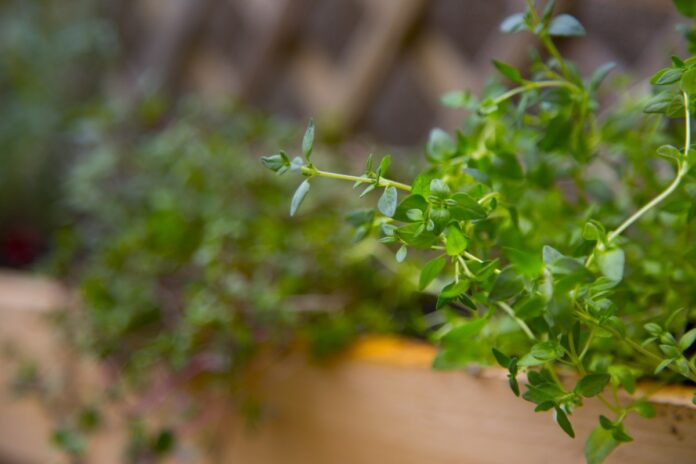
Within a 2025 scoping review of poultry research, thyme was by far the most frequently investigated medicinal plant. Positive findings were reported for growth performance, mortality and intestinal microbiota, with rosemary and peppermint also appearing repeatedly among the better-studied options.
The evidence was much less uniform than those broad findings might suggest. Doses, formulations and experimental conditions differed markedly between studies, and several trials reported no significant performance response. Most of the microbiological work also measured bacterial populations rather than antimicrobial resistance itself.
The review therefore provides a useful map of recent phytogenic research, but not evidence that medicinal plants can already be treated as proven substitutes for antibiotics in poultry production.
Thyme has the largest evidence base
The authors searched PubMed, ScienceDirect and Google Scholar between December 2022 and February 2023 for English-language studies published from January 2019 to February 2023. From 4,213 records initially identified, 38 studies were included after screening.
Eligible studies were randomised controlled or quasi-experimental trials in hens, chickens or chicks. The main outcomes were feed intake, feed conversion ratio, body weight, body-weight gain, mortality and intestinal microbiota. Because the work was designed as a scoping review, the authors did not pool effect sizes in a meta-analysis.
Seventeen of the 38 studies investigated thyme. Thirteen tested it alone, as powder, extract or essential oil, while four used thyme in combinations with other ingredients. The review counted 11 thyme studies addressing growth performance, two addressing mortality and four examining gut microbiota.
Some individual experiments produced clear positive results. In a trial involving 180 broilers, dietary thyme leaf powder at 6 g/kg significantly reduced total aerobic and coliform bacterial counts in the duodenum and caecum, while Lactobacillus counts increased compared with the control.
Another study used 600 Ross 308 broilers to compare mint, thyme and cinnamon essential oils in free and chitosan nano-encapsulated forms. Essential oils and nano-encapsulation improved body-weight gain and FCR during the later growth period and across the full trial, with the strongest response reported for thyme and a greater effect after nano-encapsulation.
The response was not consistent across experiments. A study in 108 Hy-Line Brown laying hens found no significant differences in feed intake, hen-day egg production, egg weight or FCR when diets contained 1% or 2% dried thyme leaves. In another experiment with 400 male Ross broilers, thyme and rosemary essential oils did not significantly affect body weight, weight gain or feed intake.
Such contrasts are common throughout the review. The same plant could perform differently according to dose, preparation, production stage and experimental conditions.
Positive findings extend beyond thyme, but comparisons remain difficult
Rosemary was investigated in five studies, while peppermint appeared alone in three studies and in two plant combinations. Both produced favourable outcomes in some trials, although null results were also reported.
One of the more striking infection studies involved 80 Cobb broilers challenged with Escherichia coli O78 at one week of age. Mortality reached 25% in the infected control group, compared with 10% in birds receiving 5 g/kg rosemary powder and 5% in those receiving 5 g/kg fenugreek seed powder. The same study reported better body weight and weight gain in both supplemented groups than in infected controls.
That result came from a single experimental infection model and cannot establish a general advantage of fenugreek over rosemary under commercial conditions.
Trials with antibiotic comparators were similarly mixed. In one study of 750 Cobb broilers, a combination of Origanum vulgare and Andrographis paniculata extracts and a zinc-bacitracin treatment both produced higher body weight than an untreated control at 28 days. Zinc bacitracin nevertheless produced the better FCR. The plant-extract group, meanwhile, showed a different intestinal microbiota profile, with more Lactobacillus and Bacillus and fewer E. coli and Salmonella isolates.
Results of this kind show why an overall label such as “antibiotic alternative” is difficult to apply. An intervention may improve one endpoint without matching an antibiotic on another.
Microbiota data are more abundant than AMR data
The review is framed partly around antimicrobial resistance and One Health, but most of the included microbiological outcomes concerned bacterial abundance or microbiota composition.
Several studies reported lower counts of E. coli, Salmonella or other potentially undesirable bacteria and higher counts of Lactobacillus. Those findings describe changes in the intestinal microbial population. They do not, on their own, demonstrate reduced antimicrobial resistance.
Direct work on resistant bacteria was much more limited. One pilot study included broilers challenged with a multidrug-resistant strain of Salmonella Enteritidis as well as a sulpha-trimethoprim-sensitive strain. The review reports that thymol oil at 0.1% and a microemulsion at 0.01% reduced Salmonella counts in caecal contents and faecal droppings and lowered mortality after five days of treatment.
That experiment is closer to the AMR question than most of the included studies, but it remains one pilot trial among a heterogeneous set of interventions. The authors themselves call for further experiments comparing thyme with antibiotics in chickens infected with multidrug-resistant bacteria.
The One Health argument in the paper therefore points as much towards future research as towards an effect already demonstrated across the evidence base.
The dose question is still open
The authors identify 5–6 g/kg of thyme powder as a range deserving further investigation and later recommend additional trials with 5–6 g/kg thyme, 5–10 g/kg rosemary and 5–10 g/kg thyme-rosemary blends.
These figures should not be read as established commercial recommendations. The review contains no pooled dose-response analysis, and the experiments differed in bird type, age, formulation, challenge status and duration.
There are also two internal inconsistencies relevant to the thyme evidence. One citation used in support of the 5–6 g/kg statement refers to an unrelated study of asthma costs in humans. Elsewhere, the narrative states that thyme essential-oil mist improved FCR, whereas the corresponding entry in Table 1 reports the highest FCR in the thyme-mist group, with P > 0.05.
Neither issue invalidates the broader evidence map, but both reinforce the need to treat specific dosing claims cautiously.
The authors also acknowledge several wider limitations. Only three databases were searched, English-language publications were required and study methods were highly heterogeneous. Three trials used blends of medicinal plants, making it impossible to separate the contribution of individual ingredients. The search ended in February 2023, more than two years before the paper was published.
Quality assessment was described as an evaluation of study methodology and journal quality by one reviewer with referral to co-authors, rather than as a standardised risk-of-bias analysis. As a scoping review, the study also provides no pooled estimate of the average treatment effect.
For poultry nutrition research, the clearest conclusion is therefore narrower than the idea of replacing antibiotics. Thyme has accumulated the largest evidence base among the plants covered by the review, while rosemary, peppermint, fenugreek, garlic and other plants have produced encouraging results in specific settings. More standardised trials are still needed to establish dose, formulation, economic value and effects on resistance itself.
Source
Dardouri M, Mtibaa MM, Azaiez S, Mahjoub Khachroub A, Mansour W. Herbs impact on poultry health and antimicrobial resistance: a scoping review with one health perspective. BMC Veterinary Research. 2025;21:499. doi:10.1186/s12917-025-04760-6.
The source article is licensed under the Creative Commons Attribution-NonCommercial-NoDerivatives 4.0 International License (CC BY-NC-ND 4.0).
The study was funded by the International Center for Antimicrobial Resistance Solutions (ICARS), Project ID 200005, and the ENVIRE project under JPIAMR-ACTION. The authors declared no competing interests.
Article independently written by the Zootecnica – Poultry Magazine editorial team based on the cited study.
See also:
Effect of some biological factors on the performance of broiler breeder hens