
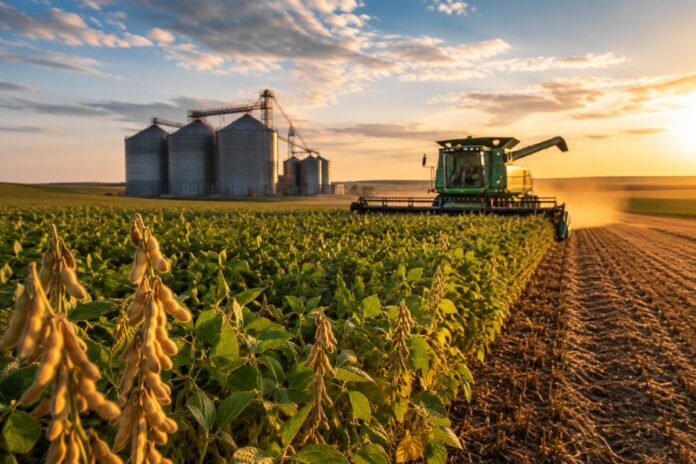
Brazil’s soybean acreage is expected to remain broadly unchanged in the 2026/27 season, marking a break from more than two decades of almost uninterrupted expansion. According to RaboResearch, the country’s soybean industry is moving into a phase where future growth will increasingly come from higher productivity rather than the steady conversion of new land into crop production.
Brazil is the world’s largest soybean producer and exporter, making developments in its crop outlook particularly relevant for the global feed industry, where soybean meal remains one of the main protein sources used in poultry diets.
RaboResearch says the economic environment has become less supportive of rapid expansion. Lower soybean prices, tighter margins, higher financing costs, more restrictive credit conditions and uncertainty surrounding input markets have all weighed on investment decisions. Instead of expanding acreage, producers are increasingly focused on preserving cash, improving efficiency and managing risk.
The tighter financial environment is also increasing the amount of agricultural land being offered for sale or lease as some producers look to improve liquidity and rebalance their finances. According to the report, this is likely to slow further expansion through pasture conversion while encouraging more intensive use of land already in production.
The report does not suggest that Brazil’s soybean sector is entering a period of contraction. Planted area is forecast to remain close to current levels, while the 2026/27 crop is projected at 178 million metric tons. The slight decline from the record harvest achieved in 2025/26 reflects a return to more typical yield levels rather than a reduction in cultivated area.
Future production growth is expected to come from productivity gains, wider adoption of double-cropping systems and incremental improvements in operational efficiency. Rather than relying on new land, Brazil’s soybean industry is expected to produce more from farmland that is already under cultivation.
Because Brazil accounts for a substantial share of global soybean production and exports, a slower pace of output growth could contribute to a more balanced global supply and demand environment while influencing international trade flows. RaboResearch nevertheless expects the country to remain the world’s leading soybean exporter.
The outlook remains subject to weather risks. The current forecast does not include potential production losses associated with a possible El Niño event during the second half of 2026. Should adverse weather affect yields in key producing regions, the report says international soybean prices could come under upward pressure during the 2026/27 marketing year.