
Introduction
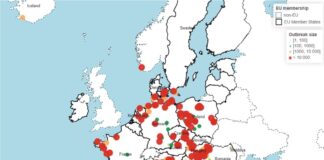
Salmonella Infantis has become one of the most relevant food safety challenges facing the poultry sector. In recent years, this serovar has gained increasing attention because of its widespread presence in broiler production and its association with multidrug-resistant strains. The poultry industry is therefore under growing pressure to implement effective control strategies that reduce pathogen circulation while supporting efforts to limit antibiotic use.
Among the available alternatives, nutritional interventions aimed at improving gut health have attracted considerable interest. Organic acids and medium-chain fatty acids (MCFAs) are widely used in poultry nutrition because of their ability to influence the intestinal environment and support microbial balance. Previous research has suggested that these compounds may help reduce the colonization of enteric pathogens, including Salmonella spp., while contributing to overall intestinal health and bird performance.
To investigate their potential role against Salmonella Infantis, a controlled challenge trial was conducted in broiler chickens. The study evaluated the effects of a dietary blend of organic acids and MCFAs on intestinal colonization, gut health parameters and production performance throughout the rearing period.
Trial design and methodology
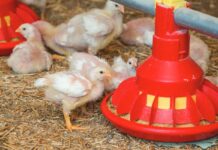
The trial involved 396 Ross 308 broiler chickens housed under standard commercial conditions. Birds were randomly allocated to two experimental groups, with nine pens per treatment and 22 birds per pen.
The study was divided into three feeding phases: 0–11 days, 11–28 days and 28–39 days. All birds had free access to feed and water, while environmental conditions and management practices followed the recommendations of the Ross 308 management guide.
A seeder-bird challenge model was used to establish Salmonella Infantis infection within the flock. Seeder birds were orally inoculated with a rifampicin-resistant strain of Salmonella Infantis on days 5 and 6 and then allowed to transmit the pathogen naturally to pen mates. This approach was selected to mimic field exposure conditions more closely than direct inoculation of all birds.
Two dietary treatments were evaluated. The control group received a standard commercial diet, while the supplemented group received the same diet supplemented with Selacid Green Growth-MP during the first two feeding phases.
The effects of the treatments were assessed through several parameters. Cecal samples were collected on days 13, 19 and 40 to determine Salmonella Infantis counts. Growth performance was monitored throughout the study by measuring body weight, average daily gain, feed intake and feed conversion ratio. In addition, gut health was evaluated using a macroscopic lesion scoring system that assessed intestinal alterations such as inflammation, ballooning, abnormal intestinal content and the presence of undigested feed particles.
Statistical analysis was performed using one-way ANOVA, with differences considered significant at P <0.05.
Effects on Salmonella colonisation
The challenge model successfully established Salmonella Infantis colonisation in both treatment groups, allowing the researchers to evaluate the impact of dietary supplementation under controlled conditions.
Across the study, birds receiving the supplemented diet consistently showed lower cecal Salmonella counts than those in the control group. The most pronounced differences were observed during the early stages of the challenge.
At day 13, the average cecal count was 4.71 log CFU/ml in the control group and 3.56 log CFU/ml in the supplemented group. A similar pattern was recorded at day 19, with counts of 3.58 and 2.78 log CFU/ml, respectively. By day 40, bacterial counts had declined substantially in both groups, and the difference between treatments was no longer evident.
Although the reductions observed at days 13 and 19 did not reach the conventional threshold for statistical significance, the results indicated a consistent tendency towards lower intestinal colonisation in the supplemented birds. From a practical standpoint, even moderate reductions in pathogen load may contribute to lowering bacterial shedding and environmental contamination within the flock.
The number of birds testing positive for Salmonella Infantis also tended to be lower in the supplemented group throughout the trial, supporting the overall pattern observed in the cecal counts.
| Sampling day | Control group | Supplemented group | P-value |
|---|---|---|---|
| Day 13 | 4.71 | 3.56 | 0.053 |
| Day 19 | 3.58 | 2.78 | 0.083 |
| Day 40 | 1.75 | 1.53 | 0.606 |
Gut health assessment
In addition to bacterial enumeration, the study evaluated gut health using a macroscopic lesion scoring system designed to assess visible intestinal alterations associated with enteric challenges.
At day 13, birds receiving the supplemented diet achieved a lower average lesion score than those in the control group (3.6 versus 5.2). The difference reflected a tendency towards improved intestinal condition, with fewer signs of inflammation and reduced evidence of intestinal disturbance.
By day 19, however, lesion scores were similar between treatments, suggesting that the early benefits observed in the supplemented birds were less evident later in the production cycle.
These findings indicate that nutritional support in the absence of AGPs in feed may help birds maintain intestinal integrity during the initial stages of a Salmonella challenge, a period that is often critical for the subsequent development and performance of broiler flocks.
| Treatment | Description | Day | Zone | Bal* | Inf* | Trans* | Flac* | Cont* | Undig pr* | Sum | Average |
|---|---|---|---|---|---|---|---|---|---|---|---|
| 1 | Challenge Control | 13 | Proximal | 1 | 2 | 1 | 3 | 3 | – | 26 | 5.2 (±0.55) |
| 13 | Distal | 1 | 5 | 4 | 2 | 2 | 2 | ||||
| 2 | Selacid GG | 13 | Proximal | 1 | 4 | 1 | 2 | 3 | – | 18 | 3.6 (±0.55) |
| 13 | Distal | 1 | 1 | 2 | 2 | 0 | 1 | ||||
| P value | 0.0727 | ||||||||||
| 1 | Challenge Control | 19 | Proximal | 1 | 3 | 3 | 5 | 2 | – | 27 | 5.3 (±0.76) |
| 19 | Distal | 1 | 1 | 5 | 4 | 0 | 2 | ||||
| 2 | Selacid GG | 19 | Proximal | 1 | 3 | 1 | 3 | 2 | – | 27 | 5.3 (±0.76) |
| 19 | Distal | 2 | 1 | 5 | 4 | 3 | 1 | ||||
| P value | 1.000 | ||||||||||
*Bal = Ballooning; *Inf = Inflammation; *Trans = Translucent;
*Flac = Flaccid; *Cont = Abnormal content;
*Undig pr = Undigestible particles in distal intestinal tract.
Growth performance
Growth performance was monitored throughout the study to determine whether the dietary intervention influenced bird productivity.
The supplemented group achieved significantly higher body weights at both day 11 and day 39. At day 11, birds receiving the supplemented diet averaged 382.5 g compared with 372.8 g in the control group. The difference remained evident at the end of the trial, with final body weights of 3,295 g and 3,188 g, respectively.
Average daily gain during the first growth phase was also significantly higher in the supplemented birds, indicating a positive response during the early stages of development.
No significant differences were observed for feed intake or feed conversion ratio. This suggests that the higher body weights were achieved without measurable changes in feed efficiency.
| Parameter | Control group | Supplemented group | P-value |
|---|---|---|---|
| Body weight day 11 (g) | 372.8 | 382.5 | 0.045 |
| Body weight day 39 (g) | 3,188 | 3,295 | 0.037 |
| ADG day 5–11 (g/day) | 38.9 | 40.2 | 0.027 |
An unexpected E. coli outbreak occurred during the final phase of the study and resulted in higher mortality in the supplemented group than in the control group. According to the authors, this event represented an external challenge unrelated to the dietary treatment and should therefore be considered when interpreting the overall performance results.
Despite this limitation, the trial demonstrated that birds receiving the supplemented diet maintained favourable growth performance while showing a tendency towards reduced Salmonella Infantis colonisation and improved gut health during the early stages of the challenge.
Discussion
The increasing prevalence of Salmonella Infantis in broiler production has encouraged the poultry industry to explore alternative strategies that complement conventional biosecurity and management practices. Among these approaches, nutritional interventions designed to support intestinal health are receiving growing attention.
The results of this trial suggest that the dietary blend evaluated may have contributed to a less favourable environment for Salmonella Infantis colonisation during the early stages of infection. Lower cecal counts were consistently observed in the supplemented birds on days 13 and 19, although the differences did not reach statistical significance. Nevertheless, the direction of the response was consistent across sampling points and may indicate a biological effect worthy of further investigation.
The improvement observed in gut health scores during the first phase of the challenge supports this interpretation. A healthier intestinal environment can play an important role in limiting pathogen establishment and maintaining digestive function. Previous studies have suggested that organic acids and medium-chain fatty acids may influence microbial populations within the gastrointestinal tract and help stabilise the intestinal ecosystem, particularly during periods of stress or pathogen exposure.
The positive response observed in body weight and average daily gain may also be linked to improved intestinal function. Broilers that maintain better gut integrity during the first weeks of life are generally better positioned to express their growth potential throughout the production cycle. In the present study, birds receiving the supplemented diet achieved higher body weights at both 11 and 39 days of age, despite no significant differences being observed in feed intake or feed conversion ratio.
Study limitations
As with any challenge study, several limitations should be considered when interpreting the results.
First, the reductions observed in cecal Salmonella Infantis counts represented statistical trends rather than significant differences. While these findings are encouraging, additional studies involving larger numbers of birds and different production conditions would help determine the consistency of the response.
Second, the trial was conducted under controlled experimental conditions. Commercial farms are exposed to a wider range of management, environmental and health-related factors that may influence the effectiveness of nutritional interventions.
Finally, an unexpected E. coli outbreak occurred during the final phase of the trial and resulted in higher mortality in the supplemented group. Although this event was not considered related to the dietary treatment, it represents a confounding factor that should be acknowledged when evaluating the overall production results.
Conclusions
Controlling Salmonella Infantis remains a major objective for poultry producers seeking to improve food safety and reduce the risk of bacterial contamination throughout the production chain.
Under the conditions of this study, broilers receiving a diet supplemented with a blend of organic acids and medium-chain fatty acids showed lower cecal Salmonella Infantis counts during the early stages of the challenge, together with improved gut health scores and higher body weight at specific stages of production.
Although the reductions in bacterial counts did not reach statistical significance, the consistent trends observed throughout the study suggest that nutritional strategies targeting intestinal health may contribute to integrated Salmonella control programmes.
The findings also indicate that supporting gut health during the early stages of production may help birds maintain growth performance under challenging conditions. However, further research under commercial conditions would be valuable to confirm these observations and better define the practical impact of such interventions.
Overall, the results suggest that supplementation with a blend of organic acids and medium-chain fatty acids may contribute to broader flock health programmes when combined with appropriate biosecurity, hygiene and management practices, while supporting broiler production systems seeking to reduce reliance on antibiotic growth promoters.
Practical implications for poultry producers
The results of this study reinforce the importance of an integrated approach to Salmonella control. Nutritional interventions alone cannot eliminate the pathogen, but they may help reduce colonization pressure and support intestinal resilience.
For poultry producers, the practical message is clear:
- Maintain strict biosecurity and hygiene procedures throughout the production cycle.
- Monitor gut health as part of routine flock management through validated techniques and qualified gut health scoring personnel or histopathology laboratories.
- Consider nutritional strategies that support intestinal integrity during periods of challenge.
- Evaluate feed additives within a broader health-management programme rather than as stand-alone solutions.
- Continue regular monitoring and surveillance programmes to identify and address potential Salmonella risks at an early stage.
A combination of sound management practices, effective biosecurity and nutritional support remains the most reliable approach for reducing the impact of Salmonella Infantis in modern broiler production.
This technical article was provided by Trouw Nutrition: www.trouwnutrition.com