
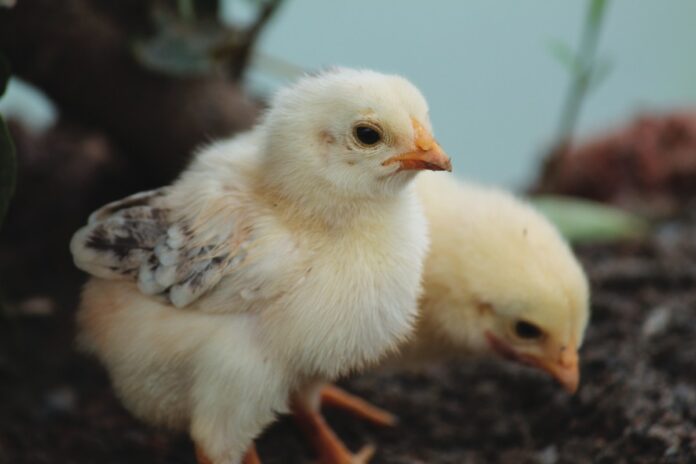
The first 7–10 days of life represent the biologically most critical phase of the entire commercial broiler production cycle. Within this narrow timeframe, the chick undergoes an extreme physiological transition: from lipid-dependent embryonic metabolism (yolk-sac resorption) to exogenous carbohydrate-protein nutrition, while simultaneously developing thermoregulatory, digestive and immune systems. Modern fast-growth genetic lines (Ross 308/708, Cobb 500/700, Hubbard) exacerbate this fragility, making any management error physiologically amplified. This article analyzes, with an integrated veterinary approach, the pathophysiological mechanisms underlying the main first-week syndromes (omphalitis/YSI, starve-outs, early ascites, SDS, aspergillosis and early rickets) specifying correct chick placement management, providing reference tables for environmental and productive parameters, necropsy diagnostics and troubleshooting protocols useful for field veterinarians and poultry sector operators.
The neonatal window: a critical phase
First week mortality (FWM) is the quintessential sentinel parameter for evaluating hatchery efficiency and placement practices. An FWM exceeding 1% must be considered a clinical alarm signal requiring systematic diagnostic investigation. Modern commercial hybrids (selected for an exceptional ratio between muscle growth and feed consumption) possess growth rates that translate into extremely high metabolic and cardiopulmonary demand even in the first week.
From a thermoregulatory perspective, a chick at hatching is essentially a poikilothermic organism: hypothalamic maturation, necessary for autonomous thermoregulation, is completed only around 7–10 days of life. In parallel, the intestine is morphologically immature, with short villi and low pancreatic enzymatic activity, and the mucosal immune system (GALT, gut-associated lymphoid tissue) depends on early antigenic stimulation provided by exogenous feeding. These three variables converge in a temporal window where any management or infectious error produces irreversible consequences on the flock’s productive and sanitary development.
Environmental management: target parameters for the first week of life
Constructing an adequate microclimate is the most effective preventive measure available to the veterinarian and the farmer. House pre-heating must begin 24–72 hours before placement, with particular attention to litter temperature (measured at multiple points, at different levels, with a contact thermometer), which is the most frequently overlooked critical parameter in field practice. Synthetic operational guidelines are reported in Table 1.
| Parameter | Target days 0–3 | Target days 4–7 | Clinical notes |
|---|---|---|---|
| Air temperature (°C) | 33–35 °C | 30–33 °C | Reduce ~0.5 °C/day. Monitor behavior (huddling = cold; peripheral dispersion = heat) |
| Litter temperature (°C) (depth 8–10 cm) |
28–32 °C | 26–30 °C | Measure with contact thermometer in 5+ points. Cold litter (<26 °C) is the primary cause of yolk sac infections and weekly mortality |
| Temperature under radiant heaters (°C) | ~40–41 °C (center) ~32–34 °C (edge) |
— | Allows behavioral thermoregulation; chicks choose the comfort zone |
| Relative humidity – RH (%) | 55–70% | 50–65% | RH <50%: mucosal dehydration, dust, aspergillosis risk; RH >70%: wet litter, NH3, pododermatitis |
| Air speed at chick level (m/s) | 0.3–0.5 m/s | 0.5–0.8 m/s | Avoid direct drafts on chicks. Minimum ventilation indispensable even in cold conditions |
| CO2 (ppm) | <3,000 ppm | <3,000 ppm | Above 3,000 ppm, immunosuppression and predisposition to early ascites due to pulmonary vasoconstriction are recorded |
| Ammonia – NH3 (ppm) | <10 ppm | <10 ppm | NH3 ≥25 ppm paralyzes the muco-ciliary apparatus and favors entry of Mycoplasma spp. and viral respiratory agents |
| Lighting – lux | 80–100 lux | 40–60 lux | Intense light in early days stimulates exploration, access to water and feed. Evaluate shaded areas for chick rest |
| Water temperature (°C) | 18–21 °C | 18–21 °C | Cold water (<15 °C) reduces intake. Warm (>25 °C) promotes bacterial growth (biofilm) in lines. Sanitize with appropriate disinfectant. |
Monitoring animal behaviour
Chicks should be left undisturbed for the first few hours post-placement to facilitate acclimatization; meanwhile, certain environmental parameters should be verified (light intensity and uniformity, minimum ventilation, and correct opening of vents).
Instrumental evaluation doesn’t replace observation of animal behavior; chicks distributed uniformly in the brooding area, active vocalization and regular access to water and feed indicate correct thermal comfort. Huddling beneath heat sources is the earliest and most reliable signal of hypothermia; peripheral dispersion with wings drooping and open-beak breathing indicates hyperthermia. Integrating both sources of information (instrumental + behavioral) is essential for clinically rigorous management.
Covering the brooding area with biodegradable paper on which starter feed is distributed must cover at least 70–80% of the surface, facilitating visual identification of food by chicks in the first hours of life, when the ability to locate traditional feeders is not yet fully developed.
Like feed, water represents one of the key factors for chick weaning: from its quality (interpreted as physico-chemical parameters) and temperature, one moves to systematic control of drinking lines (including nipples and cups) for correct filling and delivery, as well as verifying drinker height at all points in the brooding area. This also contributes to maintaining correct environmental humidity (expressed as Relative Humidity, RH), favouring animal acclimatization while preventing dehydration and starve-out phenomena (starvation due to lack of feed consumption).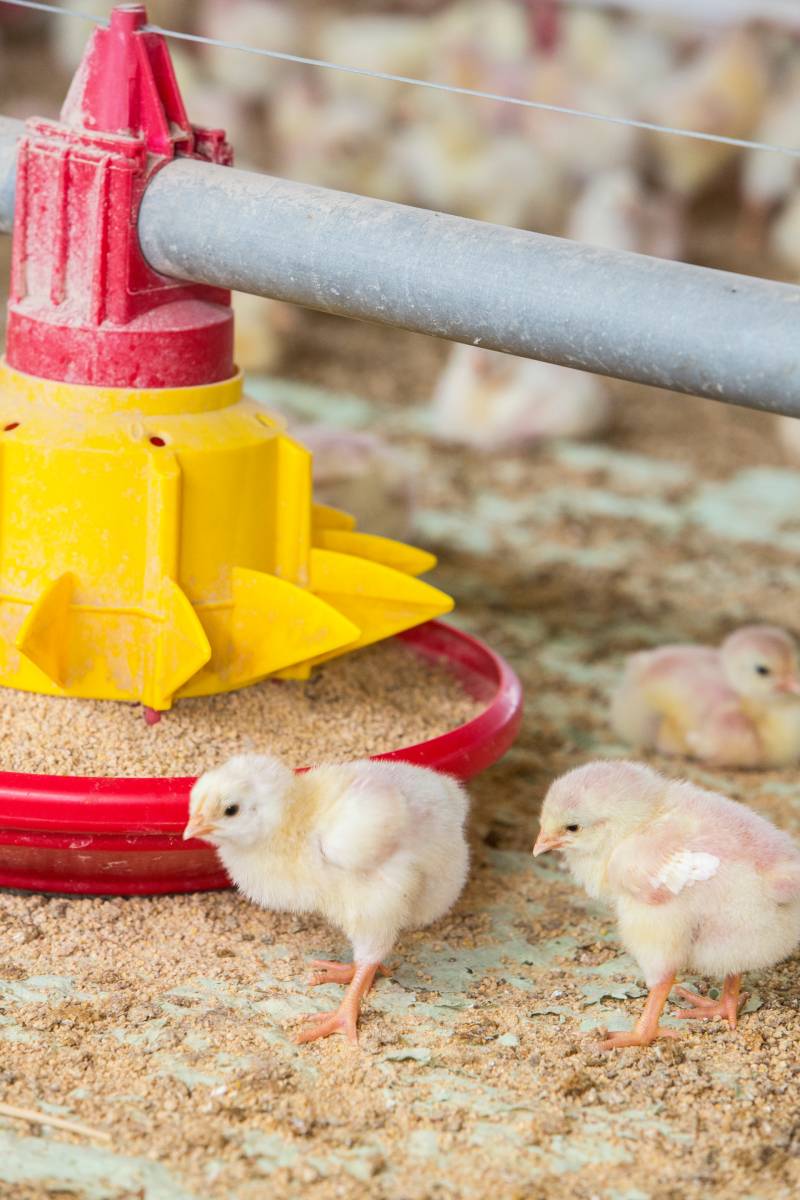
Early feeding, GALT and nutritional transition phase
Immediate access to feed and water at the time of placement (defined in literature as early feeding) is a biological requirement, not merely a good practice. Feed intake within the first few hours triggers a cascade of interdependent physiological events:
- Pancreatic enzymes secretion (lipase, protease, amylase), necessary for the blood absorption of the residual yolk sac.
- Proliferation of intestinal villi: delays exceeding 24 hours induce irreversible atrophy, reducing intestinal absorption area and causing chronic malabsorption.
- GALT maturation: early antigenic stimulation is necessary for the development of the Bursa of Fabricius and spleen, and for antibody production in response to vaccination prophylaxis.
- Microbiota colonization: early microbial competition (principle of competitive exclusion) reduces colonization by pathogenic agents such as Salmonella spp. and Clostridium perfringens.
The crop filling control (crop check) is the management thermometer: monitoring crop filling at 2, 8–12 and 24 hours post-placement is the most immediate and reliable clinical tool to evaluate early feeding efficacy. A full and soft crop indicates combined intake of feed and water; an empty crop indicates starvation (starve-out); a hard crop indicates feed intake with insufficient water supply.
Chick quality verification: main parameters
Evaluating chick quality at the time of placement represents a fundamental diagnostic moment, capable of predicting group’s productive performance and promptly identifying critical issues related to incubation, hatching egg management or transport. The main morphological and behavioral parameters to examine include: navel closure and abdominal quality (absence of residues, scabs or signs of omphalitis; palpable and dry abdomen; absence of swellings), leg color and integrity (uniform yellow color, absence of lesions/inflammation or joint swellings), eye appearance (liveliness, full opening), beak conformation (absence of defects, clean nostrils), postural tone and reactivity level to stimuli. Added to these is the evaluation of vocalizations, an indirect indicator of the group’s welfare status and vitality. The Pasgar Score uses these criteria, divided into five macro-categories — lower limbs, beak, abdominal quality (intended as complete yolk sac resorption and navel closure with full healing) and reflexes — assigning each a value from 0 to 2, to assign a total maximum of 10. Animal groups with a score ≥8 are considered good quality; values between 6 and 7 indicate acceptable quality but require monitoring; scores ≤5 signal poor quality requiring investigation into causes.
At the time of unloading, it is important to record the rectal temperature of subjects, taking individual measurements from different points/zones of the transport vehicle, using appropriate instrumentation (e.g. thermoscan): this allows evaluation of group dispersion and any deviations from the expected range of 39.5–40.5 °C. If the latter is low, subjects will struggle to consume water and feed in the first hours, with potential development heterogeneity and phenomena of failed yolk sac resorption and related mortality. Conversely, if elevated, chicks may undergo dehydration phenomena, with depressed/lethargic profiles.
Similarly, another fundamental parameter to detect upon animal arrival is body weight. This should be measured by individually weighing at least 100 chicks, taken randomly from the crates. Individual data must be processed to calculate mean weight and uniformity, parameters useful for calculating the coefficient of variation (CV): generally, a CV between 6% and 7% is good (corresponding to approximately 85-90% uniformity); there should be no differences between the initial CV and that detected at 7 days (if over 3–4%, it is a signal of worsening management in the first days of rearing). Furthermore, body weight is a predictive factor (under good conditions) of weight at 7 days of age: the latter should approach a minimum of 4.5 times the initial weight.
Key points: performance and corrective actions
The veterinarian and operators must have a quantitative reference system to evaluate the week’s progress and identify deviations from the norm early. Table 2 summarizes the main performance indicators and operational thresholds requiring immediate corrective action.
| Indicator (KPI) | Target value | Alert threshold | Veterinary action |
|---|---|---|---|
| Crop check at 2 h | ≥75% full and soft crops | <60% | Immediately verify water/feed distribution, litter temperature and nipple function |
| Crop check at 8–12 h | ≥80–85% | <75% | Correct radiant heater temperature, increase paper coverage with starter feed, add supplementary drinkers |
| Crop check at 24 h | ≥95% full crops | <90% | Identify starve-outs; electrolyte integration. Urgent revision of all environmental parameters |
| Body weight at 7 days | ≥4.0–4.5 × arrival weight | <3.5 × arrival weight | Complete audit: thermal profile, starter feed quality, group uniformity, health data recording. Hatchery feedback. |
| Cumulative mortality at 7 days (FWM) | ≤1.0% | >1.5% | Systematic necroscopy (min. 5 subjects/day). Distinguish YSI, starve-outs, aspergillosis, traumatic causes. |
| FCR week 1 | <1.0 (ideal 0.85–0.95) | >1.10 | High FCR in week 1 indicates insufficient ingestion of thermal dispersion. Re-evaluate feed physical form (fine-crumble) |
| Flock uniformity (CV%) | CV% ≤7% | CV% >10% | High variability = non-homogeneous resource distribution. Increase density of water and feed access points |
Note on first week feed conversion ratio.
Under optimal conditions, the Feed Conversion Ratio (FCR) of the first week is less than 1.0 (often 0.85–0.95), because chicks efficiently use every gram of feed for net body growth. A weekly FCR higher than 1.10 should induce suspicion of energy dispersion due to thermoregulation (cold environment), insufficient energy quality of the starter feed or subclinical pathology reducing intestinal absorption.
Etiopathogenesis and diagnostics of main issues
First-week broiler pathologies often share a multifactorial pathophysiology where management stress, immune immaturity and infectious challenges intersect synergistically.
Among infectious conditions, we find Yolk Sac Infection (YSI) which, in complicated omphalitis profiles, represents one of the most frequent neonatal septicemic problems, sustained in 70–87% of cases by Escherichia coli and more rarely by Staphylococcus aureus, Salmonella spp., and Enterococcus spp. Failure of navel closure allows ascending bacterial contamination of the yolk sac, determining a profile of lethargy, distended abdomen and bluish skin with exitus within the first 3–7 days of life. Necropsy examination reveals an enlarged yolk sac, caseous or watery consistency and fetid odor, frequently associated with fibrinous peritonitis, pericarditis and perihepatitis in cases of systemic colibacillosis.
This pathology merits specific clarification for its implications regarding antimicrobial resistance management. In Italy and Europe, acquired resistance of avian E.coli to β-lactams (ESBL-producing strains), tetracyclines and fluoroquinolones is widely documented and directly correlated to indiscriminate preventive antibiotic use in the first week of chick life. Antibiotic therapy in subjects with severe YSI septicemia is frequently ineffective: tissue concentrations at the yolk sac level (an anaerobic, nutrient and rich substrate) are rarely sufficient to eradicate the infection, and mortality follows its course independently of treatment. The correct approach is therefore preventive, based on systematic hatchery audit (hatching temperature and humidity, hygiene of beak-trimming equipment, tray sanitation), elimination of hygienically poor eggs, litter pre-heating, and rigorous biosecurity at house entry. Any use of antimicrobials via drinking water must always be supported by culture and antibiogram, in compliance with principles sanctioned by EU Regulation 2019/6 and the PNCAR.
Of non-infectious nature but with high productive impact are starve-outs and early dehydration, conditions determined exclusively by management factors: lack of access to feed and water in the first 24 hours of life induces severe glycogen depletion, detectable at crop check as an empty or hard-consistency crop. Necropsy findings evidence a pale liver with glycogen exhaustion, pale kidneys and urate deposits (uricosis). Immediate correction of environmental parameters (temperature and relative humidity) together with increasing paper coverage surface to 70–80% and integration of drinking water with electrolytes and vitamins for 3–5 days, constitutes the reference management protocol.
Among cardiovascular and metabolic pathologies, ascites originates from pulmonary hypertension secondary to hypoxia (Pulmonary Arterial Hypertension, PAH), determined by insufficient temperatures or elevated CO₂ concentrations and/or an excessively rapid growth rate. Right ventricular overload results in the production of citrine-colored abdominal transudate, with right ventricular hypertrophy, hepatic congestion and edematous lungs at necropsy. Similarly, Sudden Death Syndrome (SDS, or flip-over) predominantly affects fast-growing male subjects through fatal ventricular arrhythmias, with a mortality peak between 14 and 28 days of life (anticipated in super-early hybrids) and absence of macroscopic visceral lesions at anatomo-pathological examination. For both conditions, there are no effective therapies: prevention is based on optimizing ventilation and temperature, reducing stocking density, and, in the case of SDS, modulating early growth speed through reduced starter nutritional programs.
Regarding other infectious pathologies, aspergillosis caused by Aspergillus fumigatus represents a diagnostic urgency, as there are no practicable therapeutic protocols in farming situations: triazoles (itraconazole, voriconazole) present prohibitive costs for mass use and scarce evidence of efficacy in production animal avian medicine. Massive inhalation of conidia in the first 24–72 hours of life determines a profile of severe dyspnea, gasping, and beak cyanosis, with mortality that can reach 50% in declared outbreaks. The pathognomonic lesion is represented by multifocal whitish granulomatous nodules at the level of lungs, trachea and air sacs, with mycelium visible under UV light. Prevention requires systematic mycological analysis of litter before placement (via plating on Sabouraud agar and incubation at 37 °C for 48–72 hours) as a routine protocol in houses with anamnestic history of early respiratory problems, as well as a rigorous hatchery audit.
Finally, skeletal pathologies like rickets and dysmorphism such as splay legs and tibial dyschondroplasia recognize a nutritional etiopathogenesis or malabsorption secondary to early enteritis, with deficit of calcium, available phosphorus and vitamin D₃. The necropsy profile evidences rib deformities, distorted cartilage growth and enlarged epiphyses, confirmable by bone diaphanization. Optimal starter formulation (Ca 1,0%; available P 0.45%; vitamin D₃ ≥2000 IU/kg), combined with maintaining dry and non-slippery litter, constitutes the fundamental preventive measure.
Veterinary troubleshooting guide
Clinical diagnosis in the first week is essentially a diagnosis of management issues. The veterinarian must be able to correlate farm clinical signs with predisposing factors and translate them into precise, rapid, and measurable corrective actions. Table 3 provides an operational scheme for the main scenarios encountered in the field.
| Problem detected | Field signs | Predisposing factors | Veterinary and technical corrective actions |
|---|---|---|---|
| Insufficient Crop Check (<90% at 24h) | Empty/hard crops; dispersed, inactive chicks | Litter T° <28°C; nipples too high; cold water; poor paper coverage; poor starter feed quality | Increase paper coverage ≥70%. Lower nipples to chick eye-level. Water T° 18–21°C. Check radiant heaters and litter T° |
| High cumulative mortality with omphalitis lesions | Open navel, tense abdomen; pathological yolk sac, peritonitis | Insufficient hatchery hygiene; dirty eggs; inadequate hatchery temperature; contaminated litter; delayed navel enclosure | Hatchery audit (hatching temperature/humidity, beak-trimming hygiene, equipment sanitation). Pre-heat litter to 30°C. Rigorous biosecurity. Targeted antibiotic based on antibiogram: avoid indiscriminate prophylaxis. |
| Starve-outs and dehydration | Empty crops, light body, sunken eyes, cloacal plugs | Delayed water access; thermal stress; low drinking line pressure; poor feed distribution; crumbled feed quality | Electrolytes + vitamin C in water for 3–5 days. Add supplementary drinkers. Correct T° and RH. Verify water system pressure and nipple cleanliness. |
| Weight at 7 days <4× arrival + poor uniformity | High weight variability, low average, heterogeneous group | Non-optimal thermal profile; insufficient drinkers/feeders; feed quality; subclinical infectious challenge | Re-evaluate temperature profile over the entire week. Audit equipment density (min. 1 nipple/8–10 chicks). Starter feed analysis. Review vaccination status and health protocol. |
| Early respiratory signs + wet litter | Sneezing, nasal discharge, coughing, crusted litter around drinkers | High RH; insufficient minimum ventilation; drinker leaks; excessive water pressure; poor litter quality | Increase minimum ventilation maintaining target temperature; adjust drinker height to reduce leaks. Manage RH at 50–70%. Perform tracheal swabs if persistent. Check litter depth and humidity. |
| Skeletal issues/splay legs | Reluctance to walk, hock redness | Wet litter; smooth surfaces in transport crates; unbalanced starter nutrition; excessive density | Verify Ca/P/Vit D3 formulation in starter feed. Improve litter management and ventilation. Litter of absorbent material (wheat straw or dry wood shavings) |
Conclusions
The productive and sanitary success in broiler farming is built in the first 7 days of life. Correct management and careful monitoring in the first week by involved operators are of fundamental importance. The approach to this phase cannot be reduced to managing pathological emergencies: it must be structurally preventive, quantitative and integrated between hatchery, transport and farming.
Literature data converge unequivocally: every extra gram of weight gained at 7 days translates into 5–10 grams more live weight at slaughter, with significant impacts on conversion ratio, total mortality and overall carcass quality. The chick’s behavioral thermoregulation – not the thermometer – is the earliest and most reliable clinical indicator of environmental comfort. Systematic necropsies, weekly biometry, and a rigorous crop check at 24 hours are the fundamental diagnostic tools that every veterinarian and poultry operator must master and document.
Equally effective in interrupting recurrent cycles of neonatal pathology is a structured partnership with the hatchery, based on quantitative feedback (cumulative mortality, chick quality upon arrival, percentage of red hocks, etc.). Finally, in a European regulatory context, increasingly stringent regarding the fight against antimicrobial resistance, environmental and structural prevention is no longer an option: it is the only clinically sustainable response.