


Turkey breeder health, new welfare challenges and demands
The health of turkey breeders is critical to ensure the economic production of high quality fertile hatching eggs to produce poults which can be raised without antibiotics.

Cage free pullet management
The conditions in cage free systems differ from the traditional cage housing systems and require a different management approach. Alternative production systems can be...
Turkey reoviral arthritis update
Avian reoviruses (ARVs) belong to the genus orthoreovirus in the family Reoviridae. They are nonenveloped, double-stranded RNA viruses that are ubiquitous in domestic poultry...

Increased cecal butyrate concentrations protect against Salmonella Enteritidis
Butyrate is a molecule that is extensively studied as a feed additive to improve gut health and animal performance. It also has been described...
Water quality guidelines for turkeys
Turkeys typically consume twice as much water as feed, so it is important to provide a clean, healthy water supply. Water not only serves...
Biosecurity and surveillance in times of Avian Influenza
Biosecurity is today a primary factor in farming. The poultry world has entered a new era driven by increasingly demanding consumer and regulatory expectations....
The manureshed concept: a solution to poultry litter nutrient recycling?
Surface waters in the United States are regularly assessed as a part of the Clean Water Act to determine whether the water quality protects...
Salmonella prevention strategies and influences of sampling method selection
Multiple factors can influence both Salmonella prevalence and diversity of Salmonella serogroups detected from both pre and post-harvest samples. Sampling methodologies vary widely when...
Protein digestive dynamics influence growth performance of broiler chickens
Three apical diets were formulated to stimulate different protein digestion rates dependent on the major constituents: standard (soybean meal), rapid (whey protein) and very...
Feed borne mycotoxins: the threat to poultry?
Mycotoxins are metabolites produced by molds (fungi) that can infest crops pre-harvest and can continue to flourish under sub-optimal storage conditions. Grains with high...

Linear Epitope Mapping of B-cell responses following immunization with Avian Reovirus S1133
Avian reovirus is a causative agents of tenosynovitis and viral arthritis. Commercially available reovirus vaccines do not protect against challenge with emerging variants associated...
Metabolic differences in the blood of chick embryos
A study was conducted in order to investigate metabolic differences in the blood of chick embryos and post-hatch chicks from two egg sizes and...

Vencomatic Group and Orbem announce a strategic partnership for in ovo sexing of poultry...
Vencomatic Group (VMG), a family-owned supplier of innovative solutions for the international poultry industry, and Orbem, a leading deep-tech imaging and AI technology company,...
When the gut rebels: the challenge of chronic inflammation in laying hens
In the poultry industry, intestinal health is a cornerstone for achieving high production yields, feed efficiency, and disease resistance. One of the issues that...
Adding value into the poultry food chain
Enhancing efficiency, sustainability and consumer engagement are three cornerstones to increase profitability by adding value into the poultry food chain. All together are necessary...
Partial house brooding design and management for broiler breeders
The importance of the brooding period cannot be overemphasized. The first 14 days of a chick’s life set the precedent for good performance. Extra...
Influence of age on the standardised ileal amino acid digestibility of maize and barley...
Grains are the major energy sources in broilers. However, they also supply about 40% of the total dietary protein and contribute significantly to the...
Management of ectoparasites in cage-free housing systems
As cage-free systems become more frequent in poultry production, we are forced to evaluate how pest control measures should adapt to ensure efficacy.
The...
Practical guide for evaluating day-old chick quality: key standards and health monitoring
Evaluating the quality of day-old chicks (DOC) is crucial for successful poultry production. This practical guide outlines the key physical indicators, health factors, and...

Practical applications of nutrigenomics in poultry nutrition
Novel molecular techniques such as microarray technologies have spurred the development of the field of nutrigenomics.
Using microarrays to evaluate gene responses allows us to...
Backyard chickens
Are backyard chickens just a transient phenomenon? Current craze? Foodies’ desire for fresh eggs? Baby boomers or young families wanting to get closer to...

Meyn: a look inside the market for deboning and deskinning
The poultry processing market is still on the road to growth. A CAGR of 4.7% by 2020 in USA alone is evidence of the...
Microbiota studies in poultry
The microbial populations that inhabit the gastrointestinal tract (GIT) of birds play an important role in the establishment and maintenance of a healthy gut....
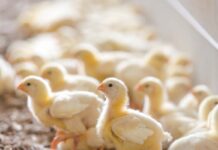
Best practice in broiler house management
How the right technology and proactive management can ensure best practice in housing on broiler farms
In partnership with Cobb, this article examines best practice...

Animal feed probiotics market expands as antibiotic-free nutrition gains momentum
The global animal feed probiotics market is undergoing a significant transformation as livestock producers increasingly seek sustainable, science-driven alternatives to conventional growth promoters. Valued...
Effects of yeast and its derivatives on meat yield
The present experiment was designed to determine the effects of yeast and its derivatives on meat yield and hematological indices of broiler chickens challenged...

Stork Nuova CoreTech poultry evisceration
Marel Poultry is global supplier of innovative inline poultry processing equipment for broilers, turkeys and ducks, providing solutions for all process stages and all capacity levels. Now Marel Poultry developed the Stork Nuova CoreTech eviscerator to operate in emerging markets or in markets with specific or religious requirements.
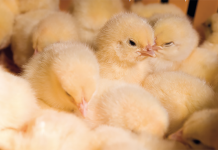
Biosecurity – practical tips to minimize the human risk of contamination
All poultry operations are under a constant threat from the ever-present enemy of disease and infection. It is imperative in all operations that we...
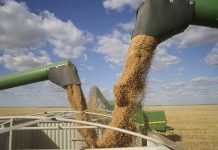
Effect of arginine and lysine on broiler chickens
Arginine is an essential amino acid for poultry and plays crucial roles in different biological pathways. Recent findings highlighted that the recommended levels of...
Impact of the lighting and feeding regimen during rearing on Hy-Line brown pullet growth...
The impact of two lighting and three feeding programs during rearing on pullet body weight (BW), feed intake (FI), organ characteristics and start of...

Taking phytase superdosing from scientific concept to commercial application: a UK example
Scientific research is based on carefully designed experiments, performed in carefully controlled conditions with the outcome measured as accurately as possible, using a range...
Selection for persistency and profitability in layers
Prof. Dr. Rudolf Preisinger, Chief Technical Officer at the EW Group, held a presentation on the selection of Lohmann’s layer lines for the traits...
Rise of Yeast Bioactives expands the toolbox for livestock operators
Canadian Bio-Systems receives Veterinary Health Products approval for Maxi-Nutrio® Liquid, a yeast bioactive technology.
An innovative new category of science-powered yeast technology, with dynamic potential to...
Management of slow growing broilers for profit
Chicken is consumed in larger quantities than either beef or pork largely due to its relatively low fat and high protein content when compared...
Protecting poultry from Avian Influenza
The Avian Influenza season is upon us, but how much do you know about Avian Influenza? Do you know how to protect the birds...
Different light sources
The value of regulating the photoperiod of poultry and livestock to stimulate reproduction has been recognized for many years and is used regularly by...
Keeping birds warm and comfortable with dry litter
Though controlling litter moisture is crucial for limiting ammonia production in houses, it also helps keep birds warm during cold weather.
One of the key...

Healthy water, healthy birds
Since birds consume as much water as feed providing a clean, safe and sanitized water supply is crucial for assuring modern poultry flocks perform...
Researchers develop method for making new types of vaccines
USPOULTRY and the USPOULTRY Foundation announce the completion of a funded research project at the U.S. National Poultry Research Center, Southeast Poultry Research Laboratory in Athens,...
Strategies for poultry producers to combat insecticide resistance
Poultry producers can combat insecticide resistance by rotating insecticides based on their mode of action, implementing resistance monitoring programs, and integrating non-chemical pest management...

Management and stockmanship – Essential to sustainable poultry production
Experts agree that the way in which animals and poultry are managed can affect 70 to 90% of their health, welfare and productivity.
Poultry producers,...
How preheating temperature can affect litter drying
One of the purposes of preheating a broiler house is to ensure the litter is properly dried prior to chick placement. Research has shown...
Emerging technologies in rodent control for European poultry farms
Rodent infestations remain one of the most persistent challenges in poultry farming. Beyond damaging infrastructure and feed supplies, rodents are vectors of diseases that...

Origin of feed ingredients in Dutch compound feeds
Wageningen University and Research (WUR) studied the origin of protein-rich feed ingredients, which in 2018 were applied in Dutch compound feeds. 65% of proteins...
Broiler nutrition, future efficiency
Talking about broiler nutrition, we all want the best possible return while investing as little as possible: efficiency is the keyword to success and...
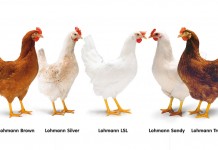
Latest innovations and future advances in genetics at Lohmann Tierzucht
The 53rd Lohmann Tierzucht Franchise Distributor provided an opportunity to review the latest innovations in genetics and genomics. Prof. Dr. Rudolf outlined the main points of the company strategy in breeding.
A practical approach to broiler breeder management in the absence of beak treatment –...
In the absence of beak treatment management strategies, which ensure appropriate bird development and growth and the provision of adequate environment and stimuli, which...
Biofilms – The hidden threat
The cleanliness of the facility is the #1 prerequisite to safeguarding the chicken products’ safety. Food safety wise, cleanliness does not merely mean keeping...

Different incubation profiles for different breeds?
Breeding has powerful effects. Although all chicken breeds originate from the same wild ancestor, they differ dramatically in appearance, physiology, type and metabolic rate....
Balancing beetles with the bottom line
Darkling beetles, commonly referred to as litter beetles, are a widely encountered pest for those in the broiler production industry. Litter beetles are holometabolous...
Aviagen slower-growing breeds get seal of approval from key European welfare schemes
Europe is experiencing an increase in demand for slower-growing breeds. The momentum of this poultry market sector is likely to follow on an upward...
Priming young birds for gut health and resilience
This brief review focuses on the types of fibre that the nutritionist should be considering and how a phase feeding strategy should not only...
Hot weather management and nutrition for commercials
This document provides practical advice for managers to reduce the effects of heat on flocks by modifying management and nutritional practices to improve bird...
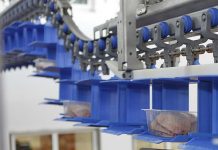
TrayTrack, a unique inline overhead concept for optimum tray logistics
The traceability of trays
Once trays have been filled with product, poultry processors will often be faced with how to transport them to packaging equipment...
Research examines different dietary treatments for woody breast
USPOULTRY and the USPOULTRY Foundation announce the completion of a funded research project at Auburn University in Auburn, Alabama, in which researchers examined different...
A cost-effective solution to partially replace vitamin E
Oxidative imbalance can reduce animal productivity. If severe, it can lead to inflammation, reduced immune function and increased susceptibility to disease. Livestock producers typically...
New applications such as superdosing of phytase to maximize phytate destruction to improve performance...
It is well documented that phytase supplementation in broiler diets improves P and Ca utilization through the destruction of phytate (IP6) and thereby allows...
Salmonella, creating the most undesirable environment
Background
Salmonella non-typhoidal is among the top foodborne bacteria that cause illness within the United States annually.With 1.4 million illness (11% of foodborne bacteria), 19,336...
Dietary energy, digestible lysine and available phosphorus levels influence growth performance and carcass traits...
Energy (E) and amino acids (AA) are two of the most expensive components in broiler diets. There is no general consensus regarding the interaction...
BBSRC launch the Agriculture and Food Security Strategic Framework
The new framework identifies the key research and innovation priorities of the Biotechnology and Biological Sciences Research Council.
The new BBSRC’s Agriculture and Food Security...
How much cold pressed canola meal can we use in layer diets?
Canola meal has been available for the layer feed industry in Australia for over 30 years. However, very little has been used due to...

How to minimize peracetic acid exposure in poultry plants
Peracetic acid has been used increasingly in the food and medical industries as a disinfectant, and its use in poultry processing has further enhanced...
Role of dietary calcium in Necrotic Enteritis development and pathogenesis
USPOULTRY and the USPOULTRY Foundation announce the completion of a funded research project at Texas A&M University in College Station, Texas, in which the...
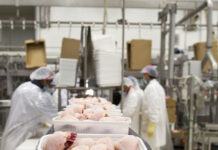
Pre-harvest interventions and implications of safety for turkey processing
Increasing consumer attention toward low fat, high protein diets, and demand for healthy foods has led to a significant increase in the production and...

The Salmonella initiative
An enduring challenge and reputational issue for the egg industry is caused by the presence of Salmonella enterica serovars (particularly some Typhimurium serotypes), which...
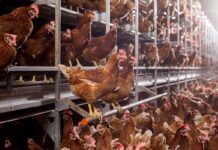
Reaching the genetic potential
Genetic improvements are seen across a wide array of traits that Hendrix Genetics’ geneticists select on, from egg production, egg quality to bird behavior....
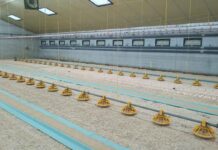
On-farm hatching: an innovative early-feeding strategy that improves welfare and reduces antimicrobial use in...
On-farm hatching is an innovative hatching technique that provides early feeding post hatch to newborn chicks. Several experimental studies and field trials show that...
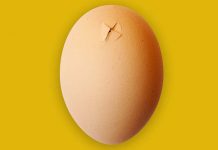
Air cell up when setting eggs!
It is important to pay attention to the orientation of the eggs when placing them on setter trays as this has quite an impact...

Lasers prevent the spreading of the Avian Influenza virus
Wageningen University released their research on a poultry farm that suffered visits from wild waterfowl, which are a source of Avian Influenza virus. The...
Improving birds’ health by refining their intestinal microbiota health and stability
Intestinal systems of living organisms are inhabited by a dense community of microorganisms dominated by bacteria but also containing archea, fungi, protozoa and viruses....
Gut health and Coccidiosis
In poultry, gut health is fundamental and the gastrointestinal tract accounts for twenty percent of the energy expenditure of the whole body. This energy...
Progress in extended testing and performance standards at Hendrix Genetics
The company’s mission to breed layers capable of producing 500 first quality eggs per hen housed has been a guiding principle at Hendrix Genetics...
Better than alternatives to antibiotics
Many poultry flocks require antibiotic treatment, if not every cycle, regularly. Antibiotic alternatives are in great demand, especially in the context of dysbiosis and...
Decoding cecal cores in chickens: from necropsy to diagnosis
Cecal cores are a classical pathological gross lesion seen in field necropsies. Even though a presumptive diagnosis is made based on the visualization of...

Phytic acid reduction in canola and camelina meals
Canola and camelina meals have been identified as alternative plant protein sources in place of soybean meal for animal feeding. The use of these...
Nutritional modulation of broiler intestine in the starter period and intestinal integrity
Gut health which is characterized by intestinal integrity, intestinal microflora, mucin and enterocyte functionality, may be of greatest concern among poultry producers because it...

Bacterial bile salt hydrolase for a good microbiota
However, limiting antibiotics use could compromise animal production efficiency and health. Thus, there is an urgent need to develop effective alternatives to antibiotic growth...

Research assessed peracetic acid in poultry processing wastewater treatment systems
USPOULTRY and the USPOULTRY Foundation announce the completion of a funded research project at the Georgia Institute of Technology in Atlanta, Georgia, in which...

Pirbright’s livestock coronavirus research
The Pirbright Institute is aware that misinformation regarding the Institute and its research is circulating on social media following an outbreak of a new...
The importance of broilers’ uniformity
The interaction between the live production department and the processing plant across the global poultry industry is governed by an internal supplier-client relationship. Hence,...